 Vietnamnet.vn

 Podcast



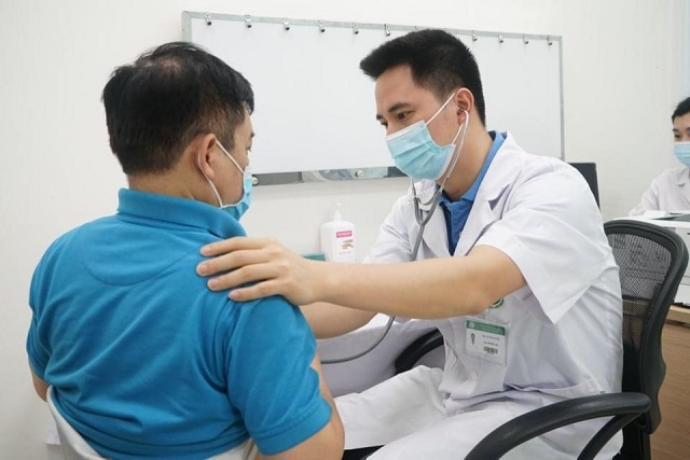
N.M.T, 38, often suffered from stomach pain and digestive disorders, sometimes having bowel movements 2-3 times a day. Although his wife repeatedly urged him to get examined, he kept avoiding it. The reason was simple: “If I go for a check-up and they find something, I’ll just worry more.”
The hesitation lasted until his condition became more serious: persistent stomach pain and noticeable weight loss. At that point, his family firmly demanded he get checked. At the medical facility, initial tests showed many abnormal indicators, and the doctor advised him to go to a higher-level hospital for a specialized endoscopy. Still, he thought he was only going “to put his wife at ease,” never believing he could have a serious illness.
The endoscopy results shocked the whole family: a colon tumor was detected. The biopsy confirmed stage 2B colon cancer. His wife broke down in tears, unable to hide her regret that her husband had missed the chance to detect the disease earlier.
Not only middle-aged men, the fear of medical exams also appears in young people. B.T.N, 25, HCMC had lived with abnormal abdominal pain for many years. N. sometimes had dull pain, other times severe cramps, accompanied by menstrual irregularities. During one online symptom search, she glimpsed the phrase “cervical cancer” and immediately panicked.
“What if I go for a check-up and it really is that disease?” N. worried. That thought led her to choose silent endurance, delaying a hospital visit. The vague fear gradually became prolonged psychological pressure.
Only when her condition worsened did she reluctantly go for an exam, but almost left because she was too scared. The results showed she had polycystic ovary syndrome and endometriosis. The conditions are not too dangerous if monitored and treated properly. However, continued delay could affect future fertility.
In reality, many people refuse medical exams because they fear discovering health problems. This avoidance is often “disguised” under various reasons: busy with work, no time to arrange, symptoms still mild, or concerns about costs. Some even have full health insurance but go years without once using it for routine check-ups.
According to the Ministry of Health, most Vietnamese only go to the hospital when the disease shows clear symptoms or has progressed to a severe stage. Meanwhile, routine health check-ups every 6-12 months can detect metabolic disorders, chronic diseases, and potential risks related to the heart, liver, and kidneys early.
Two persistent fears
Associate Professor Do Van Dung, former Head of the Department of Public Health (University of Medicine and Pharmacy, HCMC), said this hesitation does not develop randomly. There are two main reasons:
Many people have had negative experiences with medical examinations, such as complicated procedures, long waiting times, or pressure from treatment costs. Over time, these factors create invisible barriers that make people reluctant to interact with the healthcare system.
Many people fear that a serious diagnosis could disrupt their jobs, finances, or even social standing, leading them to choose the mindset of “better not to know.” This is a psychological defense mechanism but carries significant risks.
More concerningly, many people now turn to social media or artificial intelligence tools for self-diagnosis instead of seeing doctors. However, information online is often not personalized to an individual’s actual health condition, making it easy to misunderstand symptoms or overlook dangerous illnesses.
The consequences of delaying medical examinations and treatment can make diseases more severe and treatment costs higher, but also contribute to the growing trend of serious diseases appearing at younger ages. Illnesses once commonly seen in older adults are now increasingly affecting younger people, partly because of late detection.
Health experts advise that getting a medical exam is not something to fear but a way to proactively protect health. Early detection increases treatment success, reduces costs, and limits complications. Being afraid does not make the disease disappear. On the contrary, only by facing it and getting checked in time can each person keep the chance to live healthily long term.
Vo Thu
.svg)
