 Vietnamnet.vn

 Podcast



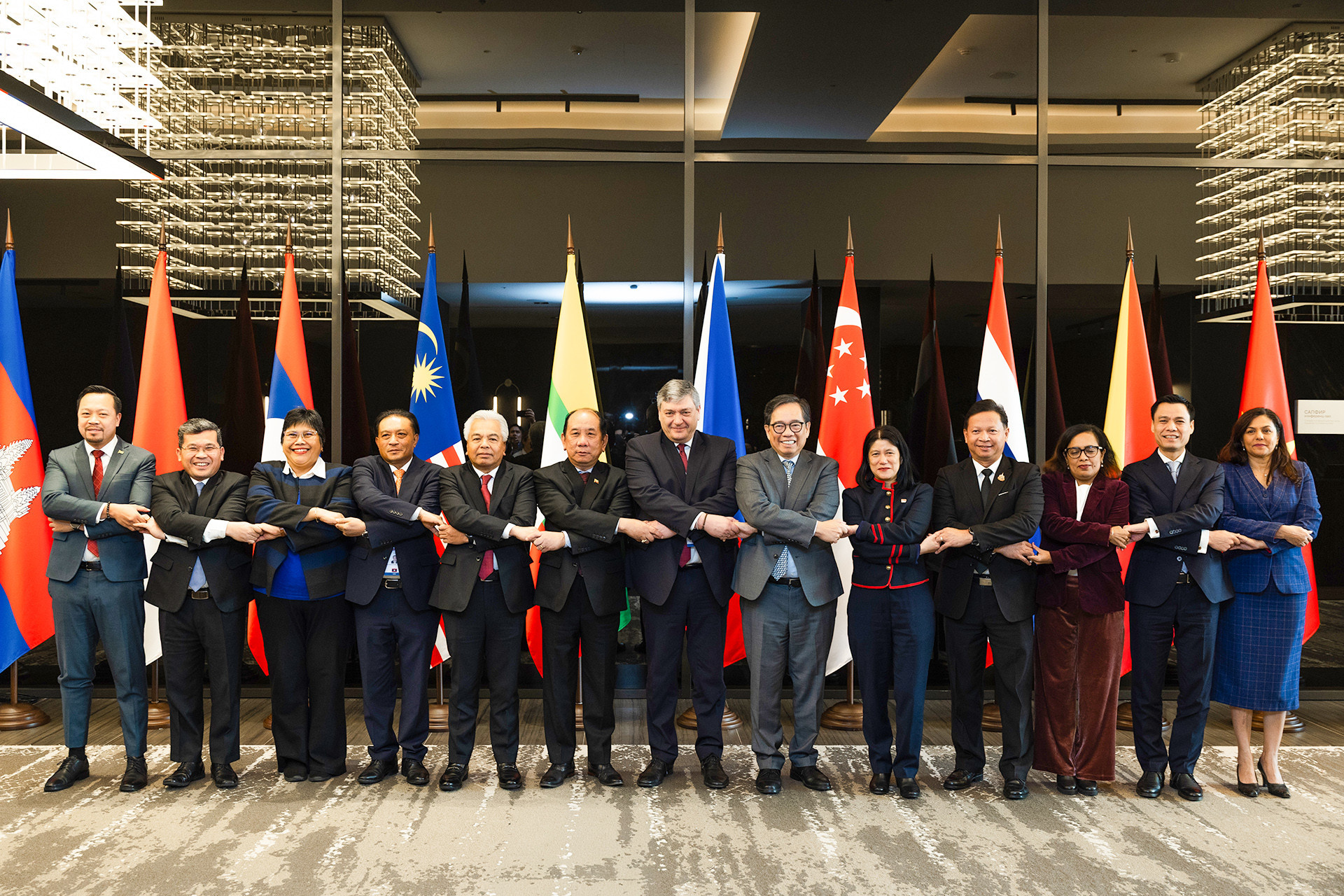
The anniversary summit takes place against a backdrop of profound global and regional transformation. Deputy Foreign Minister Dang Hoang Giang noted that the international community is facing what Party General Secretary and State President To Lam recently described at the Shangri-La Dialogue as "three foundational crises" - a crisis of the international order, a crisis of development models and a crisis of strategic trust.
Held nearly five years after the previous ASEAN-Russia summit, which took place virtually in October 2021, the gathering is widely viewed as more than a commemorative event. It is expected to serve as a strategic platform for shaping the next phase of cooperation between the two sides.
Russia has long regarded ASEAN as a key partner and consistently supports ASEAN's central role in the evolving regional architecture. ASEAN, in turn, values Russia's role and influence in regional and global affairs.
The summit is expected to reaffirm the highest-level political commitment to the ASEAN-Russia Strategic Partnership and demonstrate the importance both sides attach to dialogue and cooperation as effective means of fostering peace, security and stability.
Leaders will conduct a comprehensive review of the partnership, assess achievements and shortcomings, identify barriers to cooperation and explore new directions, priority sectors and breakthrough measures to deepen engagement.
Energy security, one of Russia's traditional strengths and a growing priority for ASEAN economies, is expected to feature prominently in discussions. Leaders are also expected to explore opportunities for stronger connectivity and integration between Southeast Asia and the wider Eurasian region.
In addition, ASEAN and Russian leaders will exchange views on major regional and international issues of mutual concern, with the aim of enhancing understanding, strengthening strategic trust and addressing shared challenges based on international law.
The summit is expected to adopt a series of key documents that will guide ASEAN-Russia cooperation in the coming years and better respond to the evolving development needs of both sides.
Three decades of growing ties
Russia's relationship with ASEAN began in July 1991 when a Russian deputy prime minister attended the opening session of the 24th ASEAN Foreign Ministers' Meeting in Kuala Lumpur as a guest of the Malaysian government.
Following those initial contacts, Russia became a full Dialogue Partner of ASEAN at the 29th ASEAN Foreign Ministers' Meeting in Jakarta in July 1996, establishing a formal framework for cooperation.
A major milestone came with the first ASEAN-Russia Summit in Kuala Lumpur on December 13, 2005. At the meeting, both sides signed the Joint Declaration on Progressive and Comprehensive Partnership and adopted the Comprehensive Programme of Action for 2005-2015, laying the foundation for cooperation across political-security, economic and development fields.
Another turning point arrived at the third ASEAN-Russia Summit in Singapore in November 2018, when the relationship was elevated to a Strategic Partnership. Leaders also adopted a declaration on security and information and communications technology cooperation and witnessed the signing of a memorandum of understanding between ASEAN and the Eurasian Economic Commission, broadening economic links between Southeast Asia and the Eurasian region.
Most recently, the 22nd ASEAN-Russia Senior Officials' Meeting, held in Kazan in April, confirmed that cooperation continues to advance across multiple areas. Officials reported that implementation of the ASEAN-Russia Plan of Action for 2021-2025, extended through 2026, had reached 82%, reflecting substantial progress.
Economic cooperation has continued to expand through trade and investment initiatives between ASEAN and Russia as well as between ASEAN and the Eurasian Economic Union. Russia remains an important partner in energy and food security, while cultural, educational, academic and people-to-people exchanges have also deepened through youth and young diplomats' summits and other initiatives.
Both sides agreed that ASEAN and Russia should further strengthen their partnership and expand cooperation into emerging areas with significant potential, including clean energy, digital transformation, artificial intelligence and smart cities.
Tran Thuong
.svg)
