 Vietnamnet.vn

 Podcast



Prime Minister Le Minh Hung on June 17 joined fellow ASEAN leaders in calling for stronger cooperation with Russia in trade, energy, technology and innovation during the ASEAN-Russia Business Forum in Kazan, the capital of Russia’s Republic of Tatarstan.
The opening session was attended by ASEAN Secretary-General Kao Kim Hourn, Vietnamese Prime Minister Le Minh Hung, Malaysian Prime Minister Anwar Ibrahim, Thai Prime Minister Anutin Charnvirakul, senior representatives from Russia and Tatarstan, as well as business leaders, industry associations and research institutions from across ASEAN and Russia.
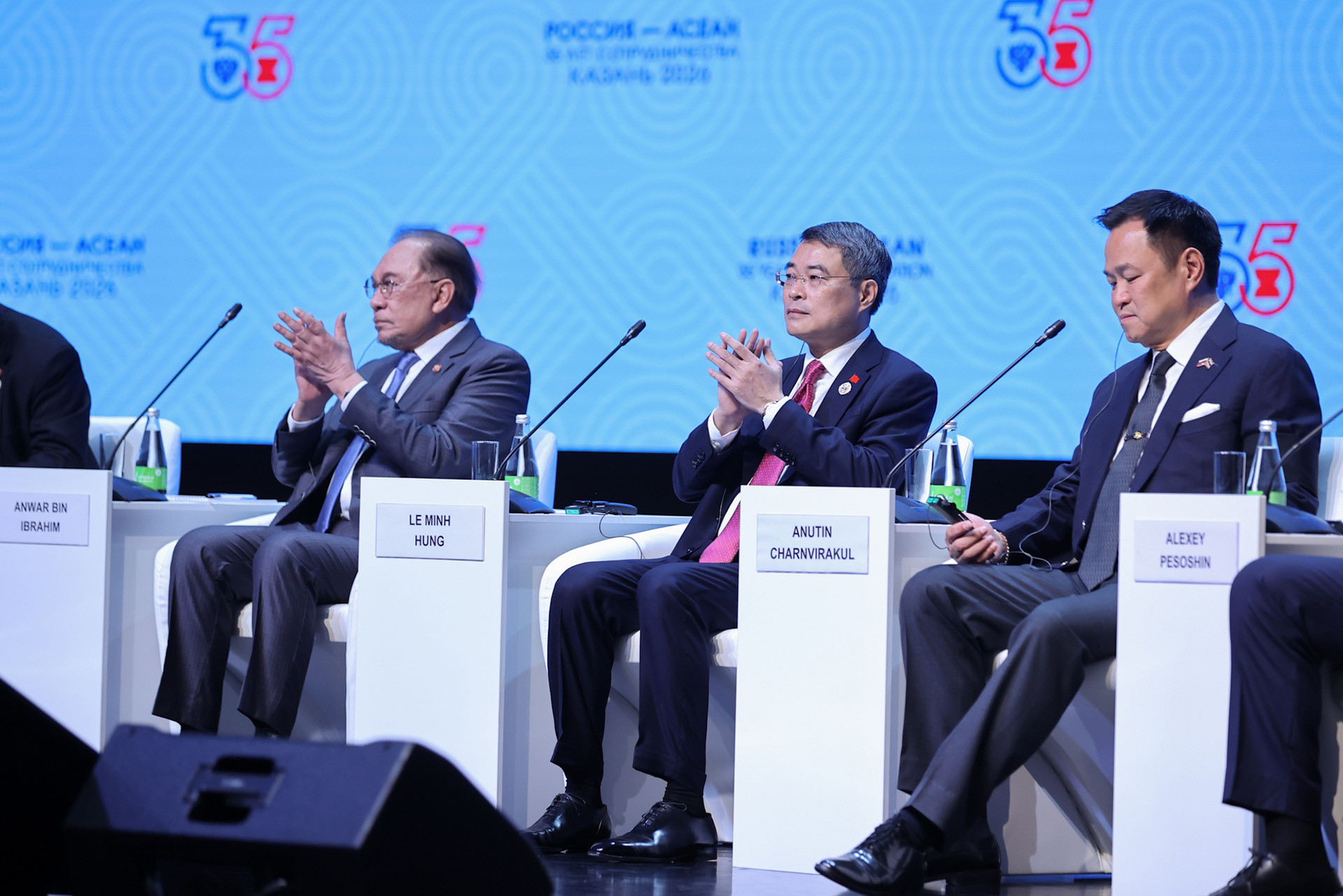
With a combined population of around 850 million people, ASEAN and Russia possess significant potential for expanded cooperation across a wide range of sectors, participants noted. Amid disruptions to global energy and food supply chains, energy security and food security have emerged as timely priorities that align closely with the needs of both sides.
ASEAN's young and increasingly connected population also presents major opportunities for collaboration in information technology, digital transformation and artificial intelligence. The region is home to an estimated 220 million people aged between 15 and 34, while about 75 percent of its population has broad internet access.
Addressing the forum, Prime Minister Le Minh Hung said the event provided an opportunity to discuss strategic directions for broader, more substantive, better connected and more resilient future cooperation.
He noted that amid increasingly rapid and complex global changes, the need for trusted partners, stable markets and resilient supply chains has become more urgent than ever.
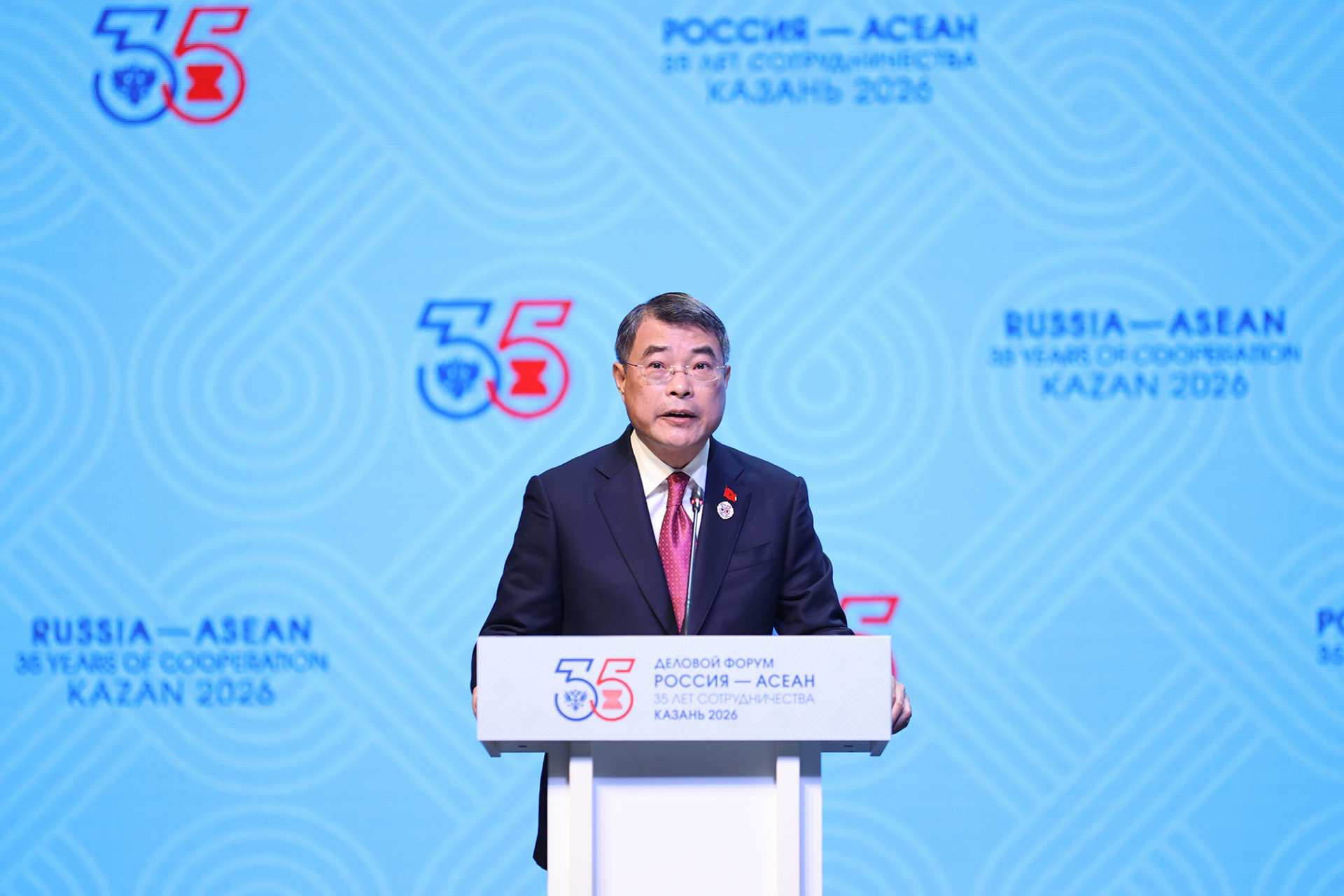
The Vietnamese leader proposed developing sustainable supply chains and expanding trade and investment cooperation. He said ASEAN and Russia should work together to build stable, flexible and resilient supply networks capable of withstanding external shocks.
The development of transportation routes linking Russia’s Far East with Southeast Asia, including maritime and railway connections, would help narrow geographical distances, facilitate trade and create new investment opportunities for businesses on both sides, he said.
Hung also encouraged businesses to make better use of existing economic cooperation frameworks, particularly free trade agreements between the Eurasian Economic Union and several ASEAN countries. Vietnam, he added, stands ready to serve as a bridge to strengthen trade and investment ties between ASEAN and the Eurasian Economic Union, especially Russia.
Vietnam seeks practical clean energy cooperation
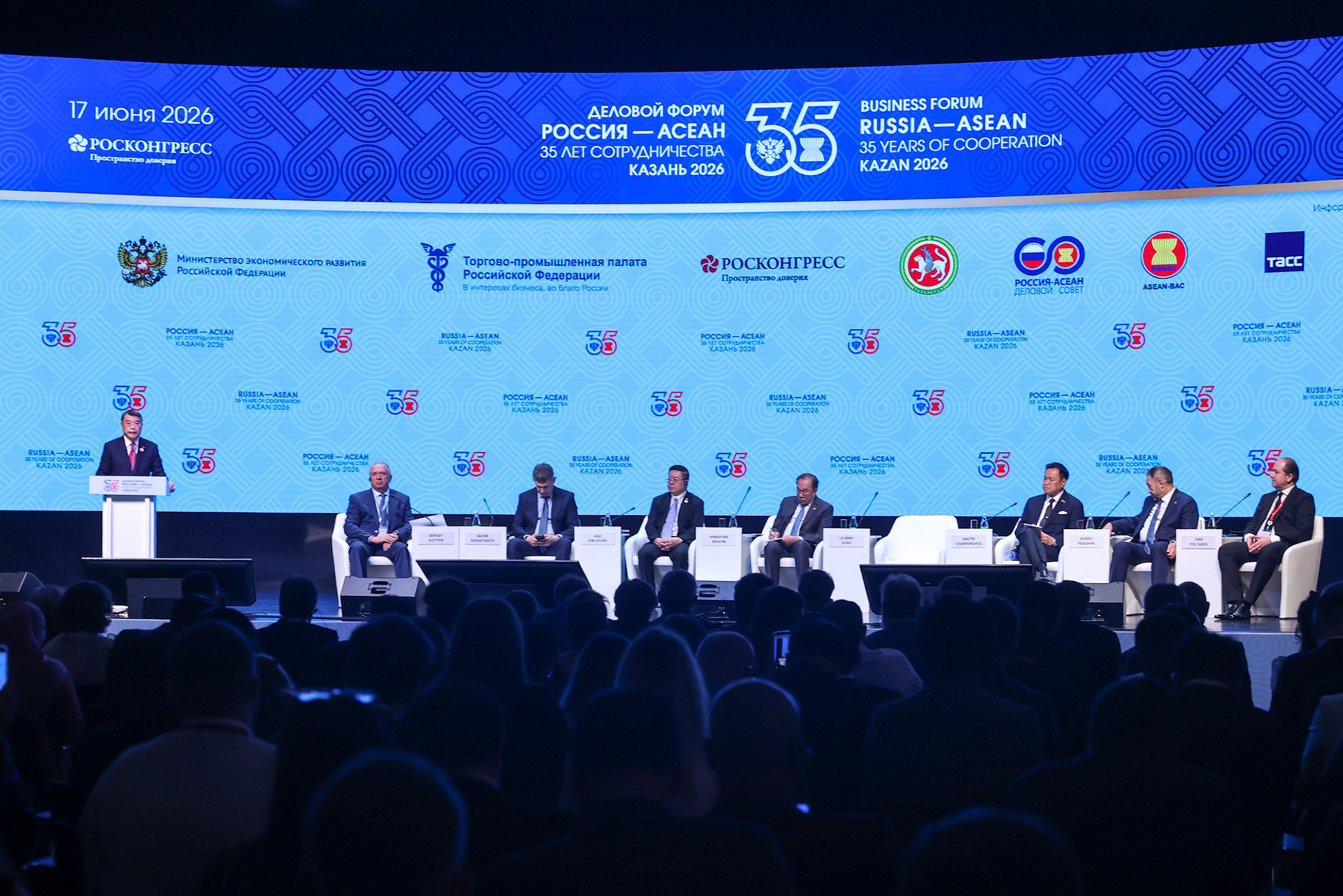
The prime minister identified energy as a key pillar of future ASEAN-Russia relations.
Energy security remains one of the most pressing challenges facing sustainable growth and development, he said. Considerable opportunities remain for investment and cooperation in clean energy, liquefied natural gas, hydrogen, offshore wind power and energy-saving technologies.
Energy cooperation has long been a cornerstone of Vietnam-Russia relations. Hung said Vietnam hopes to work with Russia and ASEAN partners to develop practical projects in clean energy and green technology, contributing to regional energy security and stability.
The third strategic priority highlighted by Hung was cooperation in technology, innovation and digital transformation.
He described ASEAN, and Vietnam in particular, as one of the world’s fastest-growing digital markets. In Vietnam, science, technology and innovation have been identified as key drivers of development in the country's next phase of growth.
Vietnam welcomes and is ready to facilitate deeper cooperation by Russian companies in fields such as artificial intelligence, cybersecurity, digital education and digital healthcare, he said.
The prime minister also proposed expanding innovation programs, supporting technology startups and young enterprises, and building a dynamic innovation ecosystem that connects business communities across ASEAN and Russia.
While governments are responsible for creating transparent, stable and business-friendly environments, Hung emphasized that companies are the real pioneers in translating partnerships into practical results and connecting economies.
He expressed hope that ASEAN and Russian businesses would continue making long-term investments and jointly build new value chains that deliver mutual benefits.
“Vietnam is ready to work with Russia and ASEAN countries to transform potential into concrete projects, connections into business opportunities and trust into new growth momentum,” he said.
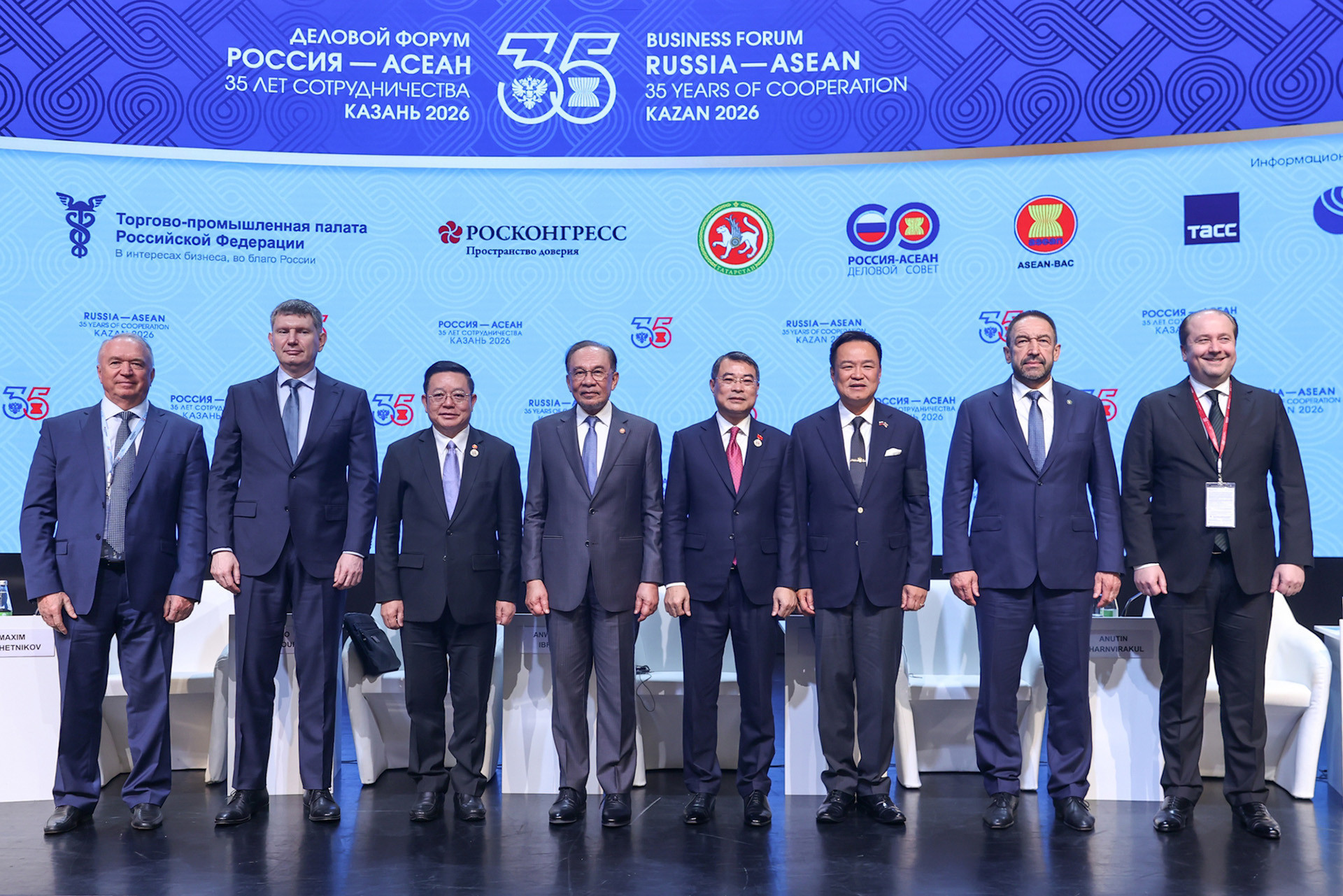
Malaysian Prime Minister Anwar Ibrahim said growing geopolitical tensions mean that no country, regardless of its size, can address global challenges alone. He stressed that dialogue, trust-building, practical cooperation, policy coordination, the removal of tariff barriers and support for a rules-based multilateral trading system remain the most effective path forward for ASEAN-Russia relations.
Thai Prime Minister Anutin Charnvirakul said rapid technological advances and instability in global supply chains present both opportunities and challenges for the region. He proposed focusing on three priorities: connectivity, trade and investment, and people-to-people exchanges.
According to Anutin, connectivity forms the foundation for economic activities, while energy cooperation and food security should remain key priorities. People-to-people exchanges should focus on tourism, wellness services and the creative economy.
Tran Thuong
.svg)
