 Vietnamnet.vn

 Podcast



Chairing a working session with the ministry in Hanoi on April 22, the PM reviewed the implementation of tasks for 2026, key bottlenecks, and priorities for the time ahead.
The meeting noted that, building on the 2021–2025 term, the sector has set high determination from the outset of 2026 to fulfil its targets, laying a foundation for the next development phase and the successful implementation of the 14th National Party Congress Resolution and the 2026–2030 socio-economic development plan.
The ministry has focused on institutional reform, industrial production, energy security, trade development, and improving governance and competitiveness. Participants also highlighted ongoing challenges and emerging issues requiring attention.
PM Hung commended the sector’s efforts in overcoming difficulties and achieving important results, particularly in proposing breakthrough policies on fuel supply amid challenging conditions.
He stressed that achieving double-digit growth is a demanding goal. The performance of the industry and trade sector will be critical to meeting this target, he said, urging it to take a leading role in addressing bottlenecks and boosting production and business activities.
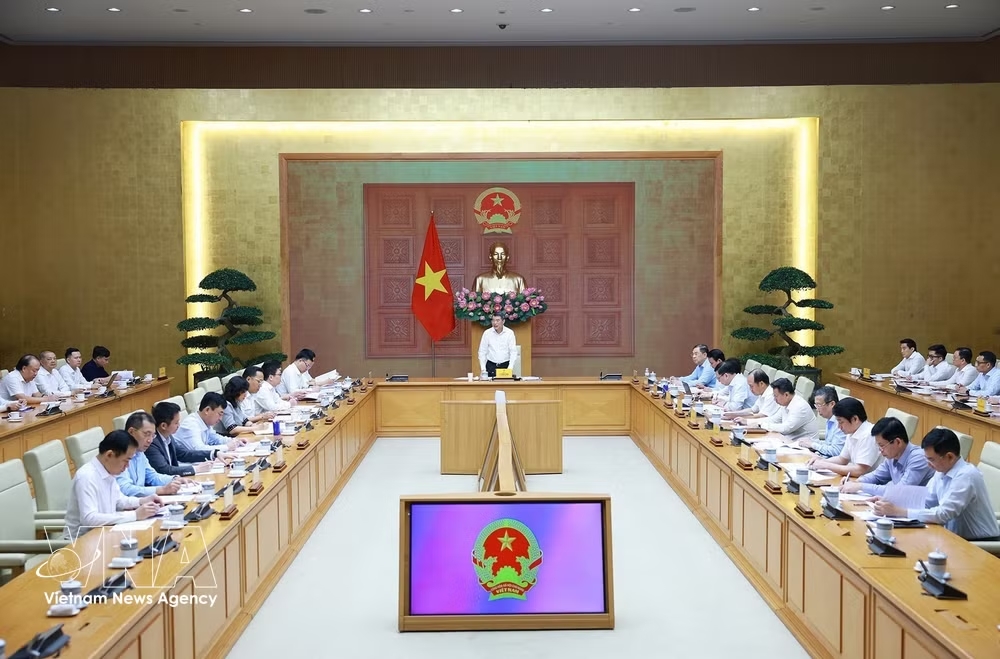
The PM called on the ministry to swiftly implement the Government’s action programme for the 14th Party Congress Resolution and Conclusion No. 18, with clear targets, tasks, timelines and accountability assigned to relevant units, enterprises and localities.
He emphasised the need to strengthen Party building within the ministry, improve personnel quality, and promptly replace underperforming officials. The ministry must also accelerate institutional reforms and complete draft laws for submission to the second session of the 16th National Assembly, including amendments to laws on petroleum, electricity, trade, and commodity derivatives, as well as a draft Law on Key Industries.
The ministry was tasked with coordinating with relevant ministries to review and refine regulations on functions and responsibilities, ensuring clear delineation of authority and avoiding overlaps, in line with Conclusion No. 18, under the principle of “one task – one lead agency.” It must also continue to promote decentralisation, simplify administrative procedures and business conditions, and streamline its organisational apparatus.
Emphasising the need to ensure energy security and a just energy transition, the PM made clear that the industry and trade sector bears responsibility for preventing any shortages of electricity and fuel in all circumstances.
Relevant agencies were asked to review and update Power Development Plan VIII, supplement base-load power projects using new technologies, accelerate power project implementation, and coordinate with the Ministry of Agriculture and Environment to optimise hydropower operations. The sector must also restructure the fuel distribution system to reduce intermediaries and costs, develop national fuel reserves, and promote the use of E10 petrol.
At the same time, the ministry should step up restructuring of industrial and supply chains, promote in-depth industrial development, enhance domestic production capacity, and help shape a new growth model. It should accelerate major industrial projects, strengthen linkages between domestic and FDI enterprises, and enable Vietnamese firms to participate more deeply in global supply chains. Efforts should also focus on improving import-export efficiency, diversifying export markets, preparing negotiation plans for reciprocal tariffs with the US, effectively leveraging signed FTAs, negotiating new agreements, and improving the performance of Vietnam’s trade offices abroad.
The PM also directed the acceleration of digital transformation and the modernisation of domestic distribution systems. This includes developing sectoral databases linked to national systems, restructuring administrative procedures based on data reuse, promoting domestic market development, strengthening market management, and strictly handling violations to ensure a healthy and sustainable market environment./. VNA
.svg)
