 Vietnamnet.vn

 Podcast



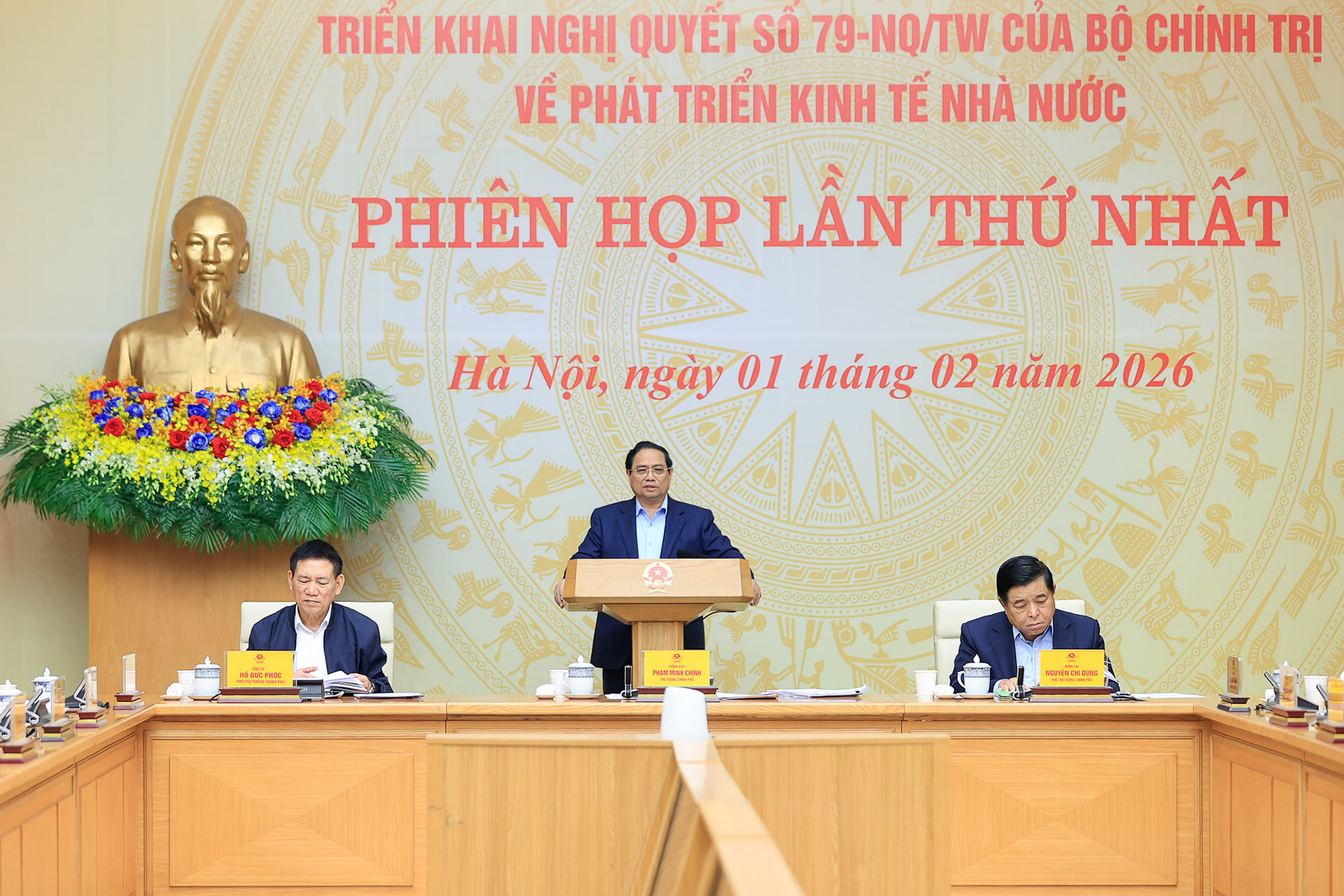
The decision, signed by the Prime Minister himself, formalizes a broad inter-ministerial structure to carry out key reforms and strategic planning related to state-owned assets and enterprises.
Broad leadership across government sectors
Deputy Prime Ministers Nguyen Chi Dung (standing deputy), Ho Duc Phoc, and Finance Minister Nguyen Van Thang will serve as vice chairmen of the committee.
Committee members include senior figures from nearly every major ministry: Finance, Construction, Agriculture and Environment, Home Affairs, National Defense, Public Security, Foreign Affairs, Industry and Trade, Culture-Sports-Tourism, Health, Ethnic and Religious Affairs, Science and Technology, Justice, and the Government Office. Representatives from the State Bank, Government Inspectorate, and Ministry of Education and Training are also included.
The body will also bring in leaders from Party and National Assembly offices, the Central Economic Committee, State Audit, and major state-owned enterprises such as Vietnam Airlines, Viettel, EVN, Vinacomin, and Vietnam National Energy Group.
Coordinating Vietnam’s state economic overhaul
The committee is charged with high-level coordination and advising the Prime Minister on matters related to the development of the state economy. It will propose strategic solutions, coordinate policy, and ensure cross-sectoral cooperation to address complex economic issues that span multiple ministries.
Regular meetings will be convened by the Prime Minister, with flexibility for vice chairmen to lead sessions when needed.
Resolution 79, issued by the Politburo on January 6, 2026, is the first comprehensive policy document to define the full scope of the state economy. It identifies nine core components: land and natural resources, infrastructure assets, the state budget, national reserves, extra-budgetary financial funds, state capital in enterprises (including those with under 50% state ownership), wholly state-owned enterprises, state credit institutions, and public service units.
Defining principles for a modern state economy
The resolution lays out five guiding principles for the role of the state economy:
Maintain its leading role in a socialist-oriented market economy.
Ensure macroeconomic stability and key national balances.
Operate under equal legal status with all other economic sectors.
Pioneer innovation and drive development.
Strengthen Party leadership over the state economy.
These principles are intended to support a self-reliant, resilient, and globally integrated national economy while safeguarding economic security.
Targets to 2030 and vision to 2045
Resolution 79 includes ambitious targets and a long-term roadmap, setting specific goals for 2030 and a vision for 2045. It outlines 37 strategic measures across the nine pillars of the state economy to enhance governance, asset efficiency, competitiveness, and integration.
One notable innovation includes a pilot mechanism for appointing and hiring general directors at state enterprises through open recruitment - marking a significant shift toward professionalizing leadership in state firms.
Tran Thuong
.svg)
