 Vietnamnet.vn

 Podcast



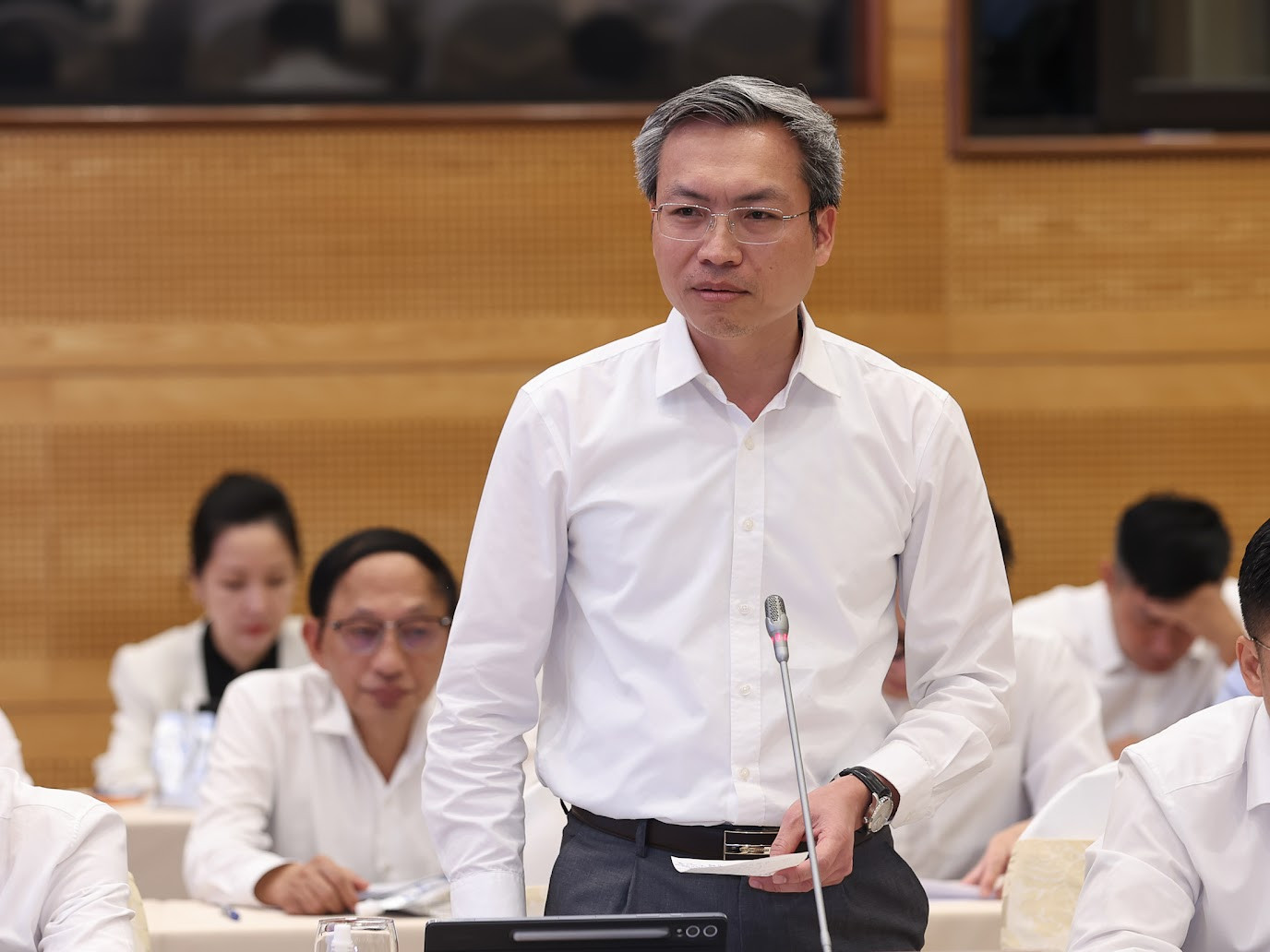
Speaking at the government's regular monthly press conference on July 4, Major General Nguyen Quoc Toan, Chief of the Ministry's Office and the ministry's spokesperson, updated reporters on the investigation.
He said the case has attracted widespread public attention and is being handled as part of the ministry's broader campaign against fraud and property appropriation crimes.
The ministry has instructed investigators to uncover the full criminal network while maximizing the recovery of assets allegedly taken from members of the public.
Police in Hanoi and Ho Chi Minh City have received about 2,500 complaints, petitions and crime reports related to this type of alleged fraud.
Based on those reports, investigators have launched four criminal cases, prosecuting 525 suspects on charges of fraud involving the appropriation of property. Two additional suspects have been charged with both fraud and money laundering.
Preliminary estimates indicate that victims lost approximately VND 2.6 trillion (about US$99.2 million).
Major General Nguyen Quoc Toan said authorities are working intensively to investigate the cases, prosecute those responsible and recover stolen assets.
Four common characteristics of the alleged fraud
Describing the methods used, the ministry's spokesperson said the suspects established companies operating under the guise of investment and business cooperation, primarily in tourism, resort development, healthcare and medical services.
The schemes mainly targeted financially secure individuals, including middle-aged and older people, as well as consumers interested in travel and healthcare services.
"The most fundamental tactic is psychological manipulation to facilitate fraudulent activities," Nguyen Quoc Toan said, outlining four common characteristics of the schemes.
First, the companies promoted offers featuring free gifts, complimentary services, unusually high returns and generous incentives.
"These are the common keywords used to influence victims psychologically," he said.
Second, the suspects created a sense of urgency by promoting limited-time offers and exclusive incentives, encouraging customers to sign contracts and make immediate payments.
Third, participants were always required to pay money upfront with the expectation of receiving future profits or investment returns.
Fourth, customers were ultimately unable to recover their money. When they attempted to terminate contracts or withdraw funds, they were generally unable to do so. Instead, the suspects allegedly continued to provide excuses, impose additional procedures and make further promises in an effort to persuade victims to pay even more money.
Major General Nguyen Quoc Toan said investigators in Hanoi and Ho Chi Minh City are continuing to examine the cases.
He urged anyone who believes they may have experienced similar schemes or whose cases may be connected to the ongoing investigations to contact police and provide information, both to assist investigators and to protect their own legal rights.
The ministry also warned the public to remain cautious about investment or business opportunities advertised with promises of free benefits, generous incentives, gifts, unusually high returns or exceptionally attractive employment offers.
When encountering such offers, consumers should carefully verify all relevant information before making financial decisions.
The spokesperson noted that similar psychological tactics are widely used not only in vacation ownership contract scams but also in online fraud and other forms of high-tech crime.
For vacation ownership contracts and similar investment arrangements, he advised the public to carefully research the companies, projects and products involved before deciding to invest or participate.
"If there are any suspicious signs, people should carefully verify the information and immediately report suspected fraud to the competent authorities or the police," Major General Nguyen Quoc Toan said.
Tran Thuong
.svg)
