 Vietnamnet.vn

 Podcast



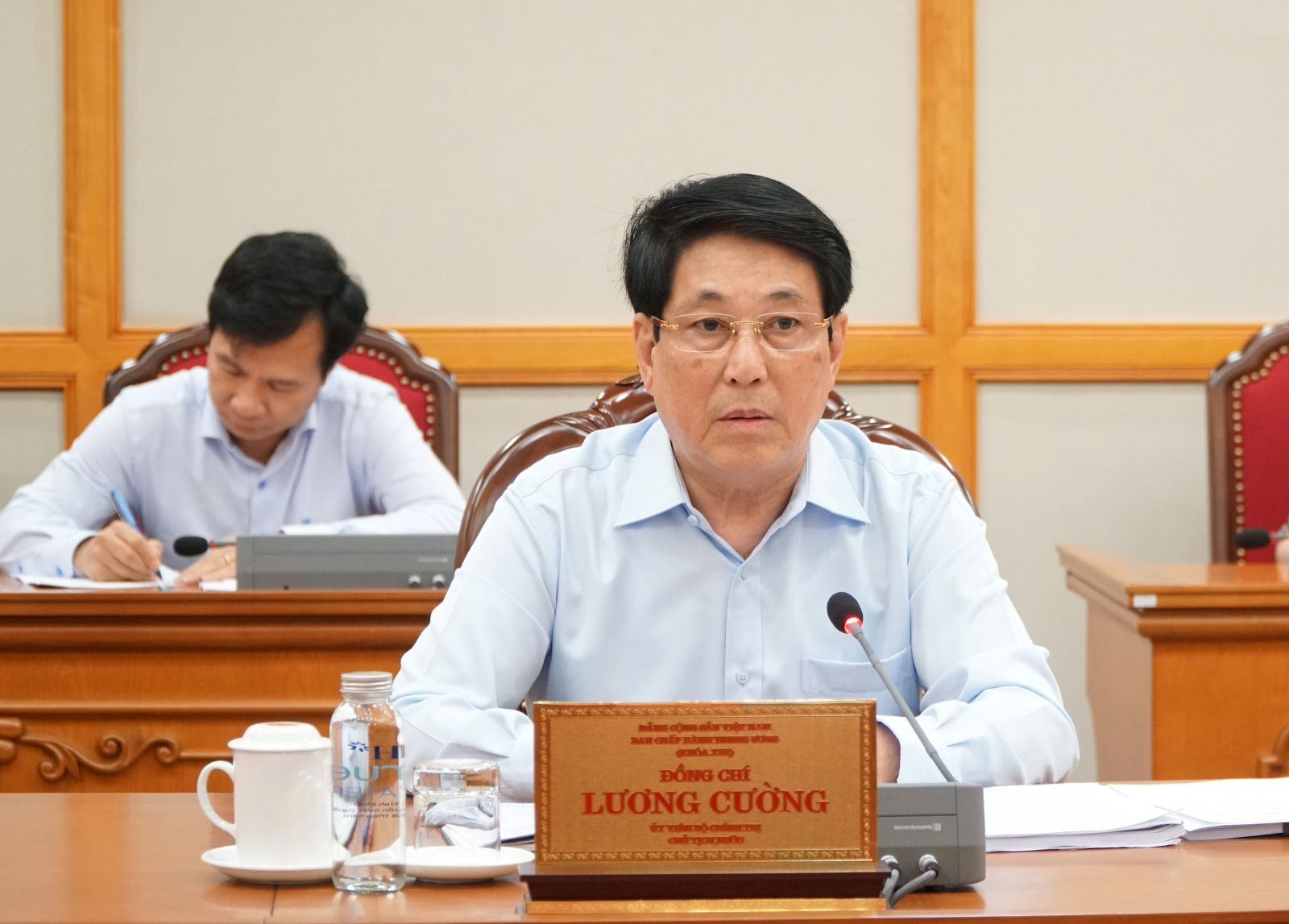
The sessions aimed to review and provide feedback on key draft documents and personnel strategies for the upcoming Party Congresses of these provinces for the 2025-2030 term.
Working Group 1 was chaired by President Luong Cuong; Group 3 by National Assembly Chairman Tran Thanh Man; and Group 4 by Standing Secretary of the Party Central Committee Tran Cam Tu.
The working groups listened to presentations and shared opinions on the primary draft documents to be submitted at the provincial Party Congresses. These include the political report, self-assessment report on leadership by the provincial Party executive committee for the 2020-2025 term, the personnel project for the 2025-2030 term, the draft resolution of the congress, the action plan for implementation, and reports addressing feedback from central-level agencies and preparations for the congresses.
Members of the Politburo, the Party Central Secretariat, and other participants generally endorsed the draft documents from the Party Committees of Dong Nai, Vinh Long, Dong Thap, Quang Tri, Thai Nguyen, and Phu Tho.
The delegates noted that the draft documents effectively summarized the achievements over the past five years, candidly identified limitations and lessons learned, and proposed development orientations, goals, tasks, and solutions for 2025-2030. These reflect strong political determination, developmental vision, and alignment with key guidelines in the draft documents for the 14th National Party Congress and recent resolutions from the Party Central Committee and Politburo.
Delegates recommended the provinces further clarify their outstanding achievements and remaining limitations, assess their unique strengths and resources more thoroughly, and incorporate strategic guidance for the next stage of development.
Finalizing Party congress documents
Concluding the working session, President Luong Cuong urged Phu Tho’s Party Committee to refine its action program for implementing the congress resolution, clearly define priority and breakthrough areas, and propose feasible, impactful solutions to effectively mobilize resources. The goal is for Phu Tho to become a major industrial, commercial, logistics, tourism, healthcare, and education hub by 2030, with strong cultural development rooted in its national heritage.
For Dong Nai, President Luong Cuong emphasized the need to identify the province’s strategic position within the southern economic region and the country at large, across economic, cultural, social, defense, and security dimensions.
He suggested Dong Nai carefully assess factors influencing future development, define specific directions for various economic sectors, enhance regional transportation infrastructure connectivity, and position the province as a multi-regional, multi-center gateway. Dong Nai should also focus on spatial planning with long-term strategic vision, clear priorities, consistent execution, and policies to attract talent and develop a highly skilled workforce, while ensuring strong social welfare programs.
All provinces were urged to pay special attention to Party building efforts, uphold principles and discipline, address weaknesses and past shortcomings, and enhance the leadership capacity and combat strength of Party organizations.
At the working session with Dong Thap, National Assembly Chairman Tran Thanh Man called on the provincial Party Committee to mobilize all resources to build a fast-growing, sustainable economy, turning the province into a growth engine for the Mekong Delta. He highlighted Dong Thap’s strategic gateway position for regional maritime and logistics development.
For Quang Tri, Tran Thanh Man encouraged the provincial Party Committee to leverage unity, self-reliance, and the province’s revolutionary legacy to maximize available resources and pursue fast, sustainable economic development. He highlighted energy and high-tech industries as growth drivers and called for premium tourism development, with the goal of positioning Quang Tri as a new economic growth hub.
Concluding the session with Vinh Long, Standing Secretary Tran Cam Tu commended the province’s Party Congress preparations. He advised the province to incorporate feedback from Politburo and Secretariat members and central agencies to finalize the congress documents, integrate key national directives, and push for institutional reforms to drive local development.
Regarding Thai Nguyen, Tran Cam Tu emphasized the need to strengthen Party and political system building, ensure national defense and security, and promote the province’s solidarity, distinct identity, and sustainable growth. He urged the province to enhance quality of life and become a modern industrial hub with above-average income by 2030.
He also advised the provincial Party Committee to outline specific roadmaps, allocate resources effectively, and set clear timelines for achieving development goals. In addition, public communications before, during, and after the congress should foster a united, forward-looking spirit among residents.
The working groups urged provincial Party Committees to carefully study and incorporate feedback from the Politburo, Secretariat, and central ministries to improve the documents for their respective congresses.
They also stressed the importance of contributing to the draft documents of the 13th Party Central Committee to be presented at the 14th National Party Congress. Finally, the teams emphasized the need to strengthen communication efforts throughout the congress cycle and ensure the success of these important political events.
Tran Thuong
.svg)
