 Vietnamnet.vn

 Podcast



Prime Minister Pham Minh Chinh has signed an urgent directive outlining a series of priority actions to help meet Vietnam’s growth targets for 2026. Among them is a call to accelerate the research and assessment of a proposed national gold exchange, with a report to be submitted to the Government this month.
To successfully implement the 14th National Party Congress Resolution, the Prime Minister instructed ministries, agencies, and local authorities to act with urgency, decisiveness, and efficiency. He emphasized the importance of closely monitoring both global and domestic developments, enhancing policy analysis and forecasting, and ensuring swift, flexible responses to avoid passivity and surprises.
In terms of fiscal and monetary policy, the Ministry of Finance is tasked with tightening fiscal discipline, ensuring accurate and timely tax collection, and broadening the revenue base. A particular focus is placed on reducing tax losses in sectors such as e-commerce, food services, and retail. The Government aims to increase state budget revenue in 2026 by at least 10% compared to 2025 estimates.
The directive also calls for the continued implementation of tax relief measures - including reductions and deferrals of taxes, fees, and land rents - to support citizens and businesses, particularly small and medium-sized enterprises.
The State Bank of Vietnam is to take the lead in closely monitoring economic developments and adjusting monetary policy proactively and efficiently. Coordination with fiscal policy is essential to promote growth, stabilize the macroeconomy, manage inflation, and maintain key economic balances.
Interest rates and exchange rates should be adjusted in line with macroeconomic conditions and monetary policy goals, while maintaining tight control over the foreign exchange market and preserving the value of the Vietnamese dong.
The central bank is also instructed to guide credit institutions toward safe and efficient credit growth, directing capital flows into productive sectors, priority industries, and key growth drivers. Credit programs should continue, especially those related to social housing, infrastructure development, digital transformation, and the production and export of high-quality rice.
A key highlight of the directive is the instruction to quickly finalize research and evaluation on the formation of a national gold exchange. A comprehensive report is to be presented to the Government Standing Committee by the end of January.
State-owned economic groups and general corporations are urged to play a leading role in economic growth, improve corporate governance, and strive for revenue or production growth of at least 10% in 2026. They are also required to accelerate progress on critical infrastructure projects and propose new investment initiatives.
Pushing for full disbursement of public investment
In terms of investment, ministries and local governments must closely monitor and expedite detailed public investment plans, ensuring effective disbursement from the beginning of the year. The goal is to achieve 100% disbursement of the capital allocated by the Prime Minister.
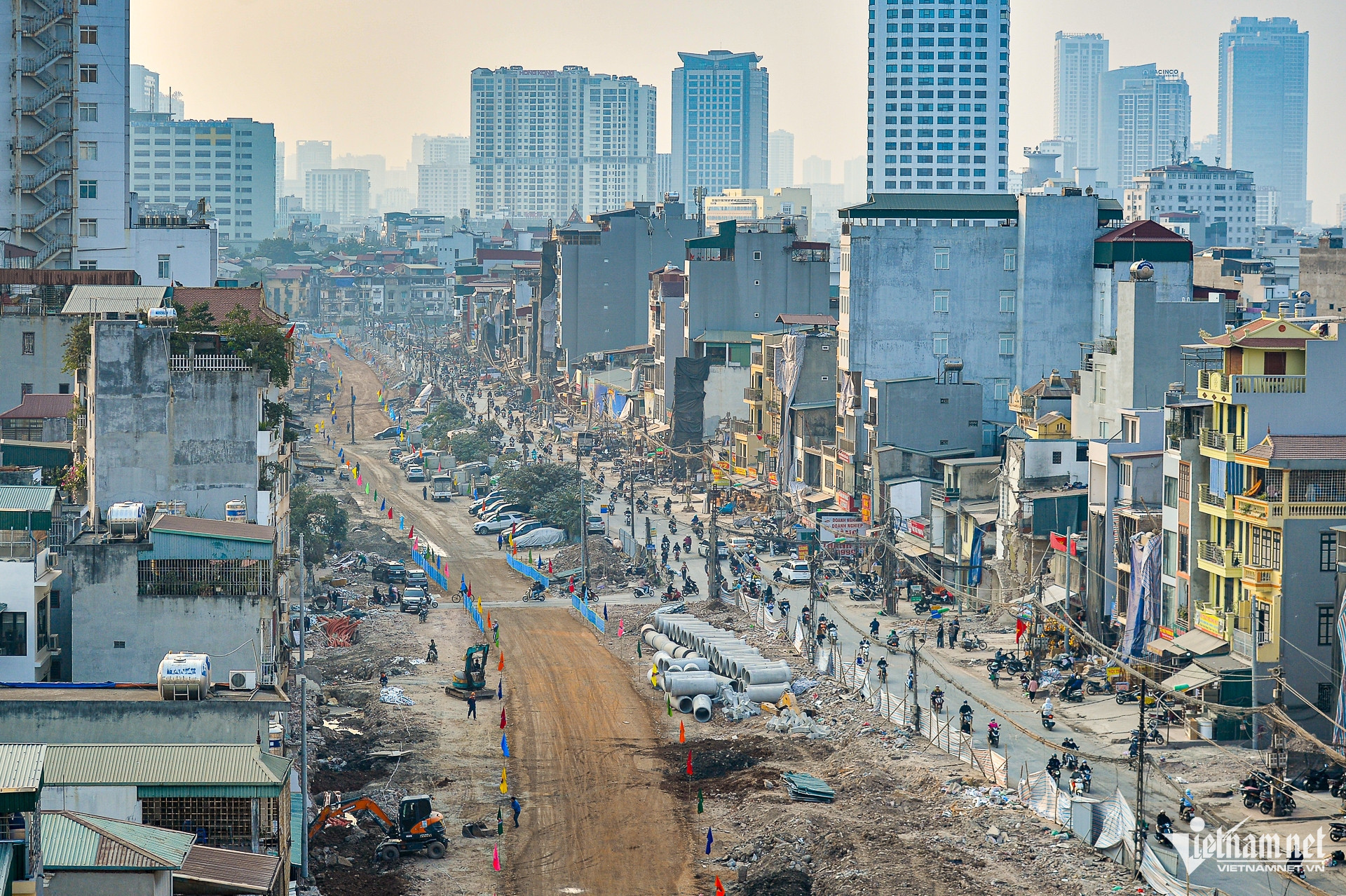
The Ministry of Construction and related agencies must urgently review and propose upgrades to existing expressways, ensuring they meet full highway standards.
The directive calls for maximizing the National Housing Fund and accelerating social housing development, especially rental units. The Government targets the completion of over 110,000 social housing units in 2026, with the aim of reaching 1 million units by 2028.
The Prime Minister has also instructed relevant bodies to expedite feasibility studies for Phase 2 of the Lao Cai–Hanoi–Hai Phong railway project, with the aim of breaking ground on key components by Q2.
Other transport directives include completing surveys and designs for international and regional railway connections, segments of the North–South high-speed rail, and key road networks linking newly merged administrative units, economic zones, and neighboring countries. These include regional ring roads for Hanoi and Ho Chi Minh City.
Regarding aviation infrastructure, the Government will study the next phase of Long Thanh International Airport, ensure progress at Gia Binh International Airport and Tho Chu Airport (An Giang), and advance plans for potential deepwater ports such as Can Gio, Hon Khoai, and others.
Stabilizing consumption and markets
The Ministry of Industry and Trade and local authorities are tasked with boosting domestic production and ensuring uninterrupted supply of essential goods. Price control and market stabilization are critical, with strict penalties for price manipulation or hoarding.
The Government will intensify efforts to combat smuggling, trade fraud, counterfeit goods, and intellectual property violations. It also seeks to improve the quality of services, particularly in food, accommodation, and domestic tourism, while ramping up international tourism promotion.
Finally, the Ministry of Finance, the People’s Committees of Ho Chi Minh City and Da Nang, and relevant agencies have been directed to accelerate the operation and integration of Vietnam’s international financial centers.
Tran Thuong
.svg)
