 Vietnamnet.vn

 Podcast



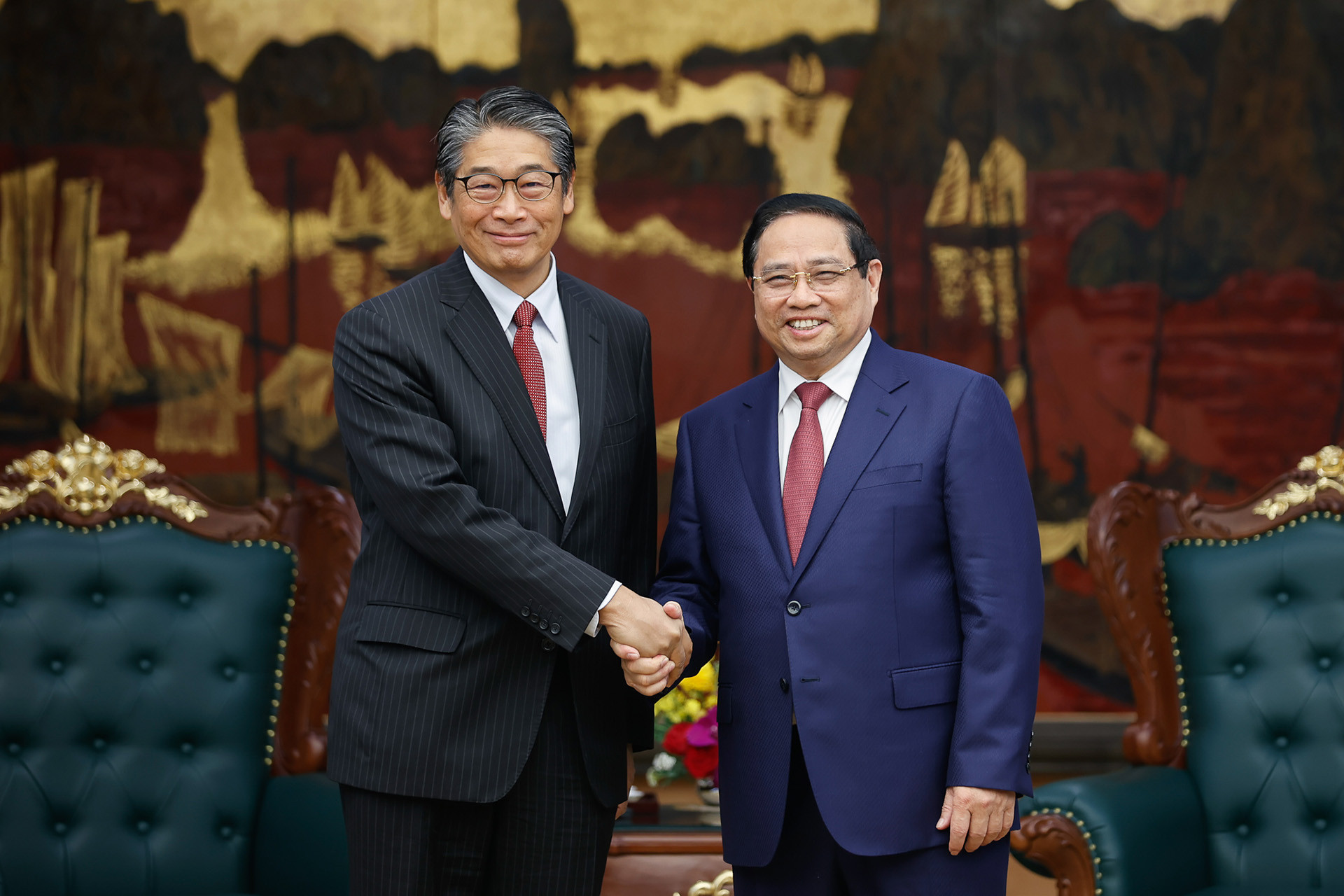
Prime Minister Pham Minh Chinh has sent a letter to Japanese Prime Minister Takaichi, proposing that Japan consider supporting Vietnam by providing crude oil from its national reserves, as part of efforts to safeguard energy security.
The proposal was highlighted during a meeting on the morning of March 17 between Prime Minister Pham Minh Chinh and Japanese Ambassador to Vietnam Ito Naoki.
The Prime Minister expressed appreciation for the ambassador’s active contributions in strengthening Vietnam - Japan relations over the past two years. He reaffirmed that bilateral ties remain strong and unhindered, noting that 2026 marks an important milestone as both countries enter a new phase of development with breakthrough-oriented programs and plans.
He emphasized the need to further deepen cooperation across key areas, including economy, trade, investment, defense, security, education and training, culture, tourism and people-to-people exchanges. At the same time, both sides should expand collaboration into emerging fields such as science and technology, innovation, digital transformation, green transition, semiconductors and energy.
Sharing concerns over increasingly complex security developments in the Middle East, particularly rising risks to transport routes through the Strait of Hormuz and disruptions to crude oil supply chains to Asian markets, including Vietnam and Japan, the Prime Minister said he had formally requested Japan to consider appropriate support measures.
These include direct assistance through the provision of crude oil from Japan’s reserves, or indirect support by allowing the Nghi Son Refinery to diversify its crude input sources from alternative partners. Such measures would help ensure Vietnam’s energy security while minimizing negative impacts on businesses from both countries involved in the project.
On this occasion, the Prime Minister also called on the ambassador to advocate for the financial restructuring and operational optimization of the Nghi Son Refinery.
Within the framework of the Comprehensive Strategic Partnership between the two nations, he further proposed that Japan facilitate Vietnam’s access, through appropriate mechanisms, to oil from a planned release of 80 million barrels from Japan’s reserves, aimed at easing pressure on global fuel prices caused by Middle East tensions.
The Prime Minister also acknowledged Japan’s cooperation in the Block B gas project and the O Mon III thermal power plant. He urged Japanese enterprises participating in these projects to accelerate the progress of the O Mon II thermal power plant to ensure alignment with the expected gas flow from Block B once exploitation begins.
Addressing challenges in securing aviation fuel supply, he called on Japan to support Vietnam in accessing aviation fuel from its reserves, reflecting the spirit of mutual assistance within the bilateral partnership.
Vietnamese leadership expressed confidence that through continued cooperation and mutual support, both countries will not only overcome current challenges but also further strengthen their enduring partnership.
Agreeing with the Prime Minister’s assessment of the global economic impacts stemming from Middle East developments, Ambassador Ito Naoki said Japan is actively engaging with Vietnamese agencies on bilateral cooperation, including addressing Vietnam’s energy challenges.
He affirmed that he would report the Prime Minister’s proposals to the Japanese government and relevant authorities for consideration.
Japan has already decided to release oil reserves and called on G7 countries to do the same in order to increase supply to the global market.
The ambassador also noted that Japan is positively considering Vietnam’s proposals related to diversifying crude supply sources, restructuring the Nghi Son Refinery, advancing the Block B - O Mon gas-to-power chain, and supporting aviation fuel supply. In parallel, Japan is working to mobilize financing and resolve obstacles for LNG power projects in Vietnam under the Asia Zero Emission Community (AZEC) initiative, contributing to the country’s energy security.
He also expressed strong interest in Vietnam’s recent reforms and long-term development strategy, particularly its goal of achieving double-digit economic growth, reaffirming Japan’s commitment to accompanying Vietnam in this process, especially in science and technology, innovation, digital transformation and green transition.
Earlier, on the afternoon of March 16, Prime Minister Pham Minh Chinh held a phone call with Angolan President João Manuel Gonçalves Lourenço.
During the call, he proposed that Angola further support Vietnam in securing crude oil and gas supplies, and coordinate to accelerate the implementation of a memorandum of understanding on oil and gas cooperation between the Vietnam Oil and Gas Exploration and Production Corporation (PVEP) and Angola’s Sonangol E&P, as well as related activities involving Xuan Thien Group.
Sharing Vietnam’s concerns over energy security, President João Manuel Gonçalves Lourenço agreed to strengthen energy cooperation between the two countries in line with the Prime Minister’s proposals.
Tran Thuong
.svg)
