 Vietnamnet.vn

 Podcast



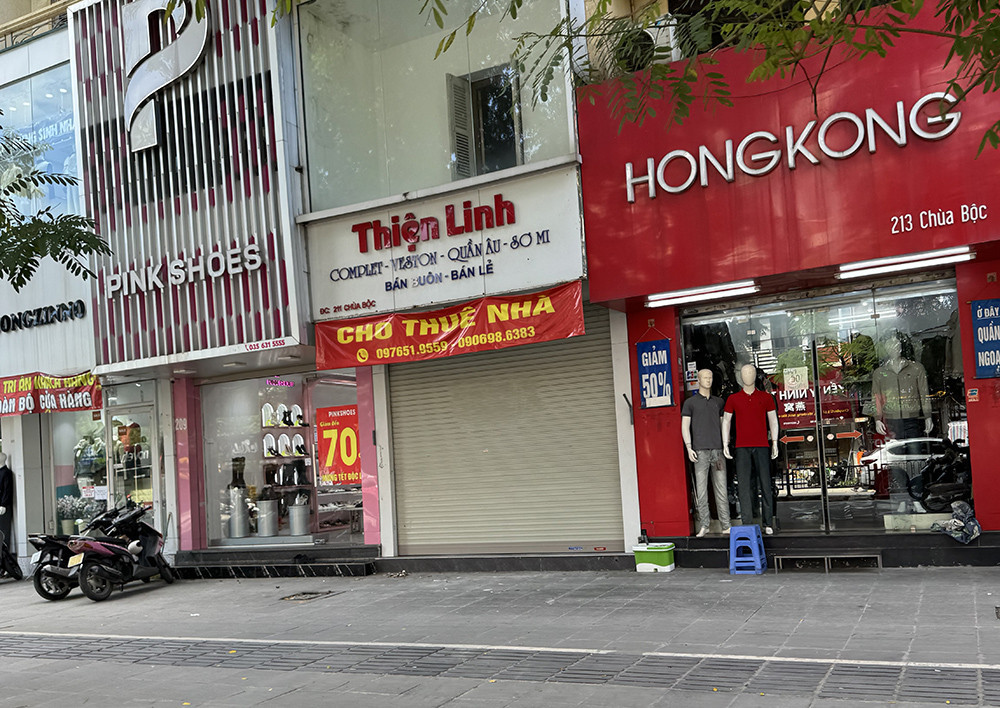
With the length of more than 1 kilometer, Chua Boc is one of the most bustling fashion business streets in Hanoi, gathering many well-known brands, from small shops to high-end showrooms.
Beyond fashion, Chua Boc is also home to offices of several bank branches, technology stores, and other service businesses. Thanks to its proximity to major universities such as Water Resources University, Trade Union University, Hanoi Medicine University and Banking Academy, the street is always crowded with students and young customers.
Houses on this street are always sought after thanks to their prime location and sidewalks 5-10m wide. Commercial spaces here are considered highly effective for business. Previously, finding a house with a “for rent” sign was almost impossible, as most spaces were quickly filled.
Recently, fashion business activities on this street have shown signs of slowing down, and some stores have had to shut down. Many commercial spaces are now being advertised for rent but attract little interest.
However, according to Thanh, a sales staff working on Chua Boc Street, even if left vacant for a long time, rental prices remain high. Rental income from the ground floor alone usually ranges from VND80-170 million per month, allowing property owners to earn VND1-2 billion a year while “doing nothing.”
Property owners can use the space for various types of businesses, including fashion, F&B, services, banking, or technology product stores. Even though some shops struggle, leasing ground-floor spaces here remains relatively quick. With limited land in the inner city, central streets like Chua Boc are often considered stable income-generating rental assets.
Sky-high property prices
Market observations show that the slowing fashion sector has led to more rental listings along this street. However, both rental rates and house prices on Chua Boc remain among the highest in Hanoi.
Tung, a real estate broker, said houses on Chua Boc Street have reached VND950 million to more than VND1.2 billion per sqm. Actual transactions depend on a number of factors such as location, size, frontage width, number of floors, legal status, and rental or business potential.
Real estate on Chua Boc attracts not only business owners but also investors. For example, with a 50 sqm property priced at VND60 billion and a ground-floor rent of VND120 million per month, the owner can earn VND1.44 billion annually, or around 2.4 percent per year in profit, not including potential land price increases of 15-25 percent annually. Compared to bank savings, this return is 4-5 times higher.
Houses in small alleys range from VND200-300 million per sqm, while those accessible by car can reach VND300-400 million per sqm. Although cheaper than main-street properties, these homes still attract buyers thanks to strong business and rental potential, especially near universities where student and office rental demand is always high.
Duy Anh
.svg)
