 Vietnamnet.vn

 Podcast



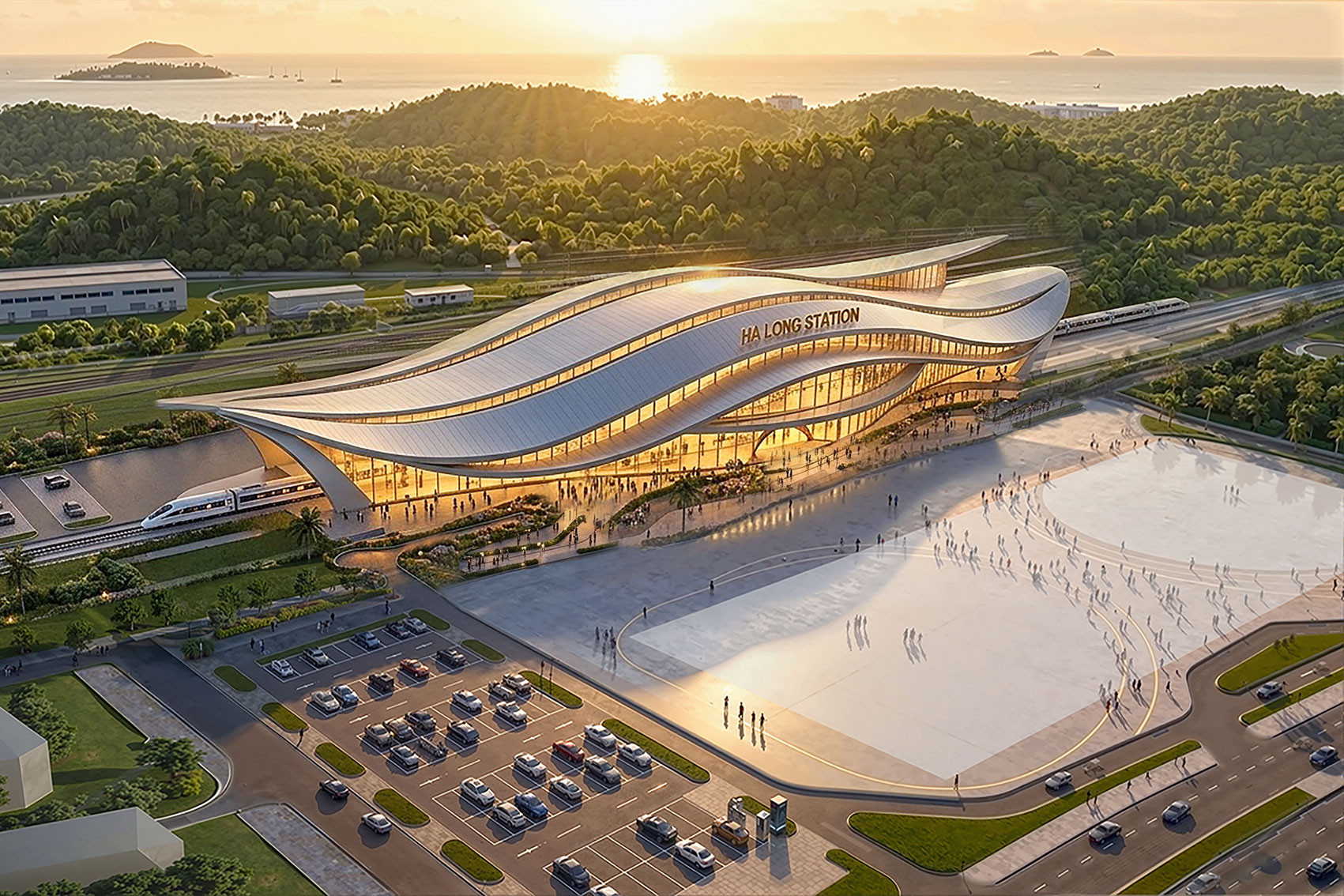
But the VND140,000 billion of capital for this railway line is only a small part of a much larger picture. In the next five years, Vietnam aims for total investment capital of up to VND38.5 quadrillion, equivalent to 40 percent of GDP, significantly higher than the 33 percent of GDP in the 2020–2025 period.
Thus, to achieve double-digit growth, the economy must enter a cycle of massive resource mobilization. While in the previous term, total medium-sized public investment capital was VND2.87 million billion, this figure is expected to reach VND8.22 quadrillion for the 2026–2030 period. The capital from the budget will also increase from VND2.4 quadrillion to VND6.5 quadrillion, nearly a 2.7-fold increase.
Notably, of the VND8.22 quadrillion worth of capital from the budget, VND3.8 quadrillion would be from the central budget, and VND4.42 quadrillion from local budgets. This shows that the focus of resource transformation will shift very strongly toward localities.
A new point in the management mindset is that the number of public investment projects is expected to decrease by 30 percent compared to the 2021–2025 period, in order to increase scale, efficiency, and the spillover effect of each project.
This marks a significant shift: instead of spreading resources thinly, the new term aims for fewer but larger projects capable of driving growth, creating jobs, and expanding development space.
Huge projects need huge amounts of capital. Phan Van Mai, Chair of the National Assembly’s Economic and Financial Committee, noted that balancing resources for the 2026–2030 plan will be highly challenging, as it depends directly on the capability of sustaining double-digit growth, actual budget revenues, and debt discipline.
A notable point from the appraisal agency is that the entire design is tied closely to the double-digit growth target. State budget revenue over the next five years is expected to increase by about 1.7 times, while the expenditure on investment and development is projected to reach 40 percent of the budget, significantly higher than the previous period.
This shows that the VND8.22 quadrillion serves as seed capital to ensure public investment accounts for about 20 percent of total investment of the society, thereby leading non-state capital flows.
Mega projects kick off nationwide
Some “mega construction sites” have emerged across the country and need huge capital in the next five years: VND1.7 quadrillion for the North–South high-speed railway, about VND3.4 quadrillion for power generation and transmission, more than VND3.065 quadrillion for metro systems in Hanoi and HCMC, around VND280,000 billion for Ninh Thuan nuclear power, and about VND400,000 billion for Long Thanh airport.
The three projects of high-speed rail, power, and metro need VND8 quadrillion. The power sector alone requires VND3.4 million billion, and metro systems VND3.065 quadrillion, totaling VND6.46 quadrillion.
Never before have so many mega construction sites appeared on the development map, from railways and power and metro systems to large urban expansions.
From a spatial growth perspective, capital pressure is even greater. Hanoi is estimated to need about VND5 quadrillion, and HCMC VND5 quadrillion for 2026–2030. These two growth poles alone account for nearly VND10 quadrillion, or 30 percent of total national capital demand.
Twenty-seven mega urban projects currently underway or planned have total investment of about $115 billion, equivalent to more than VND3 quadrillion. Besides, there are 3,297 real estate projects nationwide with total capital of VND7.42 million billion, nearly equal to five-year public investment.
In 2025, the country organized three rounds of ground-breaking and inaugurations for 564 key projects with total capital of more than VND5.12 quadrillion. That was a year that could be considered a "project record."
But that figure is still lower than the amount of non-budget capital that the economy must mobilize for just one year of the new term: VND6.1 quadrillion.
What was once considered the peak level of an investment year has now almost become the floor level for each year of the 2026–2030 period.
The VND8.22 quadrillion in public investment can only be seed capital. The decisive factor for success or failure lies in the remaining VND30.5 quadrillion - about VND6.1 quadrillion each year, which must come from domestic enterprises, FDI, international capital, money held by the public, and capital flows currently stuck in thousands of projects.
Tu Giang
.svg)
