 Vietnamnet.vn

 Podcast



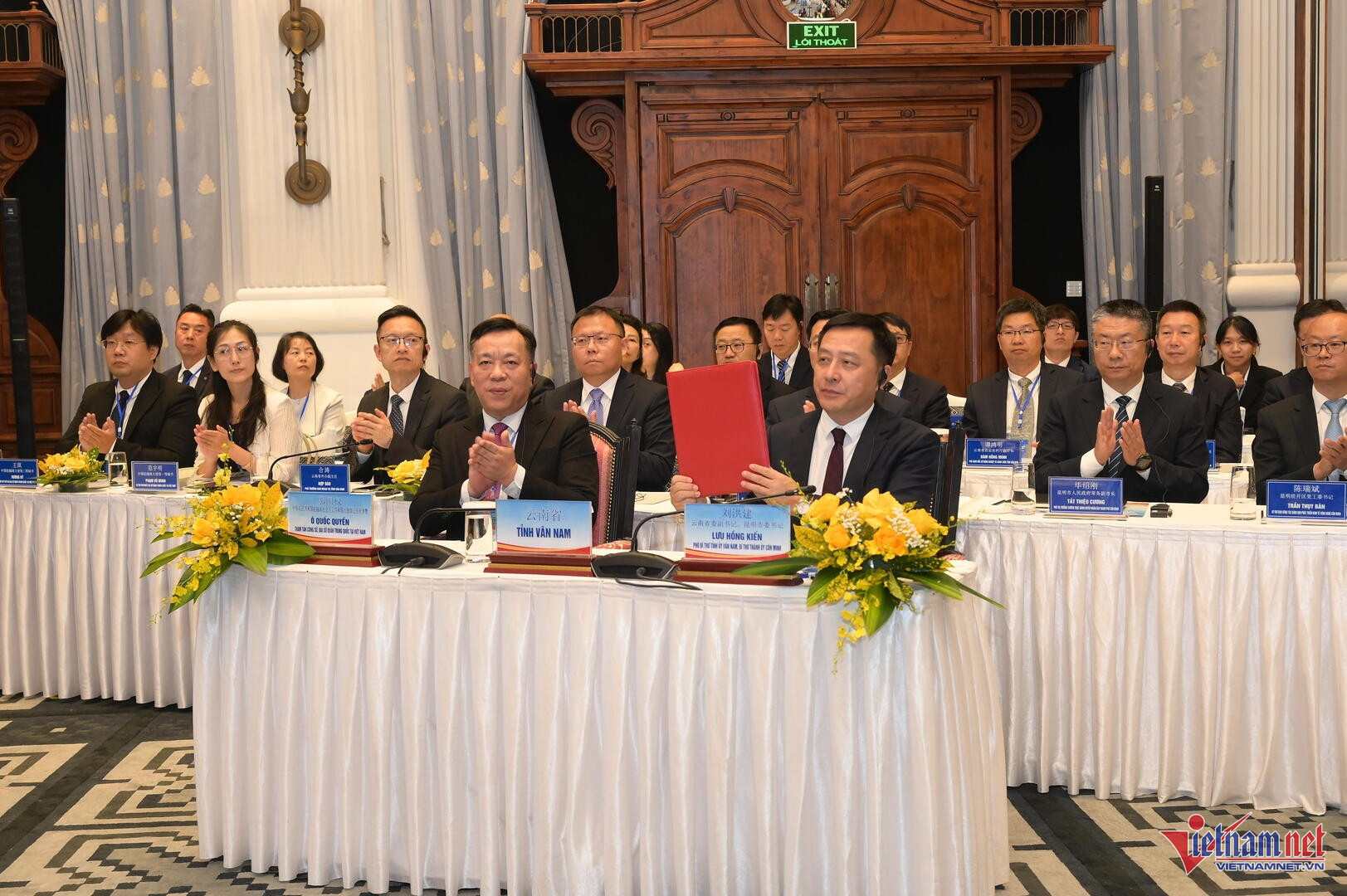
At the 12th Conference on Cooperation along the Economic Corridor of five provinces and cities in Sa Pa, localities proposed a range of measures to foster development of infrastructure, logistics, trade and tourism, including a direct air route between Van Don and Kunming.
The conference was held recently at Sa Pa National Tourism Area to review cooperation results and put forward initiatives to improve the corridor's effectiveness.
Established in 2004, the cooperation effort between Lao Cai, Hanoi, Hai Phong, Quang Ninh and Yunnan, China has held 11 rotating conferences over 22 years and has increasingly demonstrated its sustainability and practical value.
During 2024-2026, the economic corridor saw an important qualitative shift from "relationship connection" to "development connection".
The implementation of the Minutes of the 11th Economic Corridor Cooperation Conference has gained positive results, contributing to cooperative relations among localities of both countries as broader Vietnam-China relations continue to develop favorably.
Specifically, Lao Cai Province maintains the "Priority Lane" mechanism for agricultural products. The province hosts 29 investment projects from Chinese investors with a total registered capital of $163.29 million, focusing on wood processing, mining, industrial manufacturing, and trade.
As the country's economic, cultural, and educational center, as well as a key hub within the cooperation corridor, Hanoi had received cumulative Chinese FDI of over $2.55 billion by August 17, 2026. From January 1, 2026 to now, Chinese FDI into Hanoi reached nearly $1.44 billion.
In Quang Ninh Province, there are 247 active FDI projects with total registered capital of nearly $16.86 billion, in which China ranks first with 130 projects totaling nearly $6.47 billion, accounting for 38.4 percent of the province's total FDI.
However, facing development demands of the new era, cooperation still exhibits certain limitations. Specifically, overall connectivity remains limited; many activities are still scattered and have not formed joint cooperative programs of large scale and spreading power. The economic efficiency of the corridor has not been quantified fully.
The level of contribution toward trade, investment, logistics, and growth for each locality as well as the entire route has not been placed at the center of focus.
Quang Ninh Province requested Yunnan Province to jointly study and coordinate the promotion of direct or charter flights between Van Don Airport and Kunming Changshui Airport.
At the same time, it urged reporting to authorities to plan for the construction of the Mong Cai - Ha Long - Haiphong standard-gauge railway line.
A representative of Hanoi proposed accelerating the progress of the Lao Cai - Hanoi - Haiphong Railway Project, creating momentum to develop a modern connectivity system for the entire economic corridor.
The city also advocated expanding cooperation to attract investment into eco-industrial sectors, high technology, smart agriculture, and cold-chain logistics with Yunnan Province.
Additionally, Hanoi suggested effective leveraging of the "Two Countries - Six Destinations" joint tourism route, gradually expanding it toward a "Two Countries - Multiple Destinations" model, while enhancing electronic payment solutions and cross-border trade financing to help reduce transaction costs and facilitate business for both sides.
Leveraging its unique advantages, Hai Phong proposed creating breakthroughs in cross-border infrastructure connectivity and logistics; transitioning from trade exchanges to value chain integration and investment; and making tourism, culture, and people-to-people exchanges a regular stream along the corridor.
Meanwhile, Lao Cai Province proposed continuing to focus on completing a seamless, modern, and smart economic corridor; and building integrated chains from production to processing, logistics, trade, distribution, and markets, while strengthening strategic infrastructure connections, boosting transport capacity, facilitating the flow of goods, and step-by-step forming an interconnected, multimodal transport network.
Lao Cai also advocated expanding cooperation in culture, tourism, education, healthcare, sports, and human resource training.
At the conference, a representative from Yunnan Province (China) stated the need to thoroughly implement the common consensus reached by top leaders of both parties and states, consolidate the foundation of relations, and promote the building of a China-Vietnam community with a shared future. Yunnan emphasized adhering to accelerating development as a shared mission to generate strong momentum for regional cooperation.
At the conclusion of the conference, the five provinces and cities signed the Cooperation Minutes for the upcoming period.
Trong Bao
.svg)
