 Vietnamnet.vn

 Podcast



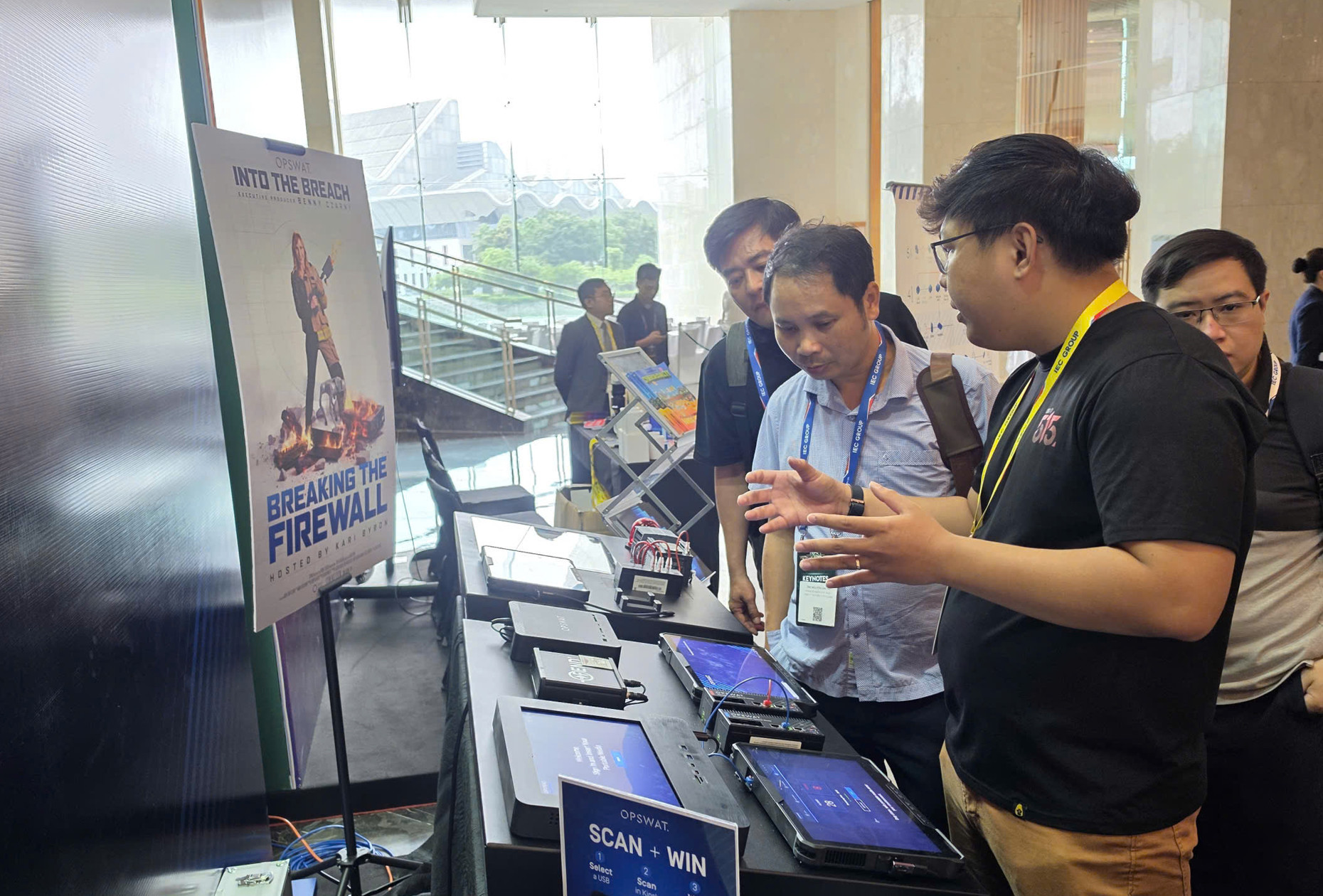
On May 22, the Vietnam Security Summit 2026 officially commenced with the theme "Securing the Digital Future in a Post-Quantum & AI World," gathering regulatory bodies, technology experts, and domestic and international cybersecurity enterprises.
The event was co-organized by the National Cyber Security Association in coordination with IEC Group and relevant units, at a time when AI and quantum computing are profoundly reshaping the global cybersecurity landscape.
AI is double-edged word
AI is exerting a dual impact on the field of information security. On one hand, AI assists enterprises in detecting early attack risks, automating operations, and optimizing data analysis.
On the flip side, this technology is being exploited by hackers to generate phishing, ransomware, and identity theft attacks with unprecedented levels of sophistication.
Along with that, the advancement of quantum computing is believed as capable of breaking current traditional encryption standards, forcing nations and enterprises to rapidly construct new defensive strategies looking toward the Post-Quantum Cryptography era.
The Vietnam Security Summit 2026 was organized to create a forum connecting regulators, organizations, businesses, and tech experts to discuss data protection strategies, guarantee digital infrastructure security, and elevate resilience against cybersecurity threats in the AI and post-quantum era.
The event aimed to foster cooperation, share experiences, and update advanced cybersecurity trends and solutions, contributing to the protection of the digital economy and building sustainable digital trust.
The highlight of the event was the plenary session themed "Securing the Digital Future in a Post-Quantum & AI World."
Quan, deputy director general of the Department of Cybersecurity and High-Tech Crime Prevention and Control under the Ministry of Public Security, emphasized that digital technology is becoming the operational bedrock of society but this is accompanied by increasingly sophisticated cyberattack activities.
These are trending upward in terms of scale, sophistication, and cross-border nature. Notably, cybercriminals have begun leveraging AI to execute fraud, forgery, malware distribution, and targeted attacks against agencies, organizations, businesses, and citizens.
Many new attack vectors, such as Deepfakes, voice spoofing, data theft, account takeovers, and cyber financial fraud, are causing severe consequences, directly impacting assets, production and business operations, and societal trust in the digital environment.
Quan said the rapid development of quantum technology in the near future is also tossing new challenges at traditional security systems.
Many current encryption methodologies face the risk of no longer being guaranteed safe against the processing power of quantum computing.
This indicates that the current requirement is not merely responding to immediate hazards, but also preparing cybersecurity protection for the next phase.
"Agencies, organizations, and enterprises need to elevate their awareness regarding cybersecurity assurance; invest in technology, human resources, and risk governance capabilities; and strengthen coordination with competent authorities to promptly prevent, detect, and handle risks early and from afar.
“Besides, there is a need to more vigorously promote the construction of a national cybersecurity ecosystem in a proactive, synchronized, and sustainable direction in which coordination among state management agencies, technology enterprises, research organizations, and the cybersecurity expert community must be enhanced," Quan said.
Major General Nguyen Tung Hung, deputy commander of the Cyber Warfare Command under the Ministry of National Defence, said: "We can see that within today's theme, the era of quantum and AI is mentioned. We are facing 'harvest now, decrypt later' (HNDL) strategy from nations that possess technologies such as quantum technology."
The plenary session continued with keynote presentations from regulators and international technology companies.
Major Tran Trung Hieu, deputy director of the National Cybersecurity Center and director of VNCERT under the Department of Cybersecurity and High-Tech Crime Prevention, presented a report titled “Shaping Cybersecurity Priorities: Key Trends for 2026 and Beyond”.
Philip Dimitriu from Sophos delivered a presentation highlighting the need to improve monitoring, and control and response capabilities amid increasingly complex threats during digital transformation.
Lee Sang Yoon from PIOLINK INC, presented a report titled “AI on Cloud Platforms: The New Battlefield Between Cyberattacks and Defense”, focusing on risks emerging from hybrid and multi-cloud environments as well as AI-powered attacks.
One of the notable topics discussed at the summit was security for AI agents in enterprise environments.
Mai Xuan Cuong, a representative of Viettel, said that as AI agents become more deeply integrated into operations, businesses will face new security challenges related to data access, model monitoring and risk control.
Thai Khang
.svg)
