 Vietnamnet.vn

 Podcast



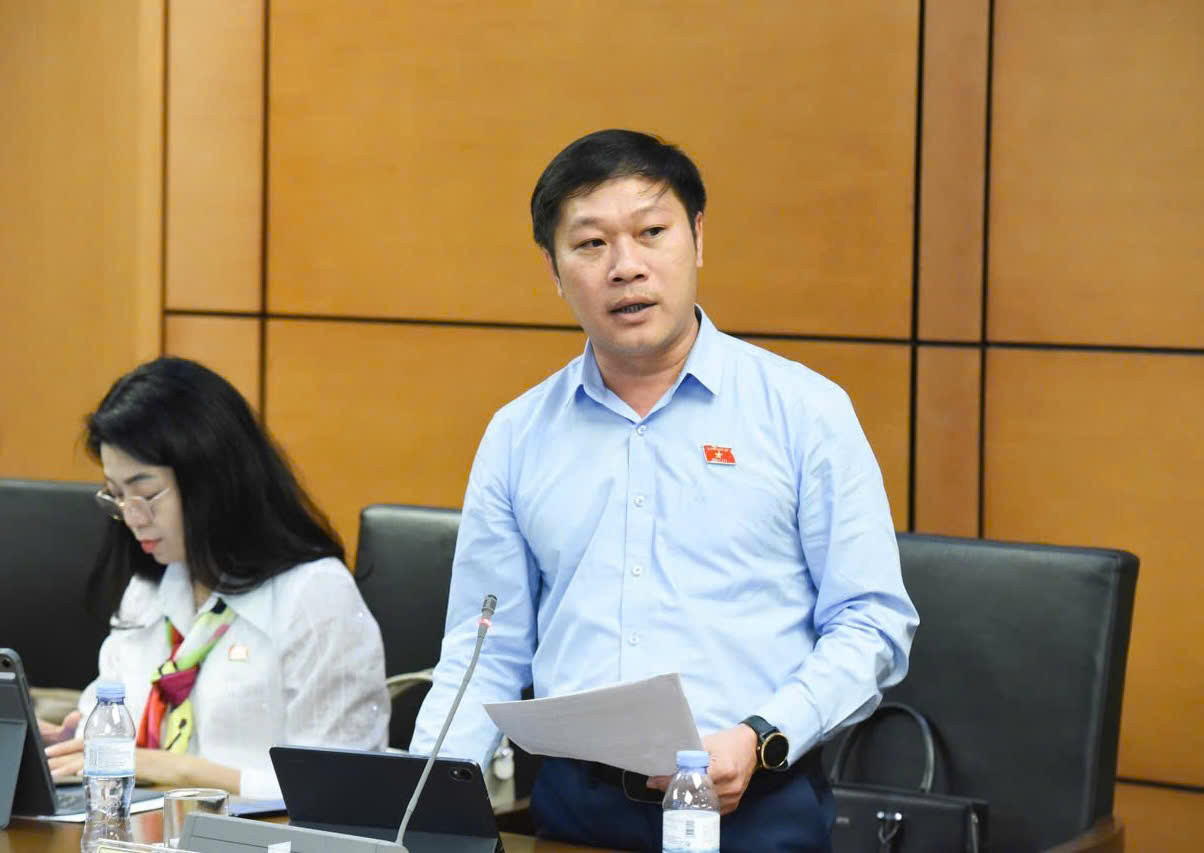
Speaking about the medium-term public investment plan for 2026–2030, National Assembly Deputy Nguyen Khanh Vu said at the discussion session on April 10 that concern is not a lack of resources, but that resources are being “tied up” by self-imposed barriers, preventing them from being used efficiently.
The biggest bottleneck is overlapping and inconsistent legal regulations. A project must go through multiple laws, yet no single law “takes full responsibility.” When conflicts arise between laws, no authority steps in to resolve them for fear of accountability.
“I propose that the Government review and remove cumbersome administrative procedures and conflicting provisions among the Law on Public Investment, the State Budget Law, the Construction Law, and other relevant laws to redesign a single focal point, a single process, and clear responsibility,” he said.
“This would create a transparent legal corridor and a synchronized operating process, ensuring smooth implementation and a safe legal environment for investment,” he explained.
He went on to say that it is necessary to set up reasonable mechanisms to protect proactive, innovative officials who dare to think and act for the common good, so that those who want to do the right thing are not “afraid of making mistakes”.
A transparent legal “anchor” is needed to give officials the confidence to fully commit to advancing projects and to remove the current fear of legal risks.
He reiterated that too many procedures are imposed after planning.
“I suggest integrating all land-related factors right at the planning stage. Once planning is approved, procedures for land-use conversion should be automatically completed. Relevant authorities, as defined by law, should participate in appraisal right at this stage to cut post-planning procedures. If planning cannot move straight into implementation, then it has no real value,” he said.
He also proposed allocating resources early so that localities have more time to prepare and implement projects, as well as to offset delays caused by natural disasters such as storms and floods.
Priority should be given to provinces that cannot balance their budgets, especially those with strategic importance like Quang Tri and others. This is an important solution that would help less-developed but strategically located areas achieve breakthroughs and promote balanced regional development.
Bottlenecks in site clearance
National Assembly Deputy Nguyen Thi Tuyen from Hanoi said that public investment disbursement remains slow despite improvements. In practice, implementation still faces many obstacles.
Investment procedures remain complex and involve multiple steps, prolonging both preparation and execution.
Meanwhile, state-announced construction material prices often lag behind market prices, leading to significant discrepancies. This makes it difficult for contractors, affecting project progress and efficiency.
She suggested more realistic assessments to allow timely adjustments, ensuring contractors’ rights and project feasibility.
She also noted that site clearance remains a major bottleneck, delaying many public investment projects. She proposed locality-based solutions to remove obstacles related to procedures, material prices, and site clearance.
High-quality tourism
At the discussion session on socio-economic development for 2026 and beyond, National Assembly deputy Venerable Thich Duc Thien (Dien Bien delegation) emphasized the need to promote tourism to contribute to double-digit growth.
Vietnam has nine UNESCO-recognized world cultural and natural heritage sites (including six cultural, two natural, and one mixed site), 16 intangible cultural heritage elements of humanity, 10 documentary heritage items under the Memory of the World program, 11 biosphere reserves, and four global geoparks.
UNESCO has also passed resolutions honoring many Vietnamese figures. Thousands of national and special national historical-cultural relics, along with rich natural landscapes and a long, beautiful coastline, provide abundant resources for tourism development.
He suggested accelerating digital transformation and applying AI to develop smart, green, and sustainable tourism, while creating high-end, in-depth tourism products to increase visitor spending.
According to him, one key driver for high-quality tourism is public-private partnership (PPP), which can enhance sustainability, competitiveness, and destination promotion.
He noted that the effectiveness of this model can already be seen in provinces such as Ninh Binh, Quang Ninh, Tay Ninh, Da Nang, and An Giang in recent years.
Tran Thuong
.svg)
