 Vietnamnet.vn

 Podcast



Freedom of belief and religion is a fundamental human right, prescribed in Vietnamese laws and ensured in reality. However, some international organisations and individuals have deliberately distorted and "politicised" this issue recently, making biased assessments that do not accurately reflect religious life in Vietnam, thereby causing misunderstandings in international public opinion.
One-sided assessments twisting the essence
The Vietnamese Ministry of Foreign Affairs has repeatedly rejected what it calls “unobjective and inaccurate” claims in various reports. Most recently on March 4, the US Commission on International Religious Freedom (USCIRF) released its 2025 Annual Report on international religious freedom, which gave biased allegations about the religious situation in Vietnam.
Dr. Hoang Van Chung from the Institute for Anthropology and Religious Studies under the Vietnam Academy of Social Sciences, described the report as a clear example of politicising religious issues. Isolated incidents, and even cases of legal violations, are often taken out of context and inflated into claims of systematic religious repression. Such an approach lacks a factual basis and deliberately conflates state management with interference in religious affairs.
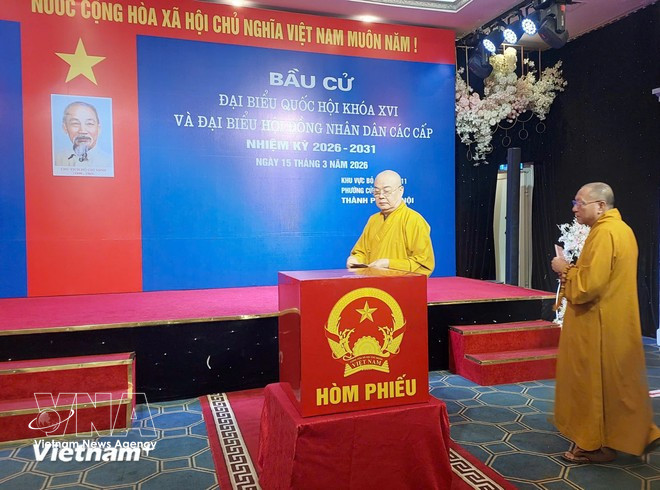
Vietnam is a multi-religious and multi-belief country, with more than 28 million followers and tens of thousands of places of worship. Freedom of belief and religion is explicitly guaranteed in the 2013 Constitution and detailed in the 2016 Law on Belief and Religion, widely viewed as relatively comprehensive and aligned with international practices. Religious activities, from daily worship to major festivals drawing large crowds, take place openly and stably across the country.
At the same time, some local cases involved individuals exploiting religious activities for harmful purposes. In October 2025, the Investigation Security Agency under the Dak Lak provincial Department of Public Security prosecuted and detained Y Nuen Ayun, a resident of Ea Phe commune, on charges of undermining national unity policies. According to initial findings, he had joined an organisation known as the “Christ Evangelical Church of the Central Highlands” since 2019, spreading fabricated claims of religious suppression and using online prayer sessions as cover for activities against the administration.
Yet, state management actions aimed at maintaining social order, ensuring public safety, and protecting the legitimate rights and interests of the community have been distorted by USCIRF as restrictions on religious freedom.
Chung stressed that no sovereign country tolerates the use of religion as a shield for breaking the law, harming community interests or threatening national security. Equating legitimate law enforcement with religious repression distorts the issue and ultimately harms legitimate religious organisations that contribute to national development. True religious freedom can only be meaningful when exercised within the bounds of the law and with a sense of civic responsibility, an essential standard for fair and objective evaluation of Vietnam’s religious situation, he stressed.
Ensuring freedom of belief and religion
Venerable Thich Duc Thien, Vice President and General Secretary of the Executive Council of the Vietnam Buddhist Sangha, affirmed that Buddhist activities in Vietnam have taken smoothly and without disruption. He has engaged directly with USCIRF representatives and raised concerns about the commission’s research methods.
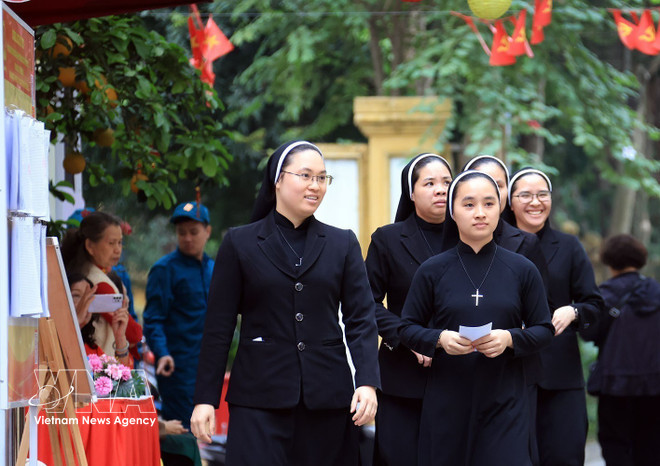
For instance, the report cited the case of Le Tung Van in former Long An province as supposed evidence of Buddhist repression. According to Thien, this is incorrect, as the case involved exploiting religion for personal gain and serious ethical violations, including alleged incest-related misconduct. If USCIRF was unaware of the facts, it showed negligence. If it knew and still included the case, it amounted to deliberate distortion. Similarly, the incident at Dai Tho pagoda in Vinh Long province involved illegal detention and was handled as a criminal matter, unrelated to religious practices such as chanting or worship.
On requirements for registering religious activities, Thien explained that the process, especially in mountainous areas such as Dien Bien, is not a restriction but a practical measure. It allows authorities to support large gatherings and ensure public safety, traffic management and fire prevention. In practice, registration functions largely as a notification and is routinely approved.
In reality, many religions in Vietnam have operated stably and actively contributed to education, healthcare, charity, environmental protection, and social welfare, reinforcing national unity. At the same time, Vietnam has become increasingly open and proactive in international dialogue on human rights and religious freedom, with numerous foreign delegations visiting to see conditions firsthand and acknowledging tangible progress./. VNA
.svg)
