 Vietnamnet.vn

 Podcast



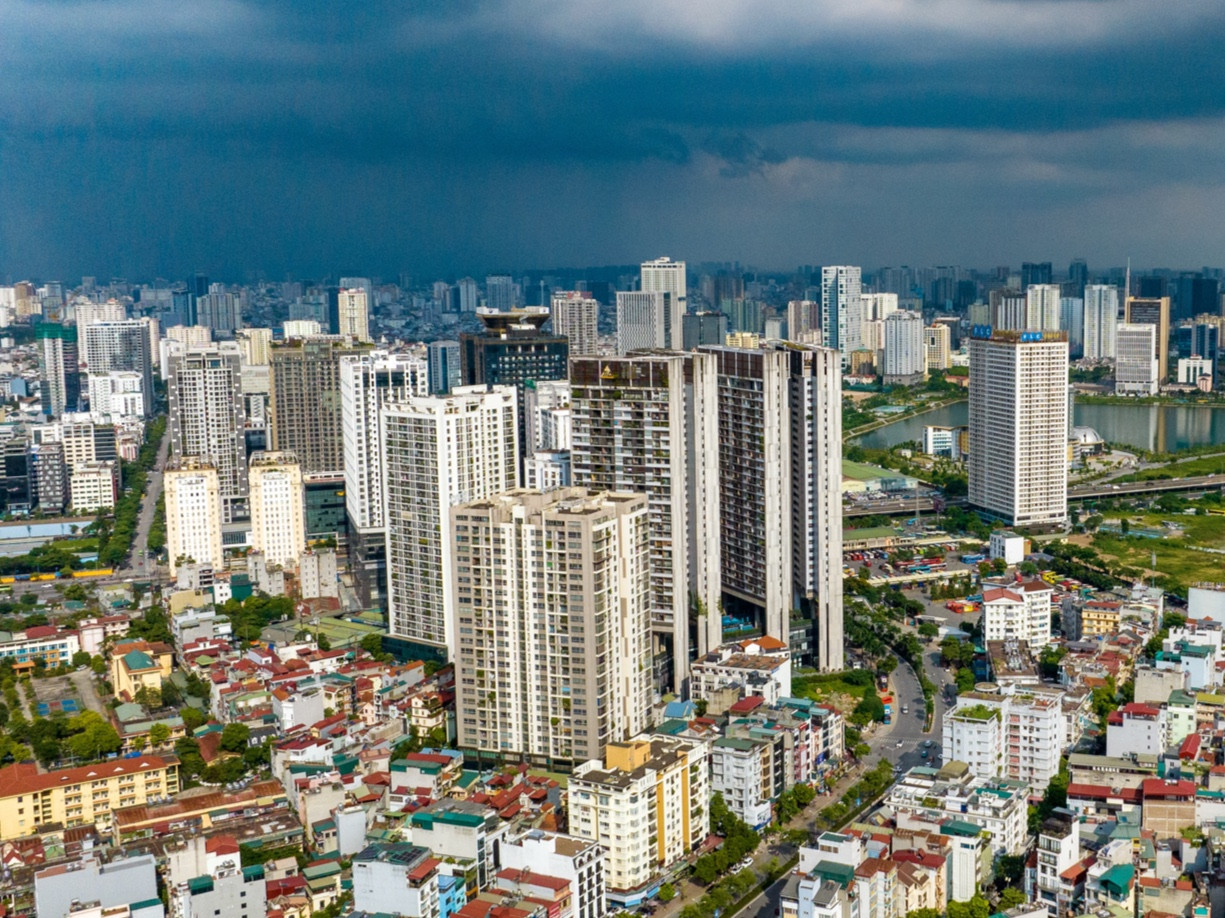
Rental yields in areas that once attracted strong demand now hover at just 2–3 percent a year.
Three years ago, after completing a two-bedroom apartment in Cau Giay, Thao, 43, was confident about her rental investment plan. At first, she leased it to a foreign family for VND25 million a month, a stable and attractive figure compared with her initial costs. The rent was enough to cover monthly bank interest and still leave a surplus as profit.
She believed that within a few years, the apartment would both appreciate in value and generate healthy cash flow, exactly as expected from a “buy-to-rent” strategy.
However, everything changed after one year, when the tenant family ended the contract and returned home. Located in an area popular with foreign tenants, but Thao’s apartment remained vacant for nearly half a year. During this time, she had to shoulder all loan repayments and service fees without any rental income. What she once saw as a “hands-off” investment began to reveal the real risks of the market.
When a new tenant was finally found, the rent dropped to just VND17–18 million dong a month, significantly lower than before. Although this was slightly higher than the average rent three years earlier, it did not keep pace with the surge in apartment selling prices.
The apartment’s value is now very high, service fees have risen, interiors have depreciated, while rents cannot increase further due to abundant supply and many comparable options for tenants.
Recalculating, Thao realized that the actual return from renting had fallen sharply. Renting now only helps maintain basic cash flow rather than delivering the profits she initially expected.
Surveys of inner-city condominiums show that rental apartments are entering a phase of unattractive yields. Two-bedroom units in Cau Giay and Thanh Xuan typically rent for VND15–25 million a month, but this growth lags far behind the rise in sale prices.
Meanwhile, many inner-city projects are priced at VND95–150 million per sqm, while rents are almost flat. As a result, rental yields are only about 3–4 percent a year, or even lower if counting in loan interest, interior depreciation, service fees, and vacancy periods.
For example, at the D’Capitale Tran Duy Hung project, a two-bedroom unit rents for around VND19 million a month, a three-bedroom unit for about VND24 million. Fully furnished studio apartments range from VND13.5 to VND15 million a month, while one- to 1.5-bedroom units rent for about VND16–18 million a month.
The selling price at this project is approximately VND95 million to VND140 million/sqm, depending on the interior condition. A 2-bedroom apartment with an area of 68 sqm is usually offered at VND8.5 billion to VND9 billion; while 3-bedroom units can reach VND10 billion to VND12 billion.
If renting a 2-bedroom apartment at VND18 million/month, the annual revenue is about VND216 million while the purchase price is VND8.8 billion, equating to a pre-expense return of about 2.4 percent/year. Even for larger units, the rental yield is only 2.5-3.5 percent/year, significantly lower than the cost of capital and other safe investment channels.
Some newly handed-over apartment buildings offer competitive rental prices and many incentives. For instance, at a new project on Lang street, a 33-38 sqm studio apartment is offered for rent at VND11 million to VND12 million/month with basic furniture and from VND13 million/month if fully furnished. A 2-bedroom, 48 sqm unit is about VND14 million/month for basic furniture and VND16 million to VND17 million/month for a fully finished unit; a 3-bedroom, 93 sqm unit costs VND20 million to VND25 million/month depending on the interior.
In addition to rental prices, apartment owners also face many incidental costs during the process of finding tenants and maintaining the apartment, from repairs and upgrades to replacing furniture to meet the market's increasingly high demands.
According to Nguyen Manh Cuong (financial consultant), apartment owners should offer competitive and flexible rental prices based on the actual prices in the building and surrounding area to limit vacancies.
Selective interior upgrades focusing on appliances, lighting, and bathrooms will help increase the apartment's attractiveness without excessive costs. At the same time, cooperating with professional brokers helps owners reach the right potential tenant group and rent more effectively.
Hong Khanh
.svg)
