 Vietnamnet.vn

 Podcast



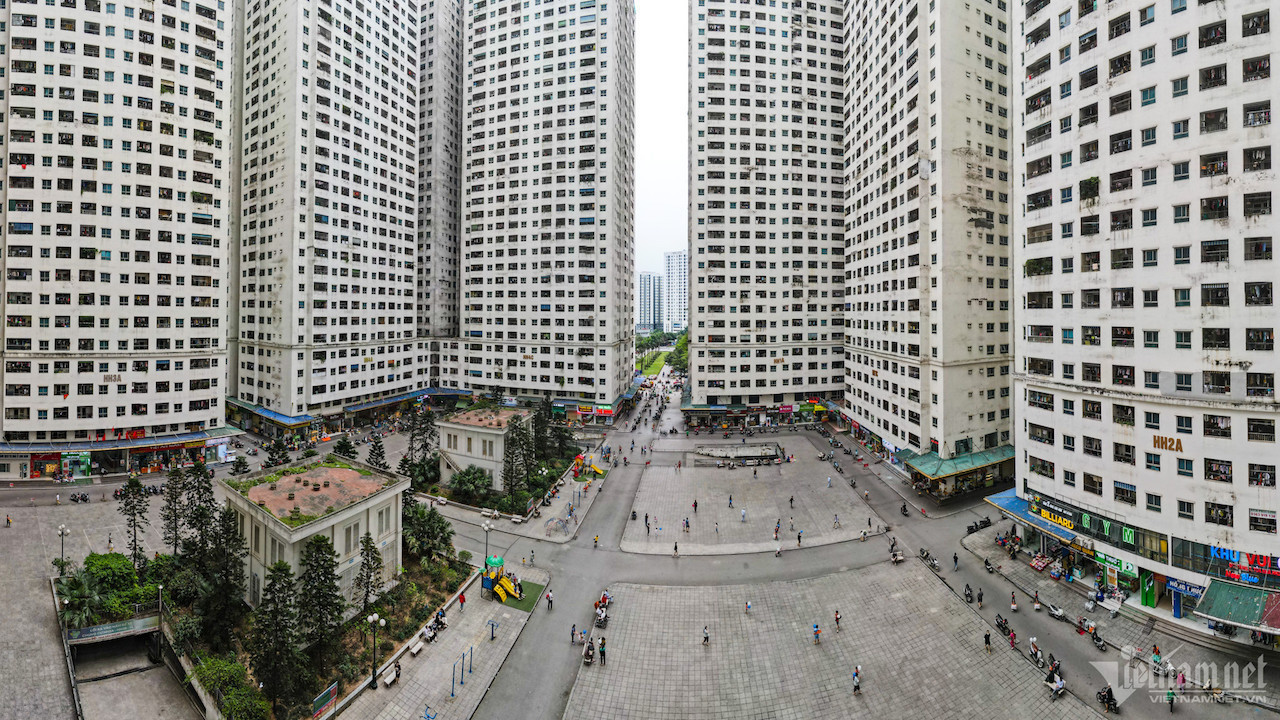
However, they are set to reshape Vietnam's real estate market – from how apartments are valued to the responsibilities of developers and the obligations of homeowners.
On July 28, the Party Central Committee issued Resolution 21 on the principles and direction for amending the Land Law and related legislation, replacing Resolution 18 issued in 2022.
One of the issues drawing significant public attention is the proposed service-life framework for apartment units.
Nguyen Van Dinh, a lawyer of the Hanoi Bar Association and a real estate legal expert, said Resolution 21 essentially maintains the current land policy for commercial housing, including apartment buildings.
Apartment owners will continue to enjoy long-term, stable land-use rights.
"The designed service life of an apartment building, as specified in its technical design documents, is a technical concept. If a building reaches its designed lifespan but still meets safety and quality standards after inspection, it can continue to be used. Reaching the end of the design life does not automatically mean residents must contribute money," Dinh said.
He noted that the key change under Resolution 21 is not a shift in ownership rights, but rather the principle that ownership rights come with corresponding obligations.
The resolution more clearly establishes that apartment owners who enjoy ownership rights must also bear financial responsibility when an apartment building needs to be rebuilt.
"The provision allowing apartment owners to fulfill financial obligations for rebuilding apartment buildings means the revised Housing Law will need to clearly define residents' contribution responsibilities once a building reaches the end of its service life," he said.
A legal corridor needed for apartment life cycle
From a corporate perspective, Nguyen Vu Cao, Chair of Khang Land Holding, argued that if fully designed, lifespan-based apartment management represents a positive step forward for the real estate market.
He explained that rather than relying solely on location, future apartment values will accurately reflect true structural quality, including developer reputation, design standards, structural integrity, maintenance capabilities, operational efficiency, and future redevelopment potential.
He also stressed that the role of real estate enterprises must evolve. Developers cannot simply finish construction and hand over units; they must assume long-term responsibility for structural quality, maintenance systems, and future project regeneration.
"We cannot expect every building to exist forever. The key is establishing a mechanism to handle buildings when they reach the end of their lifecycle - ensuring safety while fully protecting citizens' property rights," he said.
According to the chair of Khang Land Holding, the policy's success depends not on specifying a design lifespan of 50, 70, or 99 years, but on constructing a comprehensive legal corridor covering an apartment building's entire lifecycle.
Additionally, society must clearly distinguish three distinct concepts: design lifespan, actual service life, and property rights. Though related, these three issues are not identical.
"Reaching the end of a design lifespan does not mean an apartment automatically loses value or that residents forfeit ownership rights," he emphasized.
Accordingly, when a building reaches its inspection milestone, it can remain in use if certified safe. If structural reinforcement is needed, a renovation plan must be executed. Demolition and reconstruction should occur only when a building is no longer safe or when repairs are no longer economically viable.
Cao proposed five principles that should be codified into law to prevent future disputes:
First, clearly define liabilities if a building deteriorates before its design lifespan expires. If issues stem from surveying, design, construction, or building quality faults, developers and relevant entities must pay compensation rather than shifting all risks onto buyers.
Second, upon selling apartments, project dossiers must fully disclose the design lifespan, inspection cycles, maintenance obligations, land rights, redevelopment mechanisms, and future financial duties so buyers clearly understand their rights and responsibilities.
Third, establish a redevelopment reserve fund from the outset, rather than waiting until the end of a building's lifecycle to collect money from residents. This fund could be established through periodic contributions from property owners, initial developer contributions, legitimate revenue generated from managing shared assets, or even long-term insurance products.
Fourth, implement a transparent mechanism for dividing value appreciation following apartment reconstruction among the State, residents, and enterprises.
Finally, legislation must clearly define accountability for each cause of structural insecurity. If deterioration occurs due to natural lifecycle expiration, residents are responsible for participating in redevelopment. If it stems from poor management or maintenance, specific party liabilities must be established.
Hong Khanh
.svg)
