 Vietnamnet.vn

 Podcast



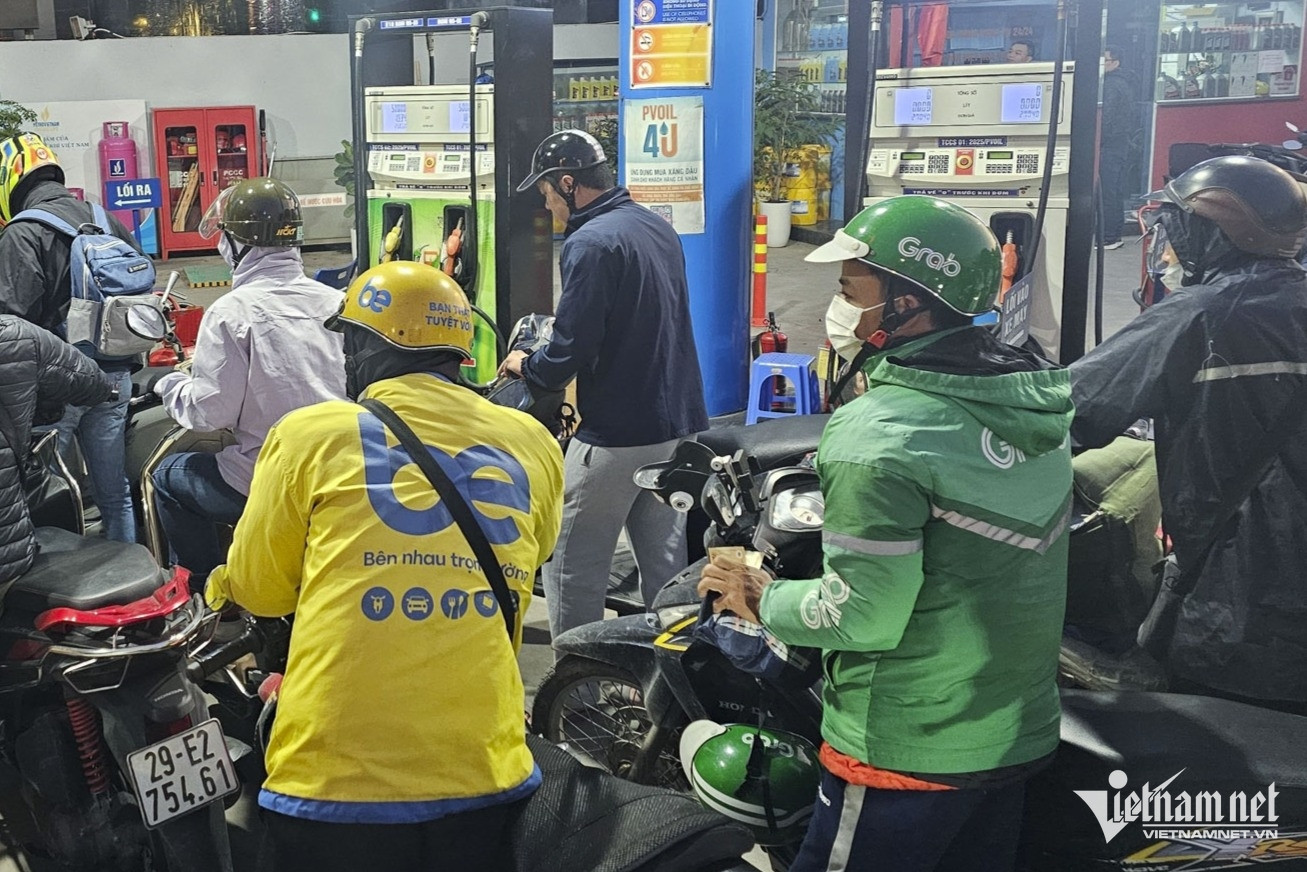
Drivers struggle with costs, driving cautiously for fear of losses
A gloomy atmosphere covers many gathering points of ride-hailing drivers in Hanoi. Soaring gasoline prices have directly eroded the income of those working in the passenger transport service. Previously, fuel costs accounted for about 25-30 percent of total daily revenue, but now this figure has jumped to 40-50 percent.
Tran Khanh Tu, a GrabCar driver, said: “Refueling a car may not be as tiring as refueling a motorbike, but if you take short trips during rush hour traffic jams, half the fare goes to fuel. After deducting more than 25 percent commission for the platform, it feels like drivers are working for free. Many drivers in my group have had to reluctantly turn off the app during peak traffic hours or stay home and wait out the price surge, because continuing to drive brings almost no profit for the family.”
Meanwhile, Dao Van Luan, a BeBike driver, complained: “I had to stand in line for an hour just to fill up the tank, then I received a VND14,000 trip but had to travel more than 2km to pick up the passenger. The fare is low while fuel prices are high, so the actual earnings are very small. If we refuse the trip, we risk penalties for canceling rides more than three times a day.”
Nguyen Vu Thu, a female GrabFood driver fueling up with Luan, recounted her tired mood: "Last night, I went to the filling station at 22:00 and saw a long line of people, so I went home. This morning I woke up at 5:00 to go; the crowd had decreased but I still had to queue for 45 minutes to fill up."
“It’s exhausting delivering food when fuel prices are rising so fast while fares shown to customers remain unchanged. If fuel prices keep increasing like this, many drivers like me will struggle to cover costs. We may also lose customers to electric ride-hailing services that are less affected by gasoline prices,” Thu added.
Support from ride-hailing platforms
Recent fuel price fluctuations have placed ride-hailing platforms in a difficult position between protecting drivers’ income and retaining customers.
Raising fares immediately could push users away or encourage them to switch to electric ride-hailing services with lower operating costs. However, thanks to the flexibility of digital platform models, companies have been able to respond quickly.
Be Group became the first ride-hailing company to provide fuel support for drivers. A company representative said that after the sharp fuel price increase announced on March 7, the company did not change its service pricing structure but quickly launched a nationwide fuel support program for driver partners within 48 hours.
The support, applied from March 9 to March 31, can reach up to VND800,000 depending on vehicle type and the driver’s level of activity.
“In the context of ongoing volatility in the fuel market, we will continue monitoring developments closely and flexibly adjust support programs in line with reality, so as to maintain a sustainable balance between drivers’ income, passengers’ travel costs and the long-term stability of the platform,” the company representative said.
Meanwhile, Grab Vietnam has introduced a revenue bonus program to share the cost burden for drivers using gasoline-powered vehicles. However, the program is short-term, lasting one week from March 11 to March 17, and is applied alongside existing policies.
For four-wheel drivers, the bonus can reach up to 7 percent of weekly revenue in the two major cities of Hanoi and HCMC, and up to 5 percent in other localities. For two-wheel drivers, the bonus is VND135,000 per week in Hanoi and HCMC, and VND104,000 per week in other provinces and cities.
At the same time, Grab Vietnam is supporting drivers who switch to electric vehicles to reduce fuel costs and introducing additional features to improve operational efficiency and expand income opportunities.
A representative of Grab Vietnam said the support packages are funded by the company’s budget, and future revenue bonus programs will be flexibly adjusted depending on fuel price developments to ensure a balance of benefits between drivers and users.
Currently, fuel price volatility remains a major challenge for the transport sector. The timely “lifelines” offered by ride-hailing companies are not only practical financial support but also a morale boost for thousands of drivers as they navigate a difficult period.
Nguyen Le
.svg)
