 Vietnamnet.vn

 Podcast



Launched in 2022, the event was put together by MGIMO’s Department of Chinese, Vietnamese, Thai and Lao Languages alongside the ASEAN Centre, the Russia-Vietnam Friendship Association, and the Fund for Russia-Vietnam Cooperation Promotion “Tradition and Friendship.” The goal is to shine a spotlight on the Vietnamese language and get more Russians hooked on Vietnamese studies.
This year’s contest pulled in a crowd of undergraduate and graduate students from leading Vietnamese language training centres across Russia, including Moscow, Saint Petersburg, and the Far East.
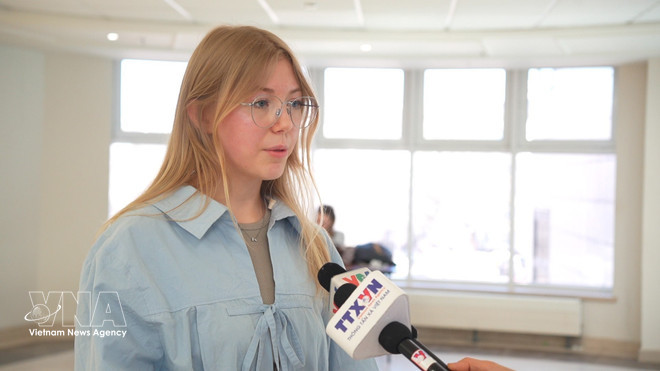
Only the toughest made it to the finals, with roughly half of the more than 50 hopefuls advancing to handle demanding specialised translation tasks that tested their interpreting and translation skills, from live work and written documents to flipping phrases and full texts back and forth between Vietnamese and Russian.
Speaking at the opening ceremony, Ph.D. in Linguistics and Assoc. Prof Marina Chigasheva, who heads the MGIMO Language Training Department and sits on the organising committee, said the contest is more than just a language test. It is an opportunity for Russian students to deepen their understanding of Vietnamese culture, society, and the bilateral comprehensive strategic partnership. Five straight years of the event proves the Vietnamese language is gaining traction in Russia, and the country still desperately needs sharp interpreters.
Andrey Tatarinov, former Russian Ambassador to Vietnam and head of the judging panel, noted that while many participants still show gaps in broader political and international relations knowledge, overall quality keeps climbing with each edition. According to him, swelling number of entries year after year is an encouraging sign, showing Russian young people are diving into Vietnamese studies and wishing to learn the language and explore the country’s culture and arts.
Svetlana Glazunova, a Vietnamese language lecturer at MGIMO and member of the organising board, said this year’s evaluation criteria and topics are updated to reflect current socio-political developments in Vietnam and beyond, such as the 14th National Congress of the Communist Party of Vietnam, the election of deputies to the 16th National Assembly, and global hotspots. Translation topics focused on Vietnam’s foreign policy, political and socio-economic landscapes, and international relations, posing substantial challenges even for graduate students and professionals.
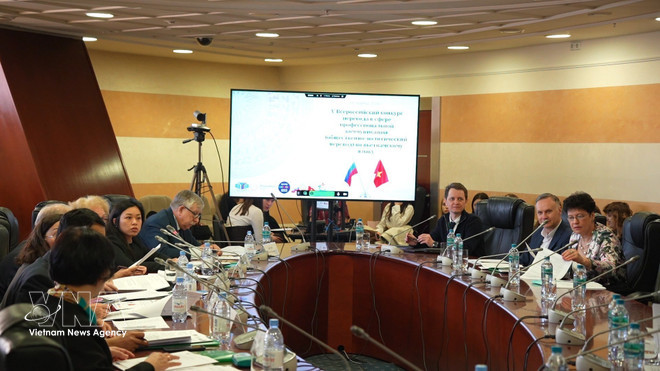
The competition is perfect to build professional assurance among aspiring diplomats and trade negotiators, equipping them for future roles, she added.
The rigorous jury, comprised of ex-diplomats and seasoned Vietnam experts, decided no one in the undergraduate category deserved the top prize. Instead, they handed out special awards to the standouts who blazed through translations with lightning speed, accuracy, and serious flexibility./.VNA
.svg)
