 Vietnamnet.vn

 Podcast


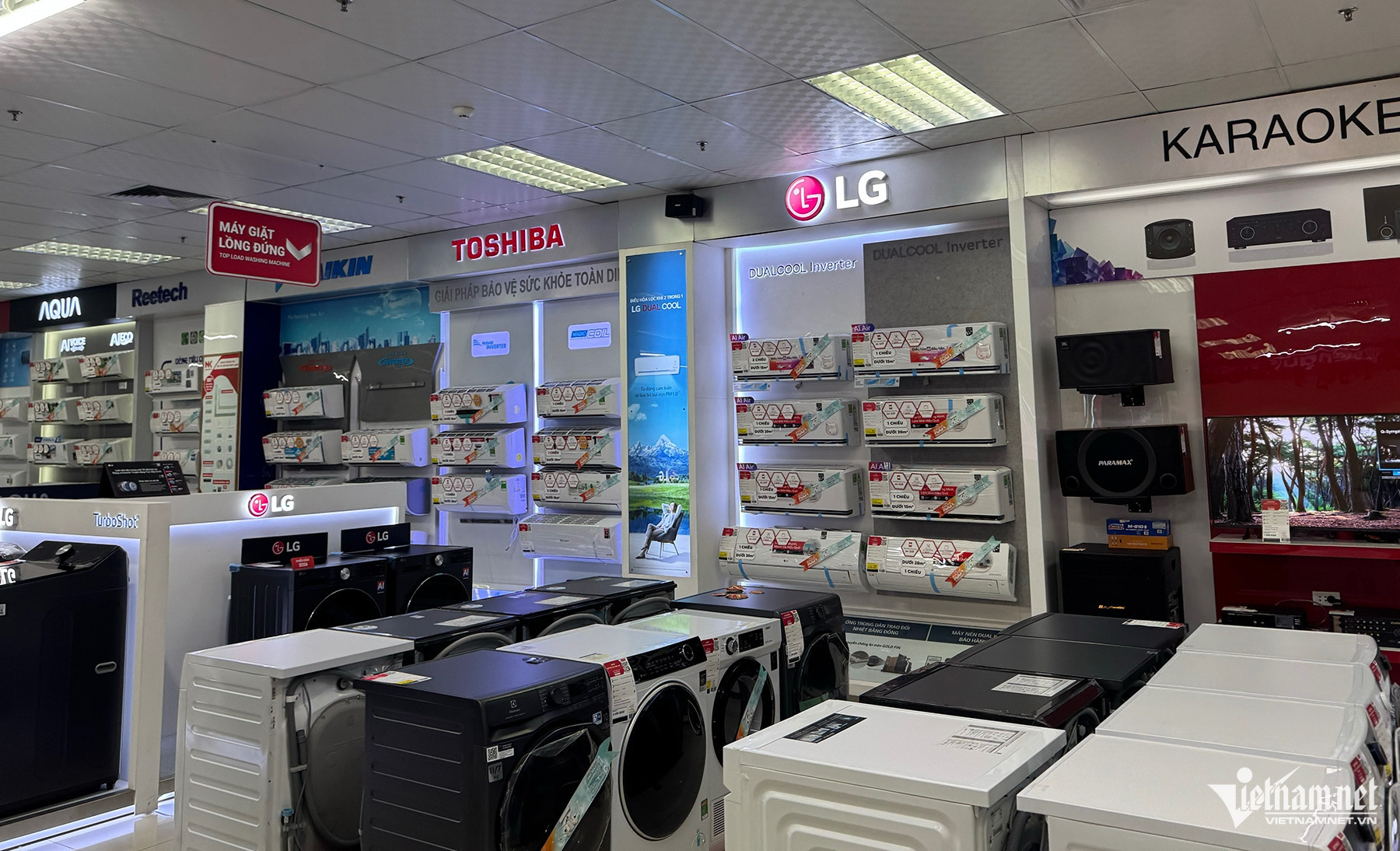
Despite rolling out nonstop year-end discounts and promotions, many electronics superstores remain relatively quiet as some consumers visit physical stores to inspect and test products before hunting for better deals on e-commerce platforms.
Outside an electronics store in Dong Da, Hanoi, rows of promotional banners advertising 30–50 percent discounts, zero-interest installment plans, and complimentary household gifts hang in plain view, yet in stark contrast to the festive signage outdoors, sales activity inside remains sluggish.
Even on a weekend afternoon, the display zones for televisions, refrigerators, and washing machines draw only a handful of browsers, with vast showroom sections spanning hundreds of sqm sitting nearly empty and sales staff noticeably outnumbering shoppers.
The rapid rise of e-commerce is reshaping how consumers shop for consumer electronics and home appliances.
Hoang Nam, 38, an office worker, explained that he had visited the superstore to check the physical dimensions and experience the picture quality of a 65-inch television he intends to buy. After comparing prices, however, he planned to order on an e-commerce platform where the exact same model was listed nearly VND 3 million cheaper thanks to discount vouchers.
Thu Ha, a sales associate at an electronics store, noted that sales revenue had dropped by roughly 30 percent compared to previous years, explaining that while shoppers still come in to inspect products, far fewer decide to buy on the spot.
Ha said consumers previously had to visit superstores in person to examine models, features, and prices before buying a television, refrigerator, or washing machine, whereas today a single smartphone lets shoppers compare prices for the exact same item across dozens of vendors while e-commerce platforms roll out steep discounts and free shipping.
As a result, many customers opt to visit superstores to test products and receive staff consultations before finding a better price online. This adds mounting pressure on traditional brick-and-mortar retailers that must shoulder storefront rent, staffing, and showroom maintenance costs.
Electronics chains restructure store networks
Roughly a decade ago, major retail brands such as Pico, MediaMart, HC, Nguyen Kim, and Dien May Xanh raced aggressively to open new outlets.
Companies did not hesitate to spend massive sums leasing sprawling premises spanning thousands of sqm with wide street frontages at major high-traffic intersections, as store scale and brand coverage were once seen as decisive advantages in the battle for market share.
However, the electronics retail market is now witnessing significant shifts in both store scale and business models:. Rather than relying solely on oversized showrooms, several chains are focusing on core product lines while integrating warehouse systems and online sales channels to optimize operating costs.
The market has also seen notable adjustments across the store networks of leading brands. MediaMart has halted aggressive expansion and returned several prime central locations. Pico and HC have both scaled back operations to focus on maintaining superstores with steady foot traffic rather than sprawling expansion. And Dien May Xanh closed its outlet on Le Dai Hanh Street.
As of November 2026, Dien May Xanh and The Gioi Di Dong operate a combined 117 outlets in Hanoi, followed by MediaMart with 50 stores, HC with 11 outlets, Nguyen Kim with eight stores, and Pico with three shopping centers.
Another major market shake-up was the divestment of the Nguyen Kim electronics chain. In 2015, Thailand's Central Group acquired a 49 percent stake in the chain's parent company, and by June 2019, group-affiliated entities purchased the remaining 51 percent stake in NKT, the owner of Nguyen Kim.
On December 23, 2025, Central Retail announced the signing of an agreement to transfer its entire direct and indirect investment in NKT to Pico Holdings in a transaction worth $36 million, equivalent to VND936 billion.
Amid tightening household budgets, electronics and home appliances no longer rank among top shopping priorities for many families. Because items such as televisions, refrigerators, washing machines, and air conditioners have relatively long lifespans of five to 10 years, many consumers are choosing to repair existing appliances rather than buy new ones or upgrade.
To keep a superstore running in Hanoi, businesses must bear high overhead expenses including storefront rent, payroll, utilities, inventory storage, and showroom upkeep.
Consequently, electronics chains need to find effective ways to integrate physical stores with online sales channels so that brick-and-mortar locations serve not merely as points of sale, but also as hubs for consultation, hands-on product experience, order fulfillment, and after-sales support.
Duy Anh

