 Vietnamnet.vn

 Podcast


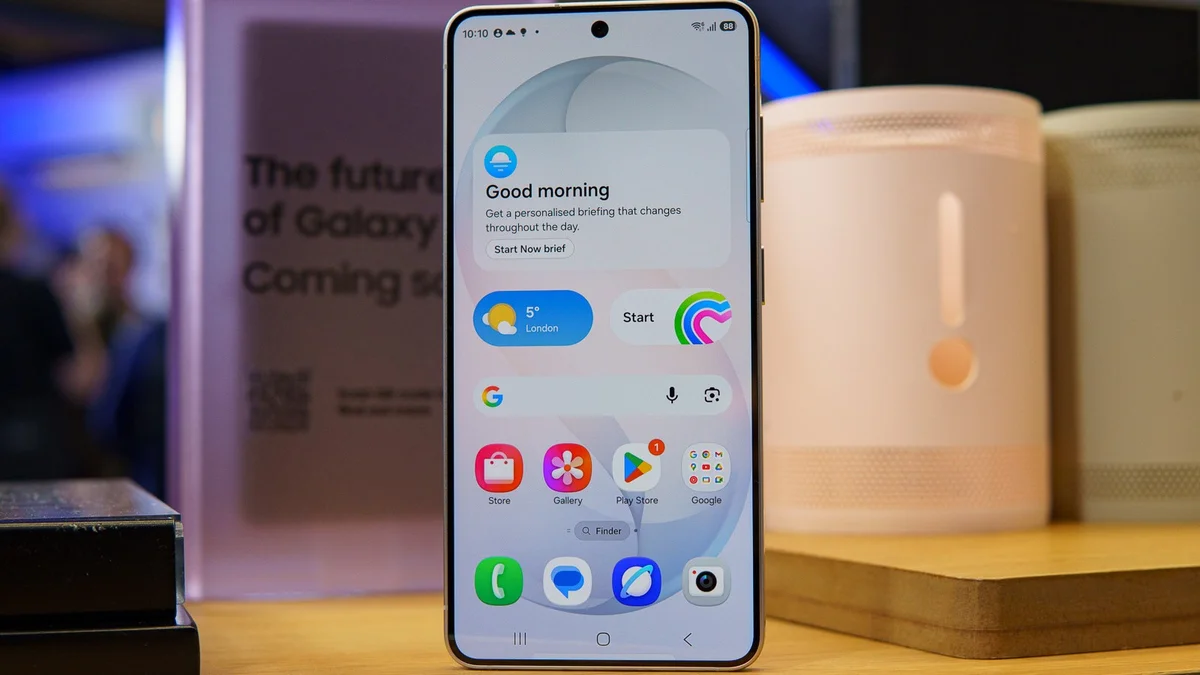
According to international certification records, Samsung's next standard flagship, the Galaxy S27, is likely to retain 25W charging, a specification that first appeared in the Galaxy S series in 2020.
If confirmed, the decision would mean Samsung is continuing one of the longstanding limitations of its premium smartphones, even as competitors have steadily improved their fast-charging technologies.
Last month, technology website SammyGuru discovered registration details for the Galaxy S27 and Galaxy S27+ in China's 3C certification database.
The initial records suggested that neither device would receive a charging-speed upgrade over the Galaxy S26 and Galaxy S26+.
Now, another certification record has reinforced that prediction, indicating that the standard Galaxy S27 is unlikely to support faster charging.
The latest certification, issued by UL Solutions (Demko) and published in the IECEE database, lists several Galaxy S27 variants, including model numbers SM-S952U, SM-S952U1, SM-S952W, SM-S9520, SC-51H, SM-S952Q and SM-S952Z.
All these variants support a direct-current input of 9V at 2.77A, equivalent to approximately 25W of charging power.
Samsung first introduced this charging specification to the Galaxy S20 series in 2020. This means the standard Galaxy S27 could arrive with charging technology essentially unchanged from that of a smartphone released around seven years earlier.
Galaxy S27 Pro and Ultra could support 60W charging
While the standard Galaxy S27 may see little improvement in charging performance, its more expensive counterparts are expected to receive substantial upgrades.
Last week, reports concerning the Chinese 3C certification of the Galaxy S27 Pro and Galaxy S27 Ultra attracted attention.
According to the leaked information, Samsung could equip its top-tier flagship with a 5,700mAh battery.
Meanwhile, the Galaxy S27 Pro, reportedly the first Pro-branded model in the Galaxy S lineup, could feature a 5,200mAh battery.
Both devices may support fast charging of up to 60W. If these specifications prove accurate, the performance gap between the standard Galaxy S27 and its premium siblings would become increasingly pronounced.
Beyond comparisons within Samsung's own lineup, the Galaxy S27 could also face disadvantages against rival smartphones.
According to the original report, Google's Pixel 11 and Apple's iPhone 17 offer faster charging, making Samsung's continued reliance on 25W technology less appealing.
As premium smartphone buyers place greater emphasis on charging times and uninterrupted usage, retaining 25W charging could become a significant drawback for the Galaxy S27.
Does Samsung really need the Galaxy S27?
The Galaxy S27 would still have advantages of its own. With an expected lower price than the more expensive Galaxy S models and a compact design, it could appeal to consumers who do not need a particularly large smartphone or the most powerful specifications.
However, Samsung faces the challenge of delivering sufficiently compelling improvements to persuade consumers to upgrade rather than continue using their existing devices.
If the Galaxy S27 introduces only modest hardware changes while leaving important specifications such as charging speed unchanged, its appeal could come under scrutiny.
A flagship launched in 2027 with the same charging power as the Galaxy S20 would be particularly difficult to position as a meaningful technological advance.
Consumers paying premium prices generally expect not only stronger performance but also new technologies that make their devices more convenient in everyday use.
Another consideration is Samsung's business strategy amid rising component costs.
The company is reportedly seeking ways to address increasing chip and component prices, a phenomenon commonly referred to as "chipflation".
One measure Samsung is said to be considering is reducing production of certain Galaxy A smartphones to control costs and optimise manufacturing resources.
From this perspective, maintaining too many smartphone variants with similar specifications and market positioning could further complicate the company's product portfolio.
If the Galaxy S27 fails to deliver meaningful upgrades, Samsung may face growing questions about the standard model's role in its flagship lineup.
Hai Phong

