 Vietnamnet.vn

 Podcast



With a turtle this rare, every possible sighting brings hope. But scientists caution that hope must ultimately be backed by scientific evidence.
Professor Nguyen Quang Truong, a scientist with years of research experience in reptiles, amphibians and turtles in Vietnam, said the Hoan Kiem turtle, also known locally as the Swinhoe’s softshell turtle, has the scientific name Rafetus swinhoei and belongs to a group of large softshell turtles.
Morphological and genetic studies have confirmed that individuals previously recorded in Vietnam and China belong to the same species, including turtles found in Hanoi’s Hoan Kiem and Dong Mo lakes.
Could another turtle still be living in Dong Mo?

Professor Nguyen Quang Truong speaks with reporters about the Hoan Kiem turtle and efforts to conserve the species. Photo: Minh Duc/VAST.
In Vietnam, Rafetus swinhoei has previously been recorded in areas of Phu Tho, Hanoi and Thanh Hoa.
Citing information from the 2024 Vietnam Red Data Book, Truong said recent surveys have failed to detect the species again at most of its previously recorded locations. Attention is now focused on Dong Mo and Xuan Khanh lakes in Hanoi.
At Dong Mo, the presence of a turtle was confirmed through multiple forms of evidence, including direct observations, photographs and DNA detected in water samples. That individual died in April 2023.
Reports subsequently emerged suggesting another turtle might still remain in Dong Mo. Truong, however, said further evidence is needed for confirmation.
There is a considerable scientific process between detecting a possible sign of the animal and confirming that an individual Rafetus swinhoei actually exists.
One tool scientists hope can help answer the question is environmental DNA, or eDNA, analysis.
Instead of capturing a turtle to collect biological samples, researchers can take water samples from areas where an animal is suspected to be present and search for traces of DNA it has left behind in the environment.
The technique is particularly useful for species that are extremely rare and difficult to observe, such as Rafetus swinhoei, while reducing the need for direct contact with the animals.
But eDNA also has limitations. Testing is relatively expensive, and not every water sample contains a sufficient concentration of DNA for detection.
Monitoring at Dong Mo therefore needs to continue over the long term, using multiple methods before scientists can reach a conclusion.
Finding the turtle means protecting its home
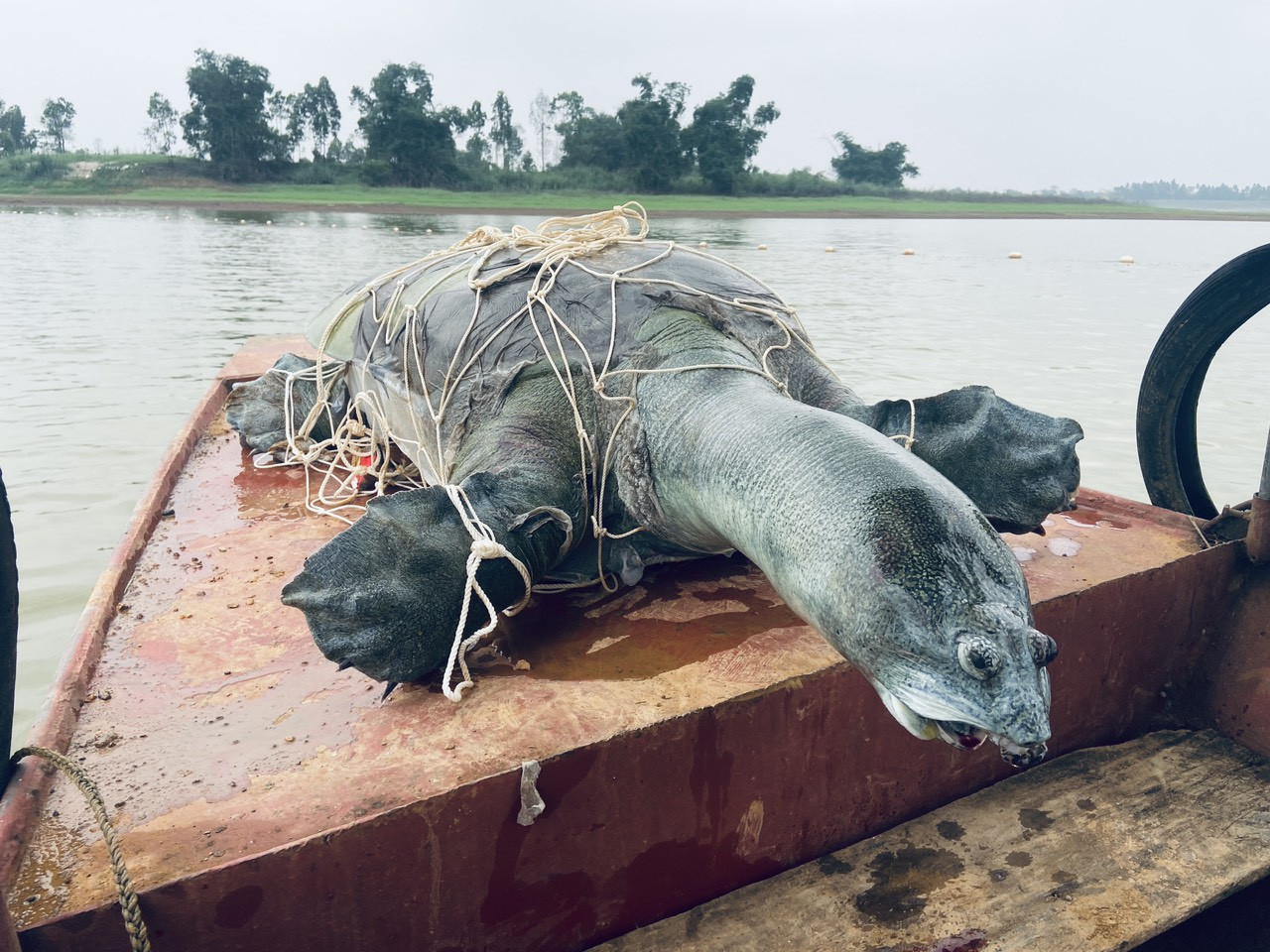
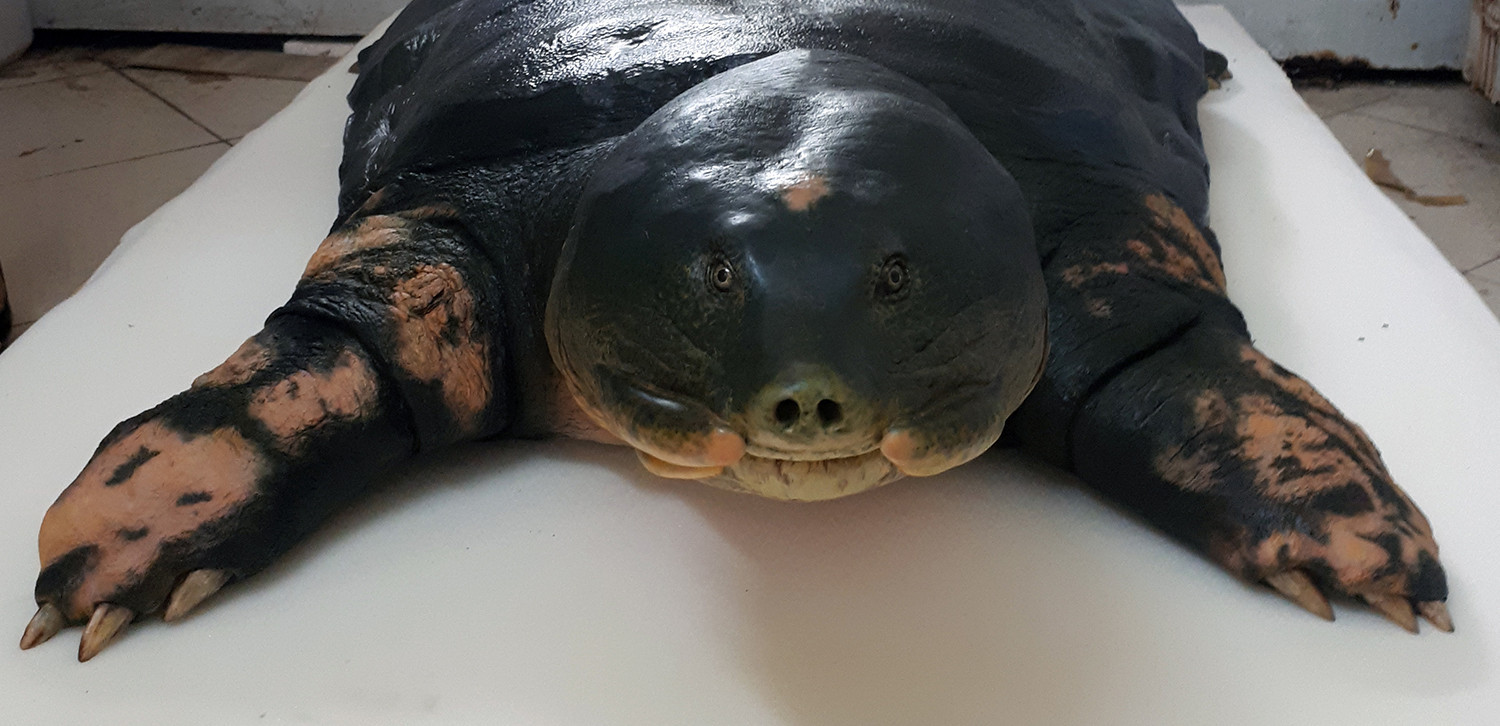
If another Rafetus swinhoei is confirmed at Dong Mo, Truong said it would represent “very good news and tremendous hope” for conservation efforts, not only in Vietnam but globally.
Every surviving individual would provide another valuable genetic resource that could potentially support future conservation and breeding efforts.
Conservation, however, cannot wait until another turtle is found.
Scientists say the immediate priority is protecting the species’ habitat, particularly feeding areas and potential nesting grounds. This includes preventing water pollution, reducing waste - especially plastic - and controlling invasive animal and plant species.
Local communities also have an important role to play. Activities such as fishing with hooks, littering or releasing non-native species into the lake can place additional pressure on the ecosystem and on any turtles that may still survive there.
Hanoi’s Department of Agriculture and Environment is currently working with the Asian Turtle Program to monitor Dong Mo Lake and search for further evidence of the species’ presence. Continued use of eDNA could help researchers look for traces of the turtle.
Over the longer term, Truong said turtles at Dong Mo and Xuan Khanh lakes should be protected in their natural habitats through the establishment of species and habitat conservation areas, along with efforts to identify their ranges, feeding grounds and potential nesting sites.
If surviving individuals are discovered, determining their sex and health would provide crucial information for considering future breeding options.
Whether the Hoan Kiem turtle still survives in Dong Mo is a question that can only be answered with scientific evidence.
But while scientists search for that answer, one task does not need to wait: protecting the lake and its habitat now.
If some of the species’ last survivors are indeed hidden somewhere beneath the waters of Dong Mo, preserving their home could also preserve a vital chance of survival for one of the world’s most extraordinary turtles.
Hai Phong
.svg)
