 Vietnamnet.vn

 Podcast



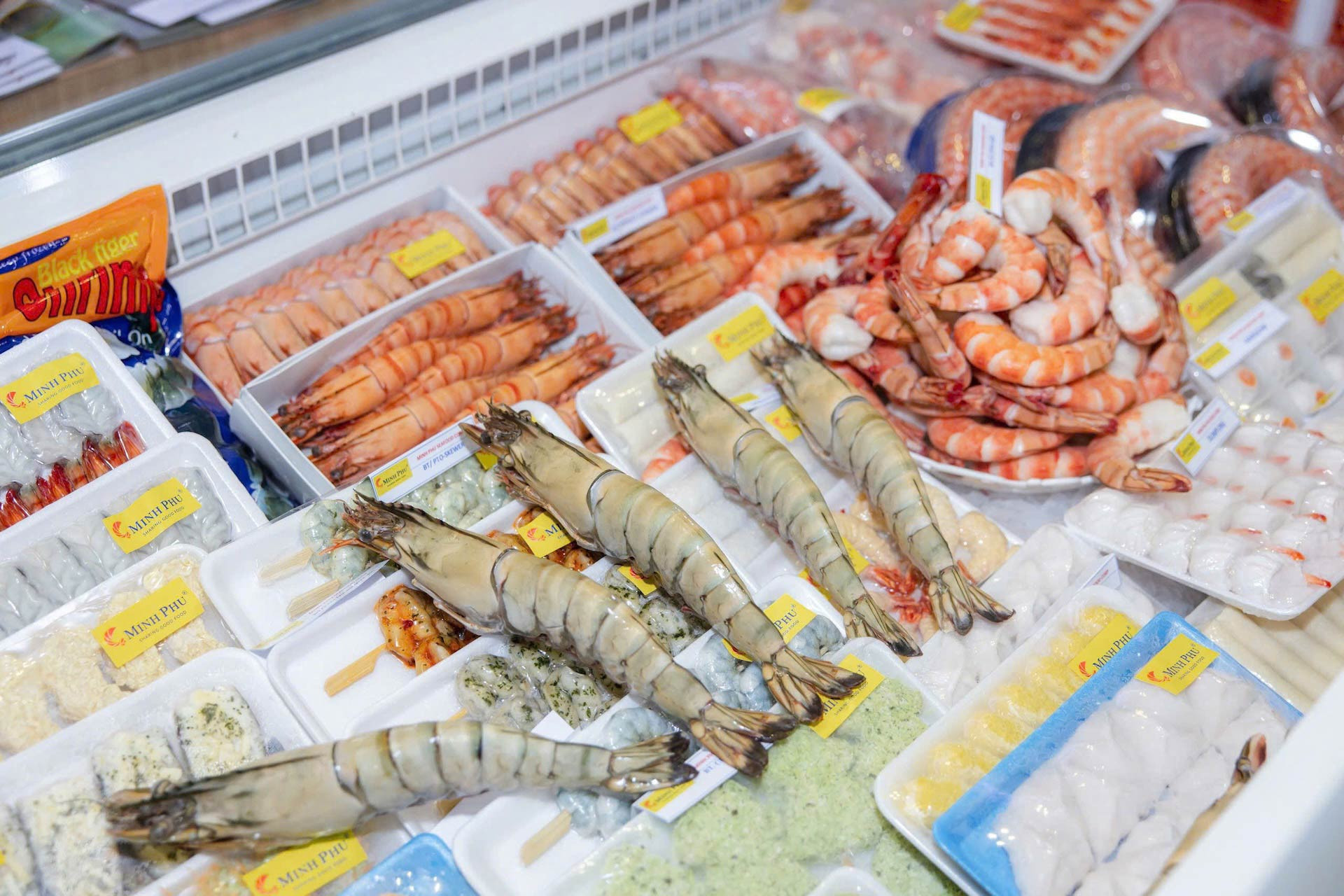
At a press conference on August 6 announcing the Vietnam International Fisheries Exhibition (VIETFISH 2025) in HCM City, To Tuong Lan, VASEP’s Deputy Secretary General, stated that seafood export turnover for 2025 is projected to reach about $9 billion, a 10 percent drop from 2024’s $10 billion.
The decline in exports, as forecasted by analysts, is largely due to the decrease in demand from the US market. According to Lan, the US is a vast market that brings high revenue to the seafood industry, however, there are latent risks for Vietnamese exporters because of the current tax policies.
Advisor to VASEP Truong Dinh Hoe noted that in July alone, seafood exports to the US fell by 20 percent compared to the same period last year. Still, the industry remains hopeful that US consumers are believed to spend more money on food, especially during the year-end peak season.
In the first six months of 2025, the seafood industry recorded an export turnover of $5.25 billion, up 19.5 percent from the same period in 2024. This reflects improved global demand and the adaptability of businesses amid market fluctuations.
“Businesses are leveraging opportunities to explore other markets to offset the revenue falls from the US market,” Hoe said.
“Meanwhile, Vietnam can offer many value-added products favored by American consumers, which Ecuador, a rival for Vietnam, still cannot make. Thus, US importers have been importing products from Vietnam in the last many years,” Hoe said.
According to VASEP, to mitigate risks, businesses are diversifying markets. They are taking advantage of Brazil's agreement with Vietnam to open the Brazilian market doors to shrimp and catfish. Also, Columbia and Peru are also potential markets.
Asian markets like Thailand, Singapore, and the Philippines are also the targets for Vietnamese businesses. The Middle East is another focus for increasing market share. Despite fierce competition from India, Ecuador, Thailand, and the Philippines, Vietnam stands out as a supplier of high-end, value-added processed products to international markets.
Regarding the domestic market, Lan noted that some exporters are not enthusiastic about local sales because their products do not yet resonate with consumers. This stems from a misconception that export products sold in supermarkets are returns.
“That perception is incorrect. Products exported to the EU and US are almost entirely sold out. There’s no such thing as returns being sold in supermarkets,” she affirmed.
VASEP’s representative sees great potential in the domestic market due to shifting consumer demand and the growing middle class.
Tam An
.svg)
