 Vietnamnet.vn

 Podcast


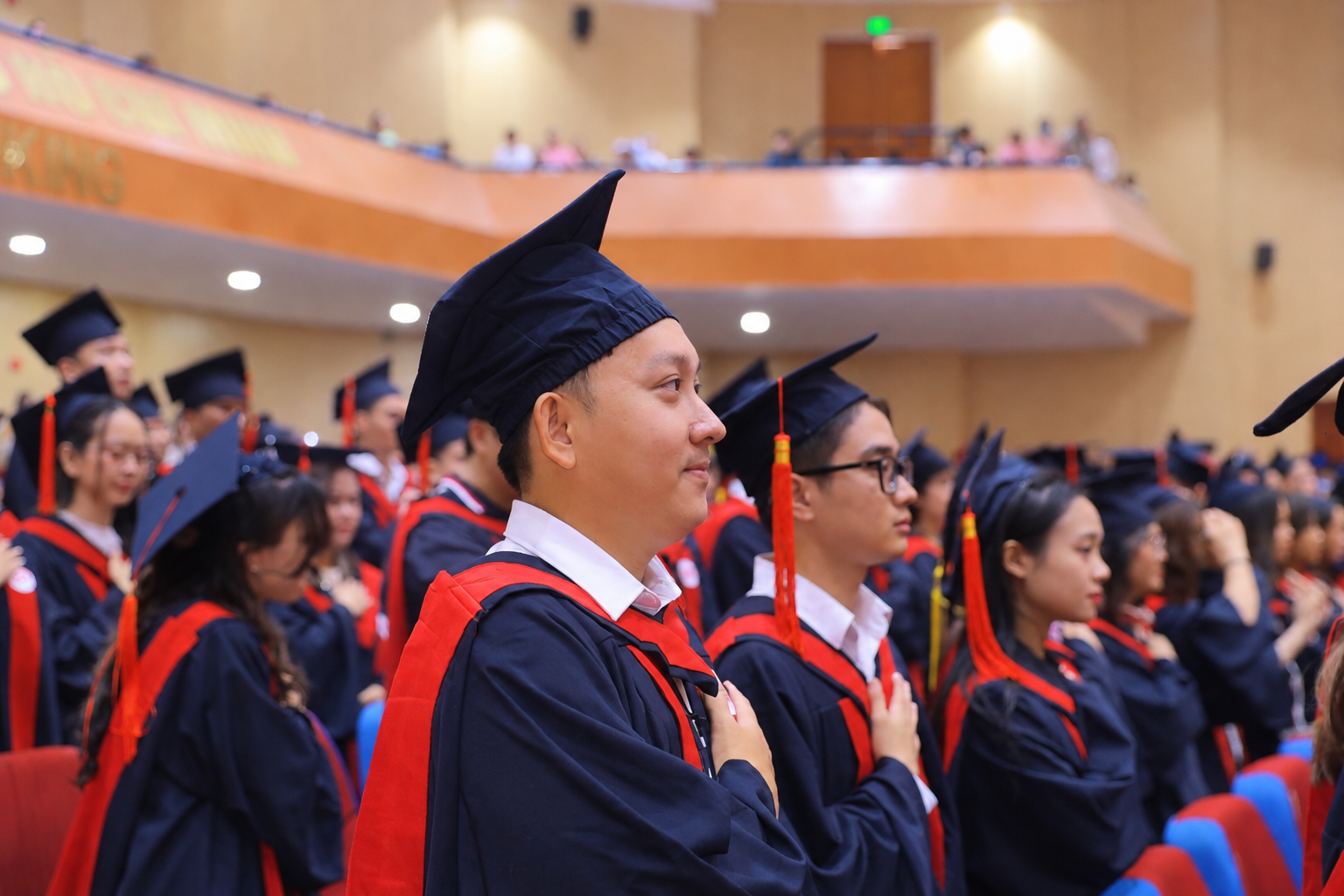
In Hanoi and HCMC, dozens of higher education institutions offer second-degree English language programs through diverse delivery modes, from full-time regular study to part-time and distance learning. Pursuing a second degree English language qualification has become a trend among working professionals.
English Language ranks among the majors with the highest number of second-degree providers, with 35 higher education institutions in northern Vietnam operating the programs under various modalities.
Only a handful of universities offer full-time programs, including Hanoi University and the National Economics University. Hanoi University admits students twice a year, with a combined annual enrollment quota of more than 300. The program is delivered mainly through in-person classes, with online learning accounting for no more than 30 percent of the total.
Admission is based on the cumulative grade point average of applicants' first university degree or a higher qualification. The program comprises 131 credits, similar to the regular full-time English Language program.
Students may have previously completed equivalent courses recognized and exempted from the second-degree curriculum. Graduates must meet the same learning outcomes as students in the regular full-time program, including foreign language proficiency requirements.
National Economics University initiated regular second-degree admissions for English Language in 2018. Students follow a curriculum similar to first-degree undergraduates, totaling roughly 145 credits, and must meet an IELTS 6.5 or equivalent certification standard.
Conversely, distance learning represents a favored format among northern institutions, including Trade Union University, Hanoi University of Industry, and Thanh Do University. At Trade Union University, the program spans roughly two years, utilizing transcript screening rather than entrance exams.
Hanoi University of Industry offers distance-learning options taking from 1.5 years depending on prior qualifications, utilizing document reviews without entrance tests.
Additionally, several northern universities offer part-time formats, such as the University of Languages and International Studies under Vietnam National University, Hanoi, Hanoi National University of Education, and ThuyLoi University.
The University of Languages and International Studies admits degree holders by ranking academic averages from high to low until quotas are filled. Training spans a maximum of three years across 130 credits, featuring primarily face-to-face instruction with online components capped at 30 percent.
Certain institutions implement both distance and part-time formats, including Hanoi Open University, blending in-person and online instruction for part-time learners while relying on e-learning systems for distance education.
In southern Vietnam, second degree English language providers cluster primarily around HCMC. Key institutions include HCMC University of Education, Saigon University, HCMC Open University, HCMC University of Banking, HCMC University of Foreign Languages and Information Technology, Ton Duc Thang University, Hoa Sen University, HUTECH University, UEF, Hong Bang International University, and Van Lang University.
Regional institutions such as Can Tho University, An Giang University, Dong Thap University, Tra Vinh University, and Cuu Long University also participate in offering these programs.
Institutions adopt diverse formats to serve working adults requiring flexible scheduling. Enrollment quotas vary significantly: Van Lang University, Dong Nai University of Technology, and Thu Dau Mot University recruit a few dozen students, while Binh Duong University opened 100 slots in its third intake for 2026.
Sharp growth spurs strict quality audits
According to Ministry of Education and Training (MOET) data, enrollment across regular and part-time second degree English language programs rose from 10,613 learners in 2023 to 17,113 in 2025, marking a 61.2 percent increase.
Distance education experienced similar expansion, jumping from 32,489 to 52,129 learners (up 60.5 percent), as participating institutions increased from 20 to 39.
For 2026, universities registered 38,224 distance-learning quotas, 5,810 regular second-degree quotas, and 6,534 part-time quotas.
Facing rapid scale expansion, Deputy Minister of Education and Training Le Quan instructed the Higher Education Department to conduct specialized audits regarding distance-learning second degree English language programs. The ministry will inspect selected institutions before conducting nationwide reviews in coordination with the Internal Political Security Department under the Ministry of Public Security.
The Deputy Minister also ordered the prompt issuance of curriculum standards for foreign languages, literature, and culture fields, emphasizing that second-degree output standards must strictly match regular full-time programs.
Students enrolled in a second degree English language track will receive bachelor's degrees only after earning Level 5 foreign language certificates, equivalent to the C1 level on the CEFR scale.
Le Huyen - Thuy Nga

