 Vietnamnet.vn

 Podcast



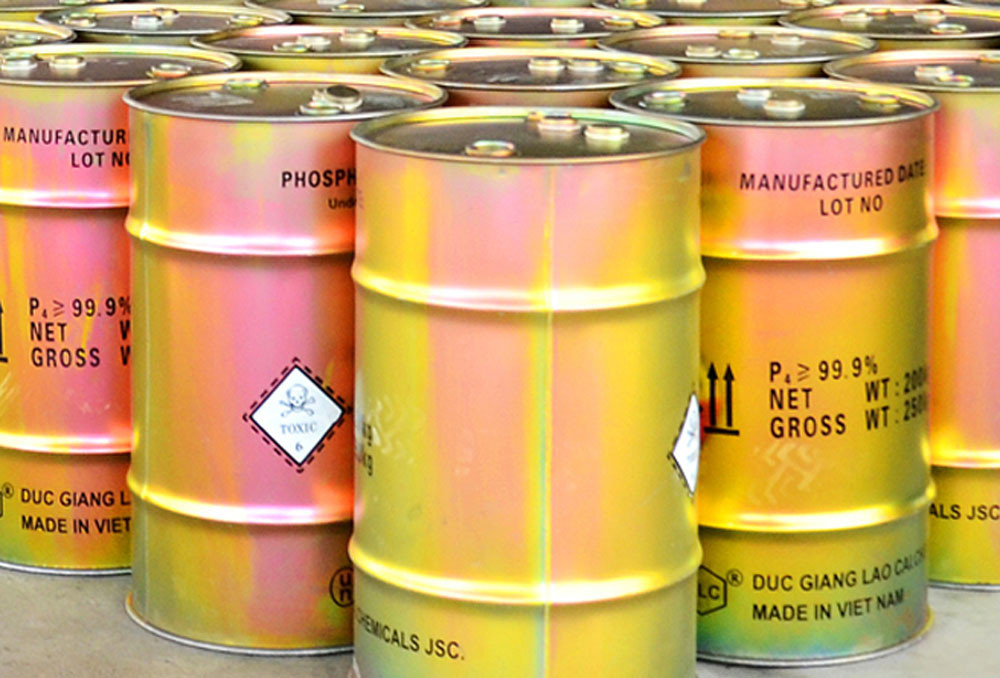
Yellow phosphorus products of Duc Giang Chemicals. Photo: DGC
A series of unusual developments has emerged at Duc Giang Chemicals Group after low-profile businessman Dao Huu Kha was appointed chairman, replacing his older brother Dao Huu Huyen, who was prosecuted earlier this year.
DGC shares plunge as leadership reshuffle rattles investors
In recent days, shares of Duc Giang Chemicals Group have come under intense selling pressure following a wave of news surrounding senior management changes and legal troubles involving the company.
Although the group has already appointed a new chairman after the former chairman and his son were prosecuted, DGC shares fell another VND700 on May 12 to VND47,900 per share - around $1.88 - marking the stock’s lowest level in the past three years.
Compared with its peak of roughly VND125,000 per share - about $4.90 - reached in mid-2024, DGC has lost around 62% of its market value.
The sharp decline also dragged down covered warrant CDGC2501, issued by Vietcap Securities.
During the May 12 trading session, the warrant hit the floor price as investors grew increasingly cautious about the chemical giant’s short-term outlook.
Selling pressure intensified further as foreign investors continued to offload shares aggressively.
On May 12 alone, foreign investors net sold nearly 2.59 million DGC shares, while purchases totaled only around 971,000 shares.
Earlier, during the May 11 session, DGC shares briefly hit the floor after the company announced a change in the chairman position.
Under the newly released resolution, Dao Huu Kha officially assumed the role of chairman for the remainder of the 2024-2029 term starting May 8.
Born in 1970 in Hung Yen Province, Kha is the younger brother of former chairman Dao Huu Huyen.
Before his appointment, Kha remained largely unknown to the market despite being one of the company’s major shareholders.
He owns nearly 22.7 million DGC shares, equivalent to 5.97% of charter capital, with a market value of around VND1.1 trillion - approximately $43.1 million.
His wife, Ngo Thi Ngoc Lan, also holds a 6.64% stake in the company.
Immediately after taking over as chairman, Dao Huu Kha signed a series of major personnel decisions across subsidiaries within the DGC ecosystem.
Several key positions at units operating in chemicals, real estate and sports were reorganized in an effort to stabilize management operations.
Kha will directly represent DGC’s capital at Vietnam Apatit Phosphorus JSC and Tia Sang Battery JSC.
Luu Bach Dat was additionally assigned chairman roles at two subsidiaries in Lao Cai and Nghi Son.
Several other executives were also reassigned and appointed to strengthen the group’s operational structure.
The management shakeup comes as DGC faces a major legal crisis.
In March, the Ministry of Public Security’s investigative agency launched criminal proceedings related to environmental pollution, violations of natural resource extraction regulations and accounting violations involving Duc Giang Chemicals and affiliated entities.
Former chairman Dao Huu Huyen, his son Dao Huu Duy Anh and several others were prosecuted in connection with the case.
Despite the investigation, Huyen remains the company’s largest shareholder with ownership of around 18.4%.
Combined holdings tied to Huyen’s family currently exceed 45% of charter capital.
Mounting pressure but growth potential remains
Beyond legal and personnel issues, Duc Giang Chemicals is also facing mounting pressure in the stock market after its shares were moved from warning status to controlled status starting May 13 due to the late submission of its audited 2025 financial statements.
Earlier, the Ho Chi Minh City Stock Exchange removed DGC from the VN30 index basket and replaced it with Binh Son Refining and Petrochemical JSC.
The stock was also excluded from several major indexes including VN100, VNAllshare, VNMITECH and VN50 Growth.
The move added technical selling pressure from index-tracking investment funds.
To address delays in financial disclosures, DGC said it had selected UHY as its new audit firm and appointed Truong Thi Loan as chief accountant from May 8.
According to company executives, the delay in completing financial statements stemmed from the fact that many accounting records and documents had been sealed during the investigation process.
After finalizing the selection of the audit firm, the company plans to complete the 2025 audited statements in an effort to remove the stock from warning status.
At a recent extraordinary shareholders’ meeting, many investors expressed concerns over whether the company could maintain its long-term development strategy after longtime leader Dao Huu Huyen became entangled in legal proceedings.
However, Luu Bach Dat insisted that the new leadership team consists of long-serving executives who will continue the company’s previous development orientation.
In terms of operations, DGC remains one of Vietnam’s largest chemical producers, holding a leading position in yellow phosphorus, phosphoric acid and industrial chemicals.
The company owns a vertically integrated production chain ranging from apatite ore mining to deep processing, giving it significant advantages in production costs and profit margins.
Beyond the domestic market, DGC exports products to Japan, South Korea and India.
In recent years, the company has also expanded into chemical batteries and materials for high-tech industries in search of new growth drivers.
Still, recent business results show pressure is mounting rapidly.
In 2025, the company recorded consolidated revenue of more than VND11.262 trillion - about $441 million - up 14%, while net profit rose only 3% to around VND3.189 trillion, equivalent to roughly $125 million.
Entering 2026, growth momentum slowed sharply.
In the first quarter of 2026, DGC’s net revenue fell 24% to VND2.125 trillion - around $83.3 million - while net profit nearly halved year-on-year to VND430 billion, or approximately $16.8 million.
According to the company, surging input material costs were the primary reason behind the profit squeeze.
Sulfur prices tripled from the same period last year, while electricity, coke coal and ammonia prices also climbed significantly.
The temporary suspension of operations at a key apatite mine forced DGC to rely more heavily on imported ore and external purchases, sharply increasing yellow phosphorus production costs.
Manh Ha
.svg)
