 Vietnamnet.vn

 Podcast



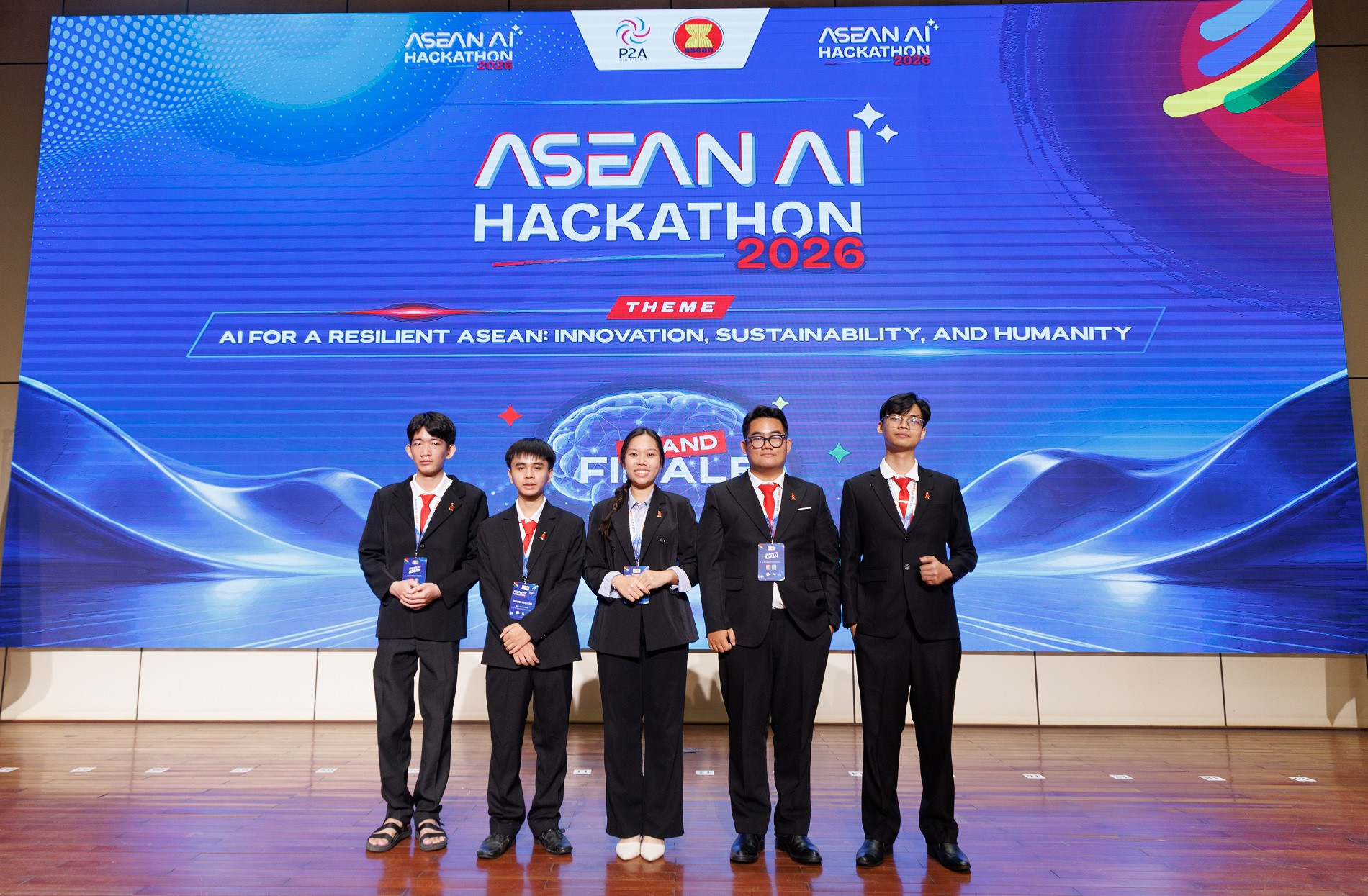
The competition, organized by Passage to ASEAN (P2A) in collaboration with Duy Tan University in Da Nang, aims to identify artificial intelligence initiatives with practical benefits for communities.
According to the organizers, the ASEAN AI Hackathon 2026 attracted more than 240 teams comprising over 1,000 students from more than 110 universities across nine countries. This year’s theme is “AI for a Resilient ASEAN: Innovative, Sustainable, Humane.”
Following four months of preliminary and semifinal rounds, the 16 strongest teams were selected to compete in the final for the championship.
The finalists represent universities and institutions from seven countries, including Chulalongkorn University in Thailand; Universiti Malaya in Malaysia; Universitas Indonesia and BINUS University in Indonesia; the Institute of Technical Education (ITE) in Singapore; Polytechnic University of the Philippines (PUP), Cebu Institute of Technology, University of San Jose-Recoletos, Naga College Foundation and Mapúa Malayan Colleges Laguna in the Philippines; and the American University of Phnom Penh in Cambodia.
Vietnam is represented by two teams, from Duy Tan University and Dong Nai Technology University.
In the final round, each team is given 20 minutes to present and demonstrate its product and answer questions from the judging panel. The format places the feasibility, applicability and practical value of each solution on an equal footing with its technological elements.
The projects focus on four main areas: developing intelligent disaster warning and response systems amid climate change; enabling remote diagnosis in areas with limited access to healthcare services; optimizing transportation and energy for smart cities; and personalizing learning pathways in education.
According to the organizers, the ASEAN AI Hackathon requires teams to begin with real-world problems and develop their products through multiple stages, from initial ideas and prototypes to working demonstrations. Participants must also present and defend their solutions directly before a panel of experts.
What the projects share is not necessarily technological complexity, but an emphasis on feasibility and the ability to work under the practical constraints still faced by many ASEAN countries.
Nguyen Hien
.svg)
