 Vietnamnet.vn

 Podcast



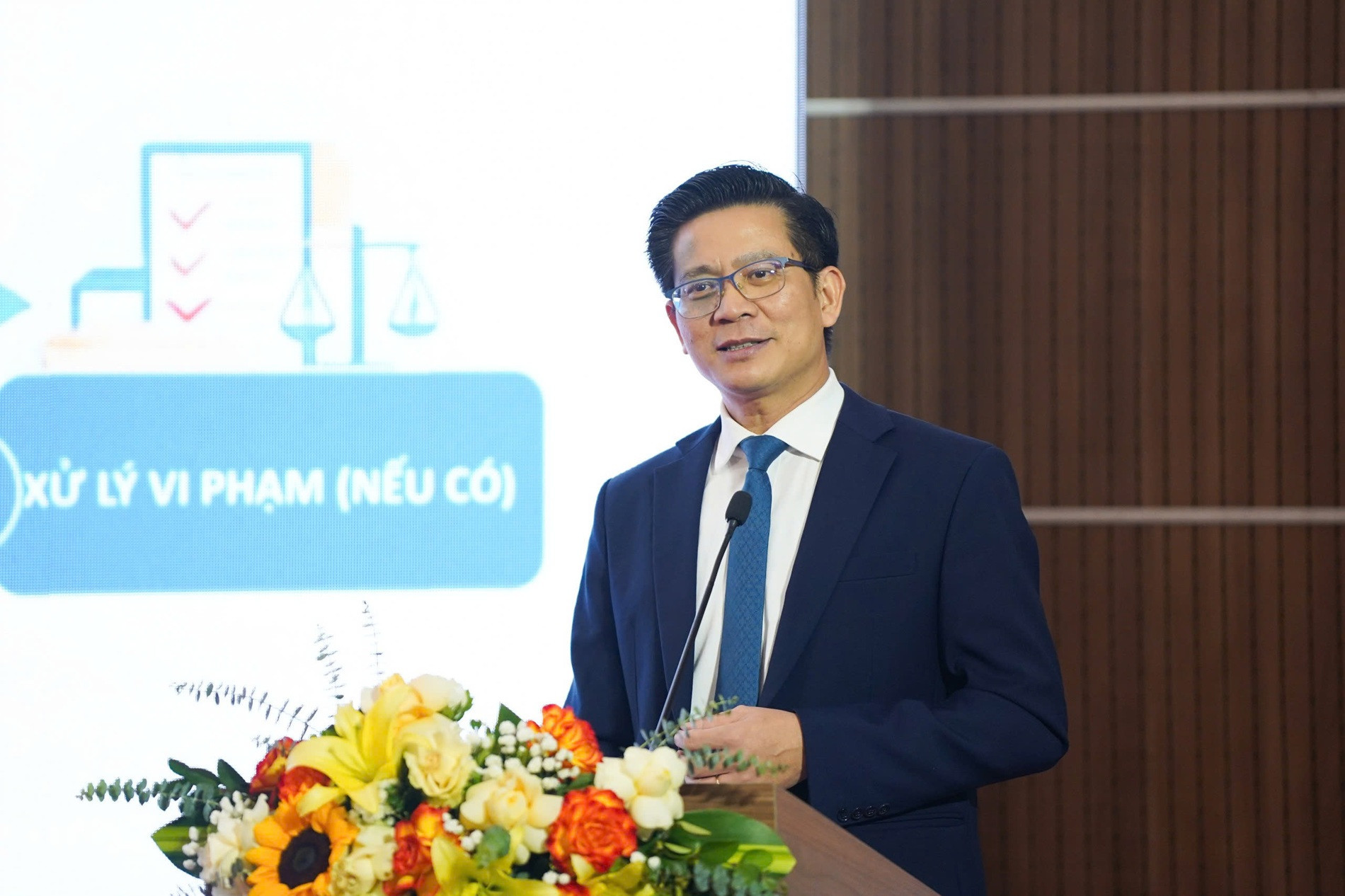
At the conference on the 2026 work program of the Post and Telecommunications sector (Ministry of Science and Technology) on January 10, Le Van Tuan, director general of the Radio Frequency Department, cited the experience in violation monitoring as a typical example of digital transformation.
The problem of “not being able to reach everywhere”
According to Tuan, previously, 95 percent of frequency violations were detected through technical monitoring systems, with the remainder identified via periodic inspections.
However, this traditional approach has revealed major gaps, as it cannot fully cover sea areas, remote regions, or urban areas with complex infrastructure.
“The monitoring system cannot reach everywhere. If we conduct on-site inspections, we do not have enough manpower,” Tuan said: “Should violations simply be allowed to continue in real life?”
The solution came from the instruction of “data-based monitoring” suggested by Minister of Science and Technology Nguyen Manh Hung (then Minister of Information and Communications) at a conference in 2018. The problem was reframed to start from data and analysis to identify inconsistencies and issue early warnings.
The Radio Frequency Department then ran a pilot project to connect data with the Vietnam Register (Ministry of Construction). Under regulations, all vessels operating at sea that are related to human safety, including fishing vessels, must be equipped with radio equipment and be registered.
However, when data on 2,561 passenger and tourist vessels from the Vietnam Register were cross-checked against the frequency licensing database and analyzed using AI, the department found that 60 percent of these vessels did not have frequency licenses.
The rate was particularly high in localities with strong marine tourism. 84 percent of vessels on the list in Quang Ninh lacked frequency licenses; while the figures were 60 percent in Hai Phong, 61 percent in An Giang, and 58 percent in Da Nang.
The department’s leadership acknowledged the reality: “There are a lot of violations. There are hardly any frequency licenses to be found, and the monitoring system is truly powerless in this case.”
Using data to identify violations
To verify the findings, the Radio Frequency Department coordinated with local authorities to organize inter-agency teams to conduct on-site monitoring of more than 500 vessels. Direct inspections showed a high number of violations. For example, in Hai Phong, all 10 companies inspected were found to be in violation.
However, according to Le Van Tuan, the main objective of this approach is not punishment, but improving compliance. Accurately identifying violators through data enables regulators to issue specific warnings.
The department also identified around 200 vessels showing signs of violations, such as being equipped with radio devices but claiming that the equipment was “stored in warehouses” when questioned. These cases were transferred to the Vietnam Register for handling.
As a result, after just one month of the pilot combining reminders with penalties (for deliberate violations), the number of companies coming in for licensing procedures surged. Since November 2025, the authority has fined 14 companies a total of VND250 million.
From practical implementation, Director General Le Van Tuan said four key lessons were drawn. First, digital transformation allows to detect violations without requiring frequency monitoring systems to cover every corner.
Next, identifying databases and connections will determine the ability to succeed. Field monitoring and punishment have a great effect in changing the awareness and thinking of violators.
Finally, the feedback mechanism helps units sharing data detect their own problems.
From this success, the Authority of Radio Frequency said it will continue to expand connections with other databases, such as fishing vessel data from the agricultural sector, to connect and step-by-step build online monitoring functions with databases outside the industry on the Authority's frequency management platform.
The Authority also requested frequency centers to coordinate with each Department of Science and Technology so that each Department uses at least one database, identifying missing licenses, and analyzing data to remind them.
At the conference, Minister of Science and Technology Nguyen Manh Hung requested the Radio Frequency Department to shift from frequency licensing management to frequency resource governance; from static management to flexible frequency management aligned with new technologies, giving rise to multiple new licensing models; and from purely technical management to market creation and national spectrum standards, thereby building an efficient frequency market.
.svg)
