 Vietnamnet.vn

 Podcast



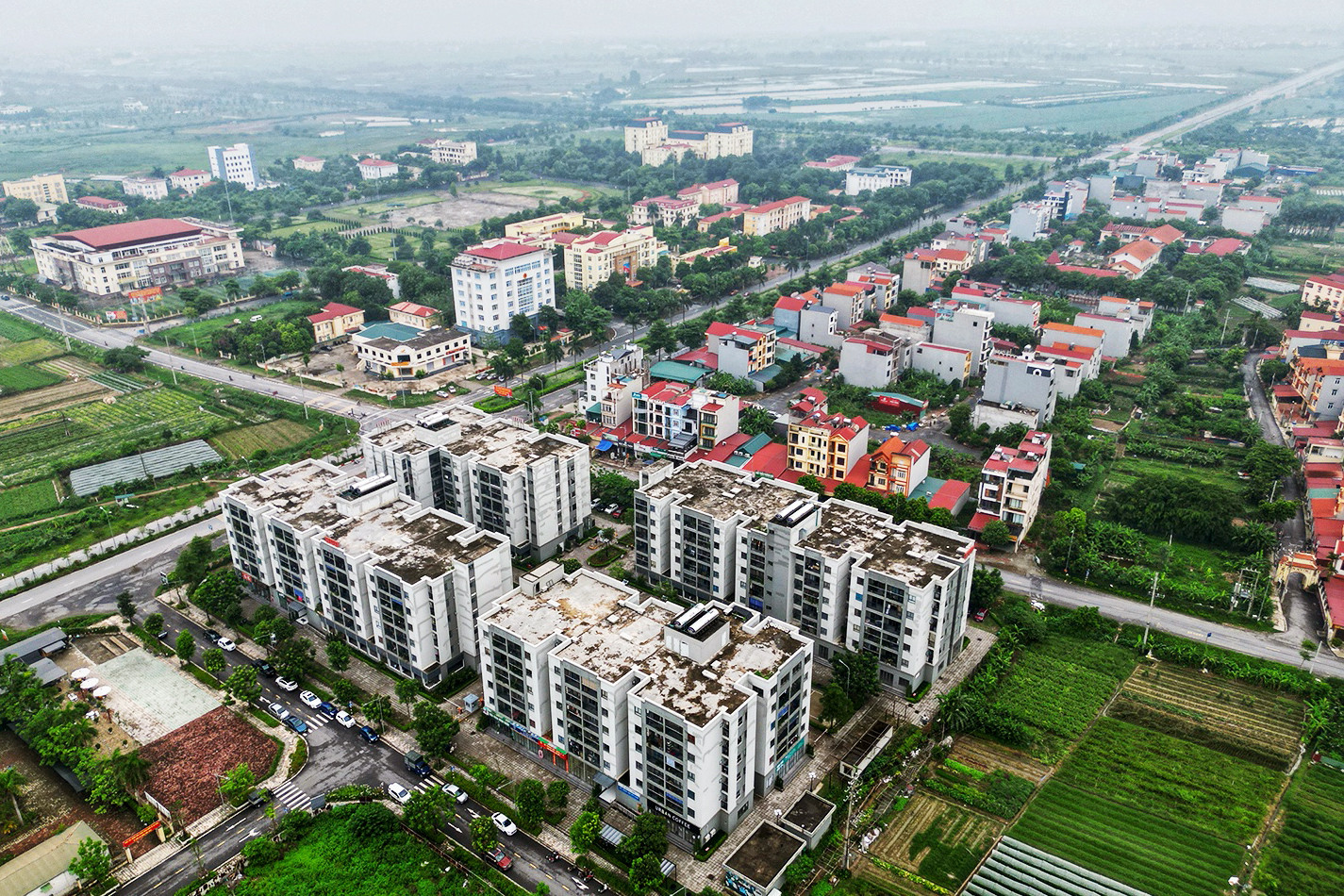
One day, they received a notice requesting to return to the apartment because their income at the time of application for the apartment a decade ago was deemed inconsistent with the "low-income earner" criteria.
Such stories are no longer rare. Many localities have recently begun reviewing social housing projects implemented years ago, and some social housing buyers have been asked to return their homes because the original buyers were determined not to belong to the correct group of policy beneficiaries.
Legally, this approach has its basis. But when placed in today’s context, the issue reveals a paradox worth considering.
While some localities are reclaiming homes based on income criteria from 10 years ago, the government is considering expanding eligibility for social housing to people earning around VND25–VND27 million per month.
These two approaches appear to be moving in different directions within the same policy.
A humane policy but not a cheap one
For many urban workers, social housing is a lifeline in an increasingly expensive housing market.
A small but stable apartment can help a family escape the vicious cycle of cramped rental rooms, provide children with a stable place to study, and help wage earners start accumulating for the future.
But to have such low-priced houses, the State has actually had to spend enormous resources: exempting land-use fees for projects, reducing taxes for developers, supporting infrastructure, and providing preferential interest rate loans for buyers.
Because it carries so many incentives, social housing has also become a very sensitive policy. If managed loosely, this housing fund can easily be turned into a new channel for speculation.
That is why at the end of 2025, the Prime Minister issued Directive 34 calling for strict handling of acts such as “illegal brokerage or dishonest declarations to buy social housing”.
According to the Statistics Office, the average income of workers in 2025 was only about VND8.4 million per month, while the average income in urban areas was about VND10.1 million.
Notably, earning just over VND10 million per month already places someone among the top 20 percent income group in the country.
Social housing policy, therefore, is highly humane for low-income people.
When old criteria meet new realities
Recent inspections have found many cases where homes were reclaimed because buyers did not meet the income criteria at the time their applications were reviewed ten years ago. But the conditions today are very different.
Recently, a new policy proposal is considering allowing people with monthly incomes of VND25–VND27 million to access social housing, because even with this level of income it is still difficult to buy market-rate housing under current price conditions.
The gap between housing prices and incomes in major cities is widening. In Hanoi and HCMC, many apartment projects are now offered at prices of hundreds of millions of VND per sqm, while workers’ incomes are growing slowly, making housing increasingly inaccessible even for people with stable jobs.
Rapid housing price increases are not only a real estate market issue. They are beginning to leave marks on the social structure.
Placed side by side, these figures reveal a paradox. If today policy considers someone earning VND25 million per month eligible for support, then reclaiming a home from someone 10 years ago because they earned VND10–VND12 million raises questions about whether it is reasonable.
This is not simply a matter of right or wrong in an administrative file. It reflects a mismatch between old criteria and new economic realities.
Another question must also be asked: if an application was ineligible from the beginning, why was it approved?
Allowing violations to remain undetected for a decade reveals gaps in the approval and supervision process. In that situation, requiring citizens to bear the full consequences of a weak management system is something that should be carefully considered.
Some experts suggest that instead of reclaiming homes after many years of residence, the state could require buyers to repay the incentives they received, such as exempted land-use fees or preferential loan interest.
After repaying those incentives, the apartment could be converted into a commercial housing unit.
Such an approach would allow the state to recover public resources while avoiding pushing families who have already built stable lives into uncertainty.
Tu Giang
.svg)
