 Vietnamnet.vn

 Podcast



Coaches warned against driving across Hai Van Pass

The Danang Traffic Safety Board last weekend wrote to relevant agencies asking them to tighten control over traffic safety on the snaking Hai Van Pass and proposing warning coaches not to drive across the pass in adverse weather conditions following a deadly accident on January 8.
In particular, the board proposed the Danang Department of Tourism direct travel firms and tour operators to raise awareness and warn coaches plying Hai Van Pass, which links Danang City and Lang Co Town, Thua Thien-Hue Province, of the danger.
Earlier, on January 14, Deputy Director of the municipal Tourism Department Nguyen Xuan Binh sent a notice to travel firms requiring them to guarantee utmost traffic safety for passengers when crossing the pass on the Tet holiday due to the zigzag road.
Nguyen Ngoc Anh, director of Omega Tours Company, suggested there should be a prohibition notice or warning sign placed at the entrance of Hai Van Pass to prevent coaches from using the pass when the weather is bad.
Although Hai Van Tunnel is now open to traffic for vehicles, many coaches still drive across the pass so that visitors can admire the spectacular views, Anh stated, adding that at the end of the lunar year, rainy, cloudy and foggy weather conditions will cause difficulties for drivers in ensuring passenger safety.
Also Anh remarked that the Danang Tourism Association would issue warnings and guidelines to its members to avoid driving tourists across the pass in bad weather conditions.
“As the route toward Hai Van Pass is considered the country’s most beautiful path for visitors to look at natural landscapes on sunny days, we cannot prohibit coaches from taking the route,” Nguyen Van Phuc, deputy director of the Thua Thien-Hue Department of Tourism, told the Saigon Times on January 21, adding that warning signs, however, will be installed at dangerous sections of the road.
Phuc proposed that the relevant agencies ban coaches from crossing the pass on rainy and foggy days to guarantee the safety of passengers.
On January 8, a coach carrying 23 teachers and students from Kien Giang College plunged into a ravine and overturned while driving across Hai Van Pass in Thua Thien-Hue Province, leaving one student dead and many others injured.

A veterinary staff member sterilizes a pig farming facility in this file photo. Outbreaks of foot-and-mouth disease in pigs may increase especially when the Tet Holiday is coming
Foot-and-Mouth Disease (FMD) in pigs will possibly spread to many more localities across the country due to the complicated development of weather conditions and the increasing frequency of the transportation of swine herds and pork products as the Tet holiday draws nearer, heard attendees at a meeting held today by Hanoi Animal Health Division, the local media reported.
The division also warned against possible outbreaks of FMD in swine herds during and after the Tet holiday, now that outbreaks have been reported in seven districts in the capital city. Accordingly, local authorities and farmers should be cautious of the disease and actively take preventive measures to cope with an FMD epidemic.
Besides this, grassroots animal health bodies were asked to offer vaccinations against FMD, sterilize the farming environment and strictly control the transportation of animals. Further, the division has to cooperate with the competent agencies to launch regular inspections of animal farming and transportation to and from the city and check the origins of frozen animal products to promptly prevent the sale of unqualified items.
Speaking at the meeting on reviewing 2018 and introducing tasks for 2019, Nguyen Ngoc Son, head of the municipal animal health division, stated that Hanoi had recorded the growth of the local livestock industry in terms of quality and quantity despite the unfavorable weather conditions.
However, outbreaks of FMD in pigs occurred in 37 hamlets and 22 communes of seven districts in the city in late December last year, leaving nearly 1,000 infected pigs to be culled by veterinary staff and local authorities.
The division had teamed up with agencies to get the outbreaks under control. Also, they concurrently mapped out preventive solutions such as setting up animal quarantine facilities in FMD-hit areas, offering vaccinations and sterilizing vulnerable areas.
To date, the outbreaks of FMD in the city have exceeded 21 days, but no other sick animals have been discovered.
In addition, Tran Xuan Dong, head of the Animal Health Division of Quang Ninh Province, on January 19 was quoted by Tuoi Tre Online as saying that a new outbreak of FMD in pigs was detected in a house in the province’s Binh Lieu District.
Dong added that nearly 50 pigs were infected, presenting common symptoms such as high fever at 41 degrees Celsius, ruptured blisters on their feet and blisters inside their mouths. The swine herd was culled quickly to avoid a potential epidemic.
Data from the Animal Health Division of Quang Ninh Province support forecasts that FMD in pigs would spread to many localities. The outbreaks of FMD to date have hit five communes in Dong Trieu provincial town, Binh Lieu District and Uong Bi City in the province, with over 250 infected pigs. The first outbreak was discovered in Dong Trieu on December 24 last year.
Thanh Hóa police arrest two on drug charges

Vi Văn Đồng at the police station after being arrested for attempted drug trafficking.
Police in the central province of Thanh Hóa reported they had busted two drug rings from Laos, seizing more than 6,000 synthetic drug tablets, a brick of heroin, one kilogramme of crystal meth and several weapons.
On January 19, police in Quan Hóa District caught Hoàng Ngọc Bằng, a 40-year-old from Mường Lý Commune, Mường Lát District, attempting to smuggle a packet of heroin and a meth pill into Trung Sơn Commune.
Searching the man’s house, they seized 10 plastic bags containing 2,020 synthetic drug tablets. Bằng has three previous drug convictions.
After completing previous jail terms, he colluded with other traffickers to bring drugs from Laos to Mường Lát and Quan Hóa districts.
On the same day, local police also arrested Vi Văn Đồng, 36, from Ta Bán hamlet, Trung Sơn Commune, for drug trafficking and storage.
They found 4,200 synthetic drug tablets, a brick of heroin, 1kg of crystal meth, a homemade gun, knives, swords and other tools in his house.
Truck driver prosecuted for deadly crash

The scene of the accident in Hải Dương Province that killed eight people on Monday.—Photo nguoiduatin.vn
The Investigation Police Unit of Hải Dương Province has decided to prosecute a truck driver following a deadly crash on Monday that killed eight people and injured seven others.
The accident occurred when the truck slammed into pedestrians walking on the side of National Highway 5A in Kim Lương Commune, Kim Thành District.
The eight victims were state employees, veterans and other elderly officials of Kim Lương Commune, who were returning home after visiting the local martyrs’ cemetery.
The driver, who was identified as Lương Văn Tâm, 28, temporarily residing in Hà Nội, fled the scene after the accident. He turned himself in to police yesterday evening.
Tâm tested positive for meth.
Tâm told the police that he was drowsy at the time of the accident. He also admitted to using methamphetamine before.
Fire causes panic among apartment residents in capital
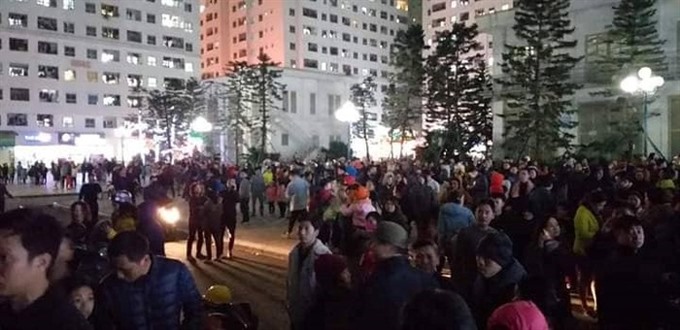
The fire caused panic among residents at the Linh Đàm apartment complex in Hà Nội’s Hoàng Mai District on Monday. — Photo giaoducthoidai.vn
A fire broke out last night on the 15th floor of an apartment complex in Hà Nội’s Hoàng Mai District.
A witness said the fire broke out at 21:45 on the 15th floor of HH3A builing.
The electricity in the building was cut off and the elevators stopped working causing panic among residents, who started to flee.
The fire was contained within an hour, according to local police.
Fortunately, there were no casualties.
Regulations needed to ensure efficiency of public hospitals

Doctors take urine samples at Hanoi's Bach Mai Hospital, one of the first financially independent public medical facilities in Vietnam.
A lack of clear and transparent regulations relating to autonomy for public hospitals is hindering the efficiency of their operation, a senior expert said.
Doan Xuan Tien, Deputy Auditor General of the State Audit of Vietnam, made the statement at a workshop entitled Autonomy mechanism to public hospitals and the role of the State Audit of Vietnam (SAV) held recently in Hanoi.
He said the dearth of regulations meant hospitals still relied on the State budget and could not cover their expenses or find funds to invest in equipment and other facilities to improve health care services.
According to Nguyen Nam Lien, Director of the Planning and Finance Department under the Ministry of Health (MoH), as many as 160 public hospitals independently controlled their regular expenditures by the end of last year.
Another 1,364 hospitals with partial financial autonomy could control between 80 and 90 percent of their regular expenditures.
Nguyen Truong Son, Deputy Minister of Health, said positive results had been recorded in providing autonomy to a number of health facilities.
Autonomy helps reduce State spending, while the quality of health care services is improved, meeting patients’ demand, according to the official. Most public hospitals have been proactive in mobilising private investment to upgrade their medical equipment.
Statistics from the ministry showed that State expenditure for the health sector decreased over the past three years. The State budget allocation for hospitals in 2018 was 3.9 trillion VND (137 million USD) lower than in the previous year.
While applauding the increasing number of hospitals with budget autonomy, Lien also pointed out shortcomings which need to be solved.
In accordance with the Law on the management and use of State Assets and Government Decree No 151, if public hospitals want to purchase medical equipment or facilities, they have to join with investors and undertake procedures like a business. This was not appropriate, he said, adding that many health facilities seek upgrades to improve care, not to increase revenue.
Regarding the results of SAV inspections at public hospitals, Chief Auditor from the SAV Le Dinh Thang said there was a pattern of hospitals collecting more than the allowed amount of money and abusing high-tech medical services and medicine. These incidents worsen the financial burden on poor patients and uninsured people and reduce their access to care.
According to Thang, a number of centrally run hospitals are expanding in-demand health care services to collect more fees. Many of the services could and should be conducted at the provincial or district level to improve funding for these lower level hospitals.
Nguyen Trong Khoa, Deputy Director of the Medical Examination and Treatment Department under the MoH, said a number of problems had been revealed during the Vietnam Social Insurance and the MoH’s joint examination of health insurance and treatment.
A number of health facilities had intentionally prolonged patients’ treatment and unnecessarily prescribed expensive medicines, he said.
“We saw some doctors made five or six diagnoses in a medical record during an inspection at a hospital,” he was quoted by Kinh te & Do thi (Economic and Urban Affairs) newspaper as saying.
Khoa emphasised the need to improve the management capacity of hospitals to minimise problems relating to professional skills and financing.
To solve difficulties for autonomous hospitals, participants at the workshop agreed it was necessary to allow them to make independent decisions on buying equipment and medicine according to their demand to ensure efficiency. The building of regulations to avoid abusing treatments and medicines as well as assure reasonable prices was also a must.
Pham Dinh Cuong, an economic expert, said hospitals should be clear on what they could do and what they could not do while exercising their right to autonomy.
Bui Sy Loi, Deputy Chairman of the National Assembly Committee for Social Affairs, suggested the Government complete mechanisms on financial autonomy for public hospitals to prevent negative effects on health care when the market economy is applied at hospitals.
He also called for increased State spending for health care to ensure sufficient investment in preventive care and health care at a grass-roots level.
EVN to ensure stable power supply for Tết

Việt Nam Electricity in HCM City is taking measures to ensure a stable power supply during the Tết holiday.
To ensure a stable power supply during the Tết (Lunar New Year) holiday, Việt Nam Electricity (EVN) in HCM City will cease certain operations that could cause a power shutdown.
Nguyễn Tấn Hưng, head of the community relations board of EVN in HCM City, said the company would also ensure power to places where political and cultural activities will be held to welcome the New Year. In addition, it will check and resolve any problems on the grid and electrical stations
EVN Việt Nam and its branches will also ensure that staff are available on duty 24/24 to fix any electrical problem during the holiday.
The company will work with local authorities to enhance security of electricity works and ensure fire safety at residential and recreational areas, and public places.
EVN has also committed to fixing any electricity-related problems to ensure that citizens will have a safe and prosperous holiday.
Lao drug traffickers arrested in Hà Tĩnh

The traffickers at a police station in Hà Tĩnh Province. — Photo baovephapluat.vn
Two drug traffickers were arrested on Monday by police in the central province of Hà Tĩnh.
The traffickers, from Borikhamxay Province in Laos, were stopped in Sơn Bằng Commune, Hương Sơn District with over 2,000 synthetic pills.
Both confessed to buying and transporting the drugs from Laos to Việt Nam.
The case is under further investigation.
Grape variety approved for cultivation

Ninh Thuận Province’s new grape variety is large and of high quality.
The Ministry of Agriculture and Rural Development’s plant cultivation department has recognised Ninh Thuận Province’s NH01-152 as a new grape variety and allowed the province to grow it on a trial basis before beginning commercial cultivation.
The south-central province, the country’s largest grape producer, has been growing the new variety on an experimental basis since 2013 on an area of 6ha and so has the neighbouring province of Bình Thuận.
NH01 -152 was created by the province-based Nha Hố Research Institute for Cotton and Agriculture Development.
Phan Công Kiên, deputy head of the institute, said the department’s recognition would enable farmers to mass produce the grape and thus have a new high-quality variety.
It would replace some old grape varieties now grown in the province, he said.
It produces an average yield of 15 – 18 tonnes per hectare in each of its two annual crops, according to the institute. It can be grown on many different types of soil, has a high fruiting rate and is highly disease-resistant.
Its fruit is large and has a slight fragrance, just one or two seeds and flesh that is slightly sweet, firm and crunchy and is meant mainly for eating fresh.
Traders buy the new grape fruit at VNĐ100,000 - 120,000 (US$4.3 – 5.2) a kilogramme, two times the price of the red cardinal and NH01-48, two major grape varieties grown in Ninh Thuận.
Grape farming has been developing in Ninh Thuận in recent years with local authorities showing farmers advanced methods of growing the fruit, including using water-efficient irrigation.
Ninh Thuận gets the lowest rainfall in the country while half of the province’s grape growing area does not get water from irrigation works.
The province People’s Committee has instructed relevant agencies and localities to expand the area under grapes grown to Vietnamese good agricultural practice (VietGAP) standards.
Localities have been instructed to grow NH01 -152 in large-scale grape fields in Ninh Hải District’s Vĩnh Hải Commune.
The province plans to expand grape orchards-related eco-tourism and promote the brand name of its grapes that are meant for eating fresh.
Households offering tourism services in their grape orchards are taught both how to grow to VietGAP standards and tourism-related skills.
In 2012 the province’s grape varieties were granted geographical indication (GI) certification by the National Office of Intellectual Property.
It has nearly 1,300ha under the fruit, 80 per cent of it red cardinal and the rest other varieties, and an annual output of 30,000 tonnes.
Sóc Sơn urged to relocate residents

Chairman of Hà Nội’s People’s Committee Nguyễn Đức Chung has ordered local authorities of Sóc Sơn District to accelerate work on land clearance and compensation for residents affected by the Nam Sơn Waste Treatment Complex or Nam Sơn dumping ground.— Photo laodong.vn
Chairman of Hà Nội’s People’s Committee Nguyễn Đức Chung has ordered local authorities of Sóc Sơn District to accelerate work on land clearance and compensation for residents affected by the Nam Sơn Waste Treatment Complex or Nam Sơn dumping ground.
From January 10 to 14, local residents blocked garbage trucks attempting to carry waste to the dump to protest the sluggish process of land clearance and compensation for a relocation project.
In 2017, due to pollution caused by the Nam Sơn dump, local authorities approved a project to relocate more than 1,000 households of three communes - Bắc Sơn, Hồng Kỳ and Nam Sơn, out of the affected areas which are located less than 500m from the dump.
Chairman Chung assigned tasks to the People’s Committee of Sóc Sơn District to complete work on compensation and resettlement assistance for the affected residents.
The committee was ordered to approve compensation and use the budget correctly.
The budget for compensation will be sourced from the city’s investment fund for development.
Earlier city and district authorities held meetings with residents living around Nam Sơn dump to discuss solutions on land clearance and compensation. After the talks, protesters agreed to dismantle tents and clear the way leading to the dump.
Set up in 1999, the Nam Sơn garbage dump, covering an area of 83ha, receives more than 4,000 tonnes of waste per day from four of Hà Nội’s inner districts.
The authorities approved a three-floor waste incinerator to reduce the amount of garbage and planned to close the dump by 2021.
In a related move, the municipal People’s Committee asked Sóc Sơn District’s authorities to review violations of illegal construction on agricultural land and make a list of violations cases in five communes – Xuân Khu, Kim Lũ, Đông Xuân, Phù Lỗ and Phú Minh.
The district authorities were urged to step up supervision on construction work and stiffen penalties on violators.
They were asked to review abandoned agricultural and public land and deal with violations related to handing over, leasing land or switching land-use purposes.
The city’s inspectorate and Department of Natural Resources and Environment were assigned to establish working teams to inspect illegal construction on agricultural and public land.
The orders were issued after 27 constructions including houses, villas and even an eco-tourism area with a swimming pool, stilt houses and concrete roads were found to have been illegally built on forest land in Sóc Sơn District over the past two years.
The city’s People’s Committee asked the house owners to take the buildings down.
Ministry asks hospitals to prepare for Tết

Doctors at Bạch Mai Hospital in Hà Nội visit a new mother. The health ministry yesterday asked all hospitals across the country to prepare human resources, medicines and medical equipment for emergencies during the Lunar New Year holiday.
The Ministry of Health yesterday ordered hospitals across the country to prepare for new patients and maintain good services for inpatients during the Lunar New Year holiday.
The ministry requested all hospitals to provide immediate first aid for severe emergencies, even if their injuries are not within the hospitals’ areas of expertise.
Only when the patients are out of critical condition should they be transferred to other hospitals, the ministry said in a statement.
All hospitals should have a clear patient transport plan, especially for elderly patients with acute pneumonia and suffering from sequelae of stroke, and children with respiratory diseases, it said.
The ministry also requested health departments across the country to reinforce the service mindset at hospitals in their areas and remind medical staff to maintain good services for inpatients during the holiday.
Working shifts should be divided between doctors, nurses and staff at the hospitals’ departments of emergency resuscitation and infection to ensure timely treatment for patients, the ministry said.
“All hospitals must be open 24 hours per day and make sure they have enough human resources, medicines, and medical equipment to handle emergencies such as victims injured in traffic accidents, people suffering from food poisoning, or mothers giving birth during the holiday,” it said in the statement.
Health centres and medical units should also prepare medicines, beds, and medical equipment in case of disease outbreaks, it added.
Nguyễn Quốc Anh, director of Bạch Mai Hospital in Hà Nội, yesterday asked all doctors at the hospital to evaluate the conditions of their patients and decide whether they should be hospitalised, with priority given to those in serious conditions.
The doctors should inform concerned personnel of new inpatients prior to their arrival, and of their arrival times for better bed arrangement, he added.
“Do not, under any circumstances, pass patients around or create trouble for them and their family members,” he said.
Doctors at the hospital’s Artificial Kidney Unit will be on duty all day long during the holiday to perform dialyses for patients with kidney failure, Quốc Anh added.
The hospital’s leaders and doctors on February 1 will pay a visit and give presents to the patients that will be staying over the holiday, he said. Free meals will be provided for all inpatients and medical staff during February 4-6, he added.
A total of 147 accidents occurred nationwide over the four-day New Year’s holiday (December 29, 2018 – January 1, 2019), claiming 111 lives and injuring 61 people.
During Tết last year, 195 people died in traffic accidents while another 199 were injured, 2018, with alcohol being the leading cause. About 810 people were hospitalised during that time due to alcohol poisoning.
Transparent regulations needed to ensure the efficiency of public hospitals

Doctors take urine samples at Hà Nội’s Bạch Mai Hospital, one of the first financially independent public medical facilities in Việt Nam.
A lack of clear and transparent regulations relating to autonomy for public hospitals is hindering the efficiency of their operation, a senior expert said.
Đoàn Xuân Tiên, Deputy Auditor General of the State Audit of Vietnam, made the statement at a workshop entitled Autonomy mechanism to public hospitals and the role of the State Audit of Vietnam (SAV) held in Hà Nội on Saturday.
He said the dearth of regulations meant hospitals still relied on the State budget and could not cover their expenses or find funds to invest in equipment and other facilities to improve health care services.
According to Nguyễn Nam Liên, director of the Planning and Finance Department under the Ministry of Health (MoH), as many as 160 public hospitals independently controlled their regular expenditures by the end of last year.
Another 1,364 hospitals with partial financial autonomy could control between 80 and 90 per cent of their regular expenditures.
Nguyễn Trường Sơn, Deputy Minister of Health, said positive results had been recorded in providing autonomy to a number of health facilities.
Autonomy helps reduce State spending, while the quality of health care services is improved, meeting patients’ demand, according to the official. Most public hospitals have been proactive in mobilising private investment to upgrade their medical equipment.
Statistics from the ministry showed that State expenditure for the health sector decreased over the past three years. The State budget allocation for hospitals in 2018 was VNĐ3.9 trillion (US$137 million) lower than in the previous year.
While applauding the increasing number of hospitals with budget autonomy, Liên also pointed out shortcomings which need to be solved.
In accordance with the Law on the management and use of State Assets and Government Decree No 151, if public hospitals want to purchase medical equipment or facilities, they have to join with investors and undertake procedures like a business. This was not appropriate, he said, adding that many health facilities seek upgrades to improve care, not to increase revenue.
Regarding the results of SAV inspections at public hospitals, Chief Auditor from the SAV Lê Đình Thăng said there was a pattern of hospitals collecting more than the allowed amount of money and abusing high-tech medical services and medicine. These incidents worsen the financial burden on poor patients and uninsured people and reduce their access to care.
According to Thăng, a number of centrally run hospitals are expanding in-demand health care services to collect more fees. Many of the services could and should be conducted at the provincial or district level to improve funding for these lower level hospitals.
Nguyễn Trọng Khoa, deputy head of the Medical Examination and Treatment Department under the MoH, said a number of problems had been revealed during the Việt Nam Social Insurance and the MoH’s joint examination of health insurance and treatment.
A number of health facilities had intentionally prolonged patients’ treatment and unnecessarily prescribed expensive medicines, he said.
“We saw some doctors made five or six diagnoses in a medical record during an inspection at a hospital,” he was quoted by Kinh tế & Đô thị (Economic and Urban Affairs) newspaper as saying.
Khoa emphasised the need to improve the management capacity of hospitals to minimise problems relating to professional skills and financing.
To solve difficulties for autonomous hospitals, participants at the workshop agreed it was necessary to allow them to make independent decisions on buying equipment and medicine according to their demand to ensure efficiency. The building of regulations to avoid abusing treatments and medicines as well as assure reasonable prices was also a must.
Phạm Đình Cường, an economic expert, said hospitals should be clear on what they could do and what they could not do while exercising their right to autonomy.
Bùi Sỹ Lợi, Deputy Chairman of the National Assembly Committee on Social Affairs, suggested the Government complete mechanisms on financial autonomy for public hospitals to prevent negative effects on health care when the market economy is applied at hospitals.
He also called for increased State spending for health care to ensure sufficient investment in preventive care and health care at a grass-roots level.
Vietnamese Musicians Association honours notable musical works

The award ceremony of the Vietnamese Musician Association. (Photo: SGGP)
The Vietnamese Musicians Association (VMA) held an awards ceremony on January 22 to honour the best musical works and music critique works of 2018.
The organisers awarded two A prizes, eight B prizes, 29 C prizes and 19 consolation prizes, selected from 195 works by VMA members from throughout the country.
The first A prize was given to a children’s song by Truong Quang Tuyen from Ho Chi Minh City, while the other A prize belonged to Nguyen Thi Minh Chau from Hanoi for 20 critical papers on music published in 2017 and 2018.
A prizes were not awarded in six categories, namely song, art song, chamber music, symphony, choir and music critique.
There were also no music performance shows awarded A, B, C or consolation prizes.
Commenting on the lack of A prizes, VMA Chairman Do Hong Quang stated that this year’s works are good but not outstanding enough.
Nearly 100,000 books displayed at 2019 Book Road Festival

Nearly 100,000 books will be put on show at an annual book road festival in HCM City from February 2-8, in celebration of Tet. (Photo for illustration)
Nearly 100,000 books will be put on show at the annual book road festival in Ho Chi Minh City, from February 2-8, in celebration of the Lunar New Year (Tet) holiday 2019.
This information was announced at a press conference on January 21.
According to Tu Luong, Vice Director of the municipal Department of Information and Communications, the book festival, entitled “Muon mau cua sach” (myriad forms of books), will take place along Mac Thi Buoi, Nguyen Hue and Ngo Duc Ke streets.
Prestigious publishers and distributors such as Phuong Nam, Thai Ha Book and Fahasa will introduce books on the culture and history of Ho Chi Minh City and socio-economic issues.
Notably, photos, books, archives and maps affirming Vietnam’s sovereignty over Truong Sa (Spratly) and Hoang Sa (Paracel) archipelagos will be exhibited on Nguyen Hue Street. Meanwhile, folk games and games developed from the STEM education (science, technology, engineering and mathematics) will be held on Ngo Duc Ke Street.
The festival, which has been held annually since 2011, is a popular destination for local people and foreign friends during the biggest and most important annual festival in Vietnam, which will come early next month.
.svg)
