 Vietnamnet.vn

 Podcast



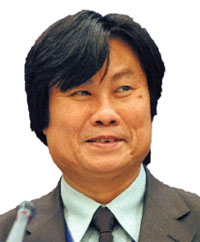
Pham Viet Muon, Vice Chairman of the Government Office and deputy head of the National Steering Committee for Enterprise Renovation and Development, sheds some light on the implementation of the government’s state-owned enterprise (SOE) restructuring project 2011-2015.
Restructuring SOEs actually began before the enactment of the project. I
mean part of the work mentioned in the project was earlier deployed.
For instance, 18 out of 21 restructuring plans of major state groups and
corporations were submitted and are in the process of garnering inputs
from relevant state agencies.
Many policies subject to be revised are now under consideration like
the decree on management and supervision of state groups and
corporations, the regulation on the rights and obligations of state
ownership at SOEs or the regulation on supervising finance and
appraising efficiency of SOEs.
SOEs restructuring has been carried out constantly, but at a slow pace.
When the restructuring plans for state groups were submitted, concerns
about their delayed appraisals appeared, especially in view that the
current market conditions could hurt these groups’ capital divestiture
plans. Is that the case?
The conditions as well as requirements for restructuring SOEs were
different compared to previous years. First, policies and mechanisms
were modified towards enhancing production, business and management
efficiency of enterprises in which the state retains 100 per cent or
more than 50 per cent of their total capital. Second, the restructuring
demand came from the inner of SOEs instead of being driven by the need
to cut down SOEs in number.
Via the project, the prime minister required the core business lines
and functions of each group, corporation and SOE to be reviewed and
redefined. SOEs will be assigned with concrete tasks. Based on their
governance capacity and other resources, SOEs will redefine what would
be their core areas and how many of them will be the best to help them
outshine in the state economic sector and the national economy.
Especially, SOE restructuring needs to link closely to technology
investment and renovation, gradually removing energy intensive products.
This move may trim the scope of business for a large number of SOEs,
but it is of necessity.
Based on these criteria and principles, enterprises will set their
strategy as well as business plans matching the new structure.
Generally, SOEs must change themselves in a comprehensive manner to
bolster efficiency.
Will there be big changes to the state groups and corporations’ operations?
Each SOE will experience sweeping changes. Some SOEs will undergo a
shake-up as they need to alter their business strategy and business
lines, divest capital or reduce their business scope. Some may only
experience changes in production and management.
The restructuring project is unique as it requires SOEs to be restructured irrespective of their management authorities.
This view-point was once given, but this is the first time it is
embedded in a project. Accordingly, the restructuring of SOEs,
particularly state groups and corporations, must link to the
restructuring of the whole economy, economic sectors and localities.
Is that why concerned ministries must appraise state groups and
corporations’ restructuring plans before those plans are submitted to
the premier?
Ministries and sectors take charge of revising individual plans of
enterprises to ensure they match the development strategies and plans of
sectors, regions and localities.
In the past, SOEs had their reshuffle plans only approved by the
ministries and localities that they belonged to. This approach made
every locality to have similar businesses like lottery or water supply
companies.
With the new approach, concerned ministries will comment on the
restructuring plans of SOEs based on sectors and localities’ development
planning. Member companies of state groups and corporations may be
removed to other areas to scale up efficiency. The case of EVN Telecom
being transferred to Viettel is an example.
In the context capital divestiture plans face difficulties, member
companies of state groups and corporations will be removed to their
specific areas or undergo changes in organisational structure to help
state groups and corporations concentrate on their core functions.
For example, property firms under state groups will be transferred to specialised groups before the next steps are taken. Under the project, firms operating in construction, trade, telecom, publishing, water services and urban environment will take this approach.
VIR
.svg)
