 Vietnamnet.vn

 Podcast



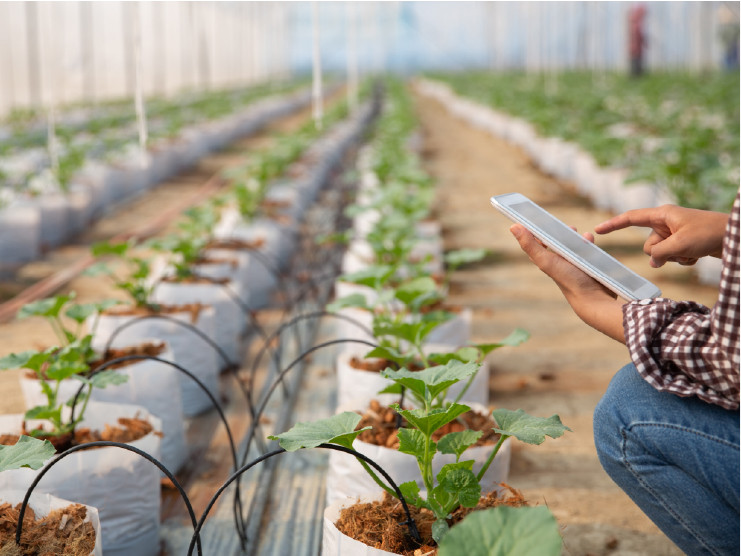
Agriculture has always advanced in step with technology. From mechanisation to satellite-guided equipment, each wave of innovation has reshaped how farms operate and scale. Today, a new transformation is underway - one defined not by machines alone, but by software and data.
Across global markets, agribusinesses are accelerating investment in digital platforms that enable farmers to monitor crops, manage livestock, optimise inputs, and anticipate outcomes with far greater precision. An industry once defined by manual processes is rapidly evolving into one of the most data-intensive sectors of the global economy.
According to MarketsandMarkets, the global agritech market is projected to reach US$22.5 billion by 2028, growing at a compound annual rate of more than 12%. At the same time, McKinsey & Company estimates that digital agriculture technologies - spanning AI analytics, IoT sensors, and smart farm management systems - could unlock as much as US$250 billion in additional value for the sector by 2030.
This transformation is not only about increasing yields. It is redefining how decisions are made at every level of agricultural operations.
From experience-based farming to data-driven agriculture
For generations, farming has relied on experience, intuition, and familiarity with local conditions. These foundations remain important, but they are no longer sufficient on their own. Modern agriculture increasingly demands speed, accuracy, and the ability to respond to change in real time.
Volatile weather patterns, fluctuating commodity prices, labour shortages, and rising input costs are placing sustained pressure on farmers and agribusiness operators. In response, many are turning to digital platforms that bring together data from diverse sources - weather systems, soil sensors, satellite imagery, livestock monitoring devices, and operational logistics.
With this level of integration, farmers are better equipped to answer critical questions as conditions evolve:
When is the optimal moment to plant or harvest?
What is the precise amount of fertiliser or feed required?
Which animals show early signs of health risk?
How can water, energy, and other inputs be used more efficiently?
Matt Long, CEO of Groove Technology, says the growing role of software is helping farmers operate with greater clarity and control.
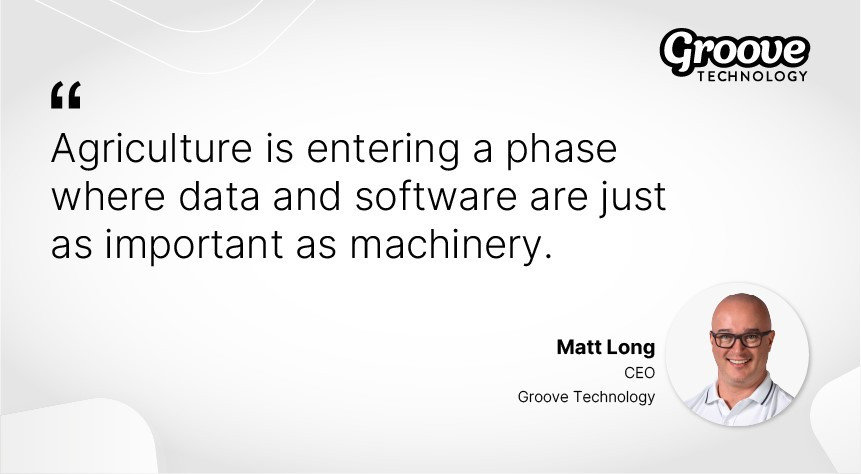
“Agriculture is entering a stage where data and software carry the same weight as physical equipment,” he says. “Farms today are highly complex systems. Digital platforms connect fragmented data into a coherent picture, allowing decisions to be made faster and with greater confidence.”
The rise of integrated agritech platforms
Among the most important developments in agritech is the rise of integrated platforms designed specifically for agricultural ecosystems.
These systems allow agribusinesses to unify farm management, analytics, logistics, and reporting within a single environment. Sensors deployed across fields and livestock facilities continuously capture data, cloud infrastructure processes it at scale, and intuitive interfaces translate it into actionable insights.
In practice, this can take several forms.
IoT-enabled soil sensors measure moisture levels and nutrient composition, supporting automated irrigation and fertilisation.
Livestock monitoring systems track movement patterns, body temperature, and feeding behaviour, helping detect health issues before they escalate.
AI-driven crop analytics interpret satellite imagery to identify disease risks or pest activity well before visible symptoms appear.
Mai Nguyen, General Director of Groove Technology, notes that while interest in these technologies is growing, building them remains complex.
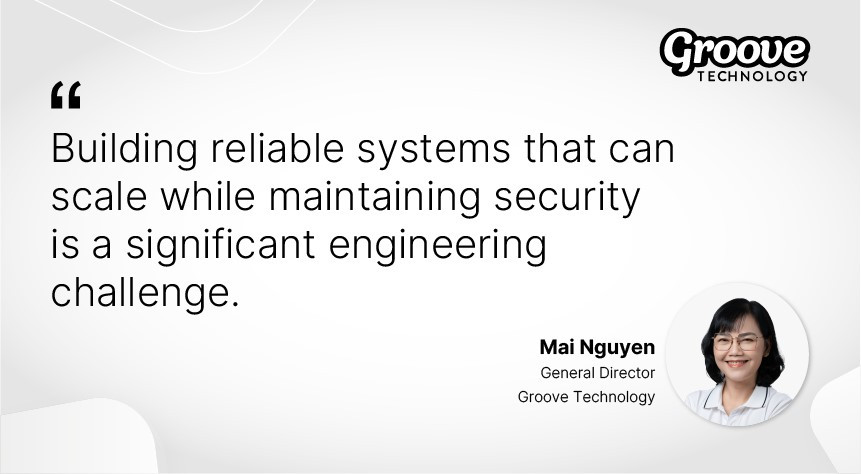
“Agritech platforms require seamless integration across many different data layers,” she says. “Weather data, IoT devices, farm machinery, logistics systems, and financial tools all need to function together. Ensuring that these systems are scalable, reliable, and secure is a significant engineering challenge.”
Smarter farming through digital platforms
For farmers on the ground, the value of agritech is ultimately measured by how effectively it simplifies daily work.
Traditionally, recording field conditions or livestock data meant interrupting physically demanding tasks to take notes, or entering information manually at a later stage. In environments where time and labour are already stretched, this process can be both inefficient and impractical.
Digital platforms are beginning to remove that friction. By consolidating operational data into a unified system, farmers can monitor crops, livestock, and environmental conditions through accessible dashboards, often in real time. This reduces reliance on manual checks and makes it easier to capture and review information as part of everyday workflows.
Improved visibility also enables earlier detection of potential issues, from disease outbreaks and shifting weather patterns to abnormal livestock behaviour. With timely insights, farmers can respond more quickly, allocate resources more effectively, and maintain more stable operating conditions.
Hung Do, Business Development Manager at Groove Technology, emphasises that successful agritech solutions must support, rather than complicate, the realities of farm work.
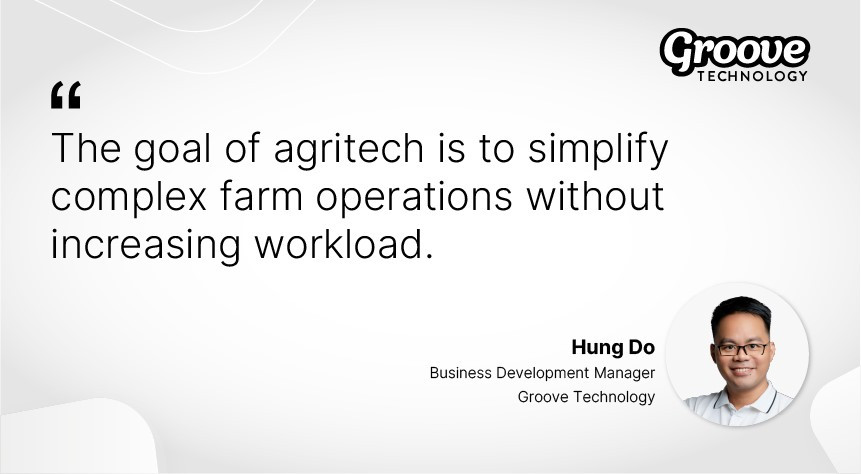
“Farming is physically intensive, and technology should not add to that burden,” he says. “Digital platforms need to be intuitive and practical - helping farmers stay informed, reduce manual effort, and act earlier when risks emerge.”
Supporting the digital future of agriculture
As the sector evolves, the demand for tailored digital solutions is growing. Standardised systems are giving way to more flexible platforms that can be adapted to the specific needs of different farms and agribusiness models.
Groove Technology, a software development company founded by Matt Long with engineering teams in Vietnam, works with organisations globally to design and build scalable digital platforms. In agritech, the company supports clients through custom software development, IoT integration, AI-powered analytics, and dedicated engineering teams that accelerate product development.
“Agriculture is one of the most essential industries in the world,” Matt Long says. “By enabling agritech companies to build robust digital platforms, we are contributing to a broader effort - helping farmers improve productivity, control costs, and manage risk more effectively.”
As investment continues to flow into digital agriculture, agritech is emerging as one of the most dynamic intersections between technology and the real economy - where software is not just supporting farming, but actively shaping its future.
Visit our website: https://groovetechnology.com/
PV
.svg)
