 Vietnamnet.vn

 Podcast



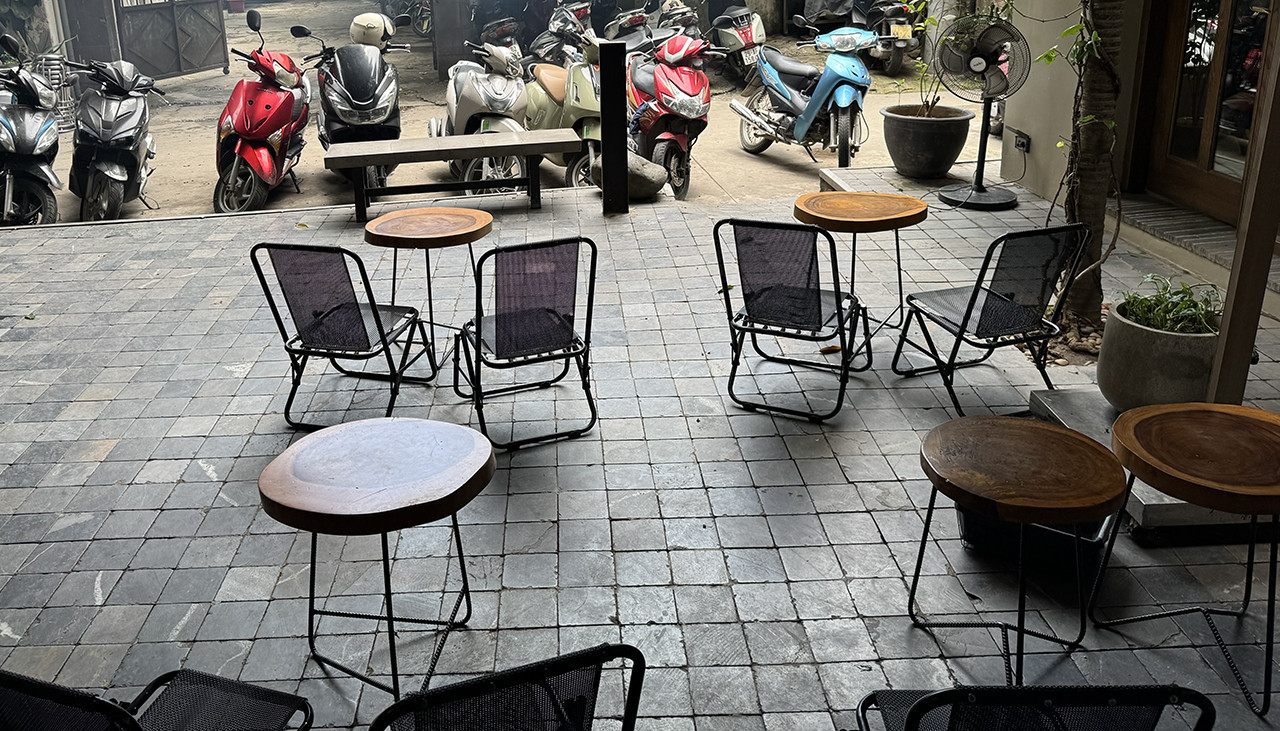
Following Hanoi's strict crackdown on sidewalk usage, many cafés have spent hundreds of millions of VND to expand their service spaces within their legally operated business areas. However, these outdoor sections have been chronically empty as prolonged heatwaves persist.
The owners of a café in Cau Giay said that they invested nearly VND200 million to renovate the front area. The money was spent on flooring, furniture arrangement, landscape enhancement, and a new open-concept space to satisfy customers' demands for outdoor seating.
When it first opened, it quickly proved effective. The spacious area gave customers more seating options and created a distinctive highlight. Many customers chose this zone when the weather was cool and often shared photos on social media.
However, when Hanoi entered peak heat, especially during the week-long heat wave with temperatures of 37 to 39 degrees C in late May, the outdoor area was nearly empty all day.
Under the harsh sun lasting from morning to afternoon, sitting outside became inconvenient even though the shop used several cooling measures. Customers prioritize air-conditioned spaces.
The indoor area is constantly overloaded. Staff now have to continuously move tables and chairs and rearrange seating to make use of every small space to meet demand. At many times, later customers have to wait or share tables because indoor seating was insufficient.
A field survey of many coffee shops with outdoor spaces shows customer numbers in these areas drop sharply due to hot weather.
During the day, rows of tables and chairs are vacant, in stark contrast to the crowds seen on cool days.
At Highlands Coffee Linh Dam, the rows of tables in front are almost unused during the day. The outdoor area has customers in early morning or late afternoon when temperatures ease.
The indoor area is always full. Later customers have to spend time looking for seats or waiting as service demand rises. Many customers said that although they liked open spaces, outdoor temperatures forced them to choose air-conditioned areas.
Winter days
Nguyen Ly, owner of Lac Coffee, said that on cool days, especially in spring and autumn, customers love sitting outside. At times the area is always full. In summer, almost no one wants to sit there even though the shop has fans and canopies.
According to Ly, seeing the whole row of outdoor tables empty makes her regretful because the shop spent a significant investment to build and complete the area. Conversely, the indoor space is often full, and many customers have to search for seats or even leave because there are no tables left.
The front yard also becomes deserted on cold winter days. According to the owner, the cost to invest, renovate, and maintain the area, including lighting, greenery, sound systems, and electric fans, was not inconsiderable.
To limit wasted outdoor space, many coffee shops are seeking ways to adapt. Some venues have added movable canopies, misting fans, greenery, and sun-blocking curtains to cool outdoor service areas.
According to owners, these solutions only improve customer numbers to some extent. The effectiveness of using outdoor space still depends on actual weather conditions.
Business revenue
Many coffee shops are feeling the pressure of rising operating costs during the summer months. The owner of a coffee shop in Dong Da said business has become more challenging despite an increase in customer traffic.
According to the owner, most customers come to escape the heat, work remotely, or study for extended periods while spending very little. Many order just a single coffee or the cheapest drink on the menu, priced at around VND30,000-VND40,000, and stay from morning until noon.
“The shop is often full, but business efficiency remains low. Customer numbers have increased, yet revenue has risen only slightly, while costs have climbed sharply, leaving profit margins much thinner,” the owner said.
He added that operating expenses rise significantly during the summer because the air-conditioning system has to run continuously at full capacity. Meanwhile, orders for additional drinks and food have not increased accordingly, meaning that on many days, revenue is even lower than on weekends despite a substantial increase in customer traffic.
Tran Chung
.svg)
