 Vietnamnet.vn

 Podcast



“Just last week, I received an email from a startup incubation center reminding me to complete the dossier for state-supported funding approval. More than a year ago, the project was on the shortlist and all documents were submitted, but for some unknown reason, the approval process was delayed until now.”
This was shared by a young startup founder on his personal Facebook page.
The founder told VietNamNet said that at the same time the project application was submitted under the program, the startup also applied for the SK Startup Fellowship (South Korea) in Vietnam and soon received $15,000 in support funding along with airfare to South Korea. In addition, the startup joined the Qualcomm Vietnam Innovation Challenge and received $10,000 in funding.
His story is not unique. A representative of an agricultural startup in Khanh Hoa province, who requested anonymity, said access to low-interest loans remains challenging.
His business was established in 2017. After years of research and product development, it has achieved notable success both domestically and internationally. The firm has export orders to Hong Kong (China) and Singapore, and is working with partners in Taiwan (China) and Japan to export products and expand markets.
In September 2025, the company submitted a loan application to a fund that provides financing to small and medium-sized enterprises through commercial banks operating in accordance with the law.
In this case, the indirect lender was a bank headquartered in Hanoi. According to the startup representative, bank staff conducted an on-site appraisal and spoke highly of the business project. However, they required the startup to provide real estate as collateral before disbursement.
Despite having international customers, confirmed orders, and clear output markets, the company was unable to obtain capital to expand production.
“This bottleneck is holding back startups like us. If we already had real estate for collateral, why would we need to approach support funds at all? With property collateral, companies could go directly to banks and even accept paying an extra 2–3 percent in interest instead of going through a complicated appraisal process,” the CEO said.
In the end, the company had to borrow money from relatives and friends to expand operations.
Unable to borrow, startups turn to personal funds
Another startup representative in HCMC said that borrowing preferential loans from the Big 4 state-owned banks (Vietcombank, BIDV, VietinBank, and Agribank) involves complex appraisal procedures. As a result, the company approached a private joint-stock bank with simpler procedures, which offered interest rates of 12–14 percent per year if collateral was provided.
“At these interest rates, profitability cannot be guaranteed, so we decided not to borrow and instead use personal funds,” the startup representative said.
Notably, this startup is developing technology applications to support people with disabilities, carrying strong social and humanitarian value.
In 2023, the company once failed to secure subsidized workspace support from an organization. Without access to subsidized office space, the startup had to rent a workplace far from central HCMC.
The company expressed hope that state authorities would establish an official feedback channel for enterprises seeking support. Regardless of whether applications are approved, enterprises should receive timely responses with clear and transparent criteria.
“This would avoid situations like when Resolution 57 was issued and I went to multiple agencies to ask about support policies for businesses, only to be told that no specific implementing circulars were available yet,” the startup representative said.
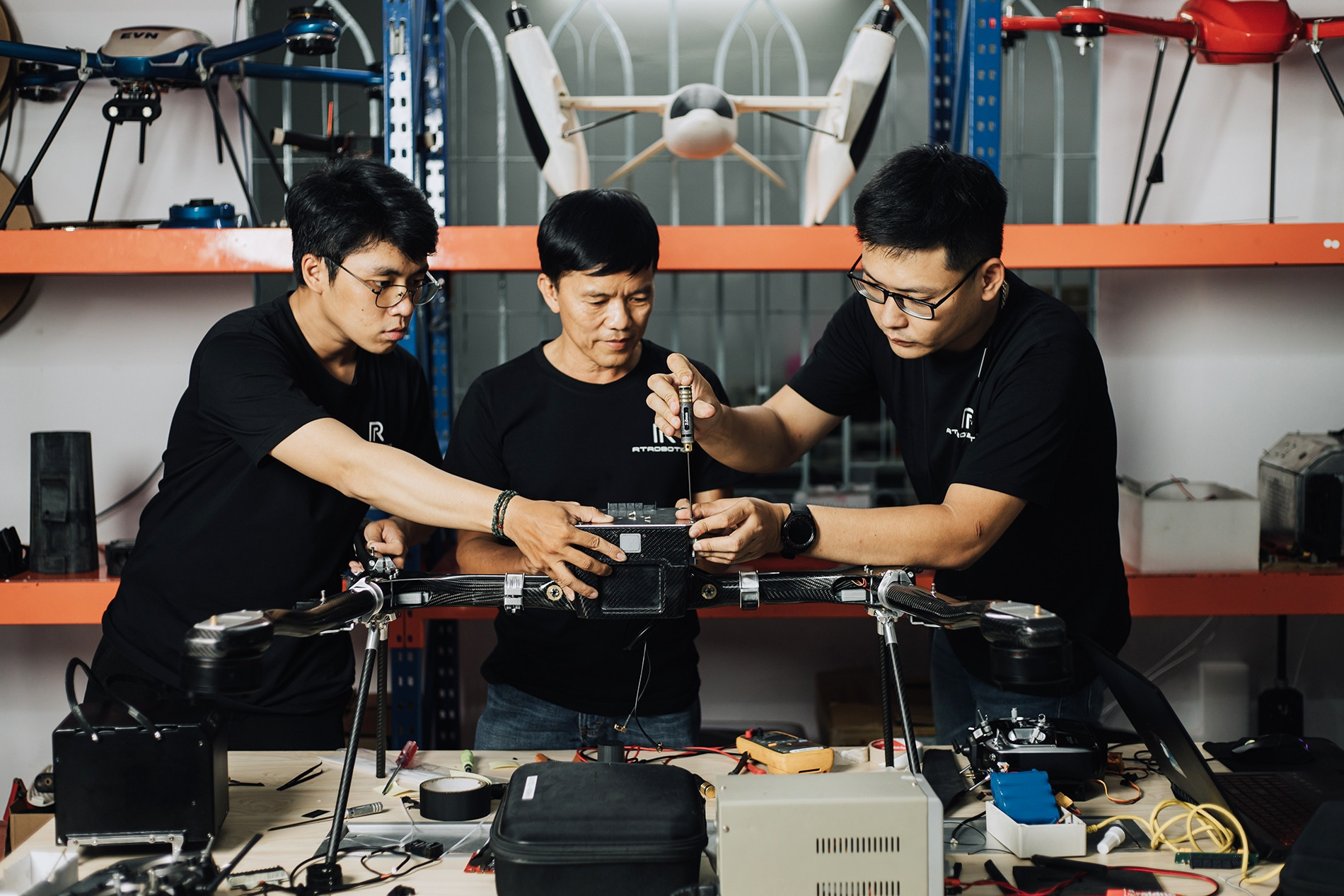
Representing a startup that has gained market traction, Luong Viet Quoc, CEO of Real-time Robotics JSC (RtR), suggested two support approaches for startups.
First, the State could call for submissions of inventions and establish a professional review council to select projects for funding. However, this approach depends heavily on the impartiality of the evaluation council, with risks of personal connections or even behind-the-scenes dealings.
Second, let the market decide. If a company’s invention is accepted by reputable international funds, such as those from the US, the State could base its funding decision on that validation and support a certain percentage of the project’s value.
For example, if a project gains international recognition, the State could fund around 20–30 percent of the investment. If the patent is successfully commercialized and products gain market traction, the funding ratio could increase, or the State could provide land for factory construction.
“Let the market be the judge. With such a mechanism, many businesses would be willing to invest in innovation,” the RtR CEO said.
Thai Khang
.svg)
