 Vietnamnet.vn

 Podcast



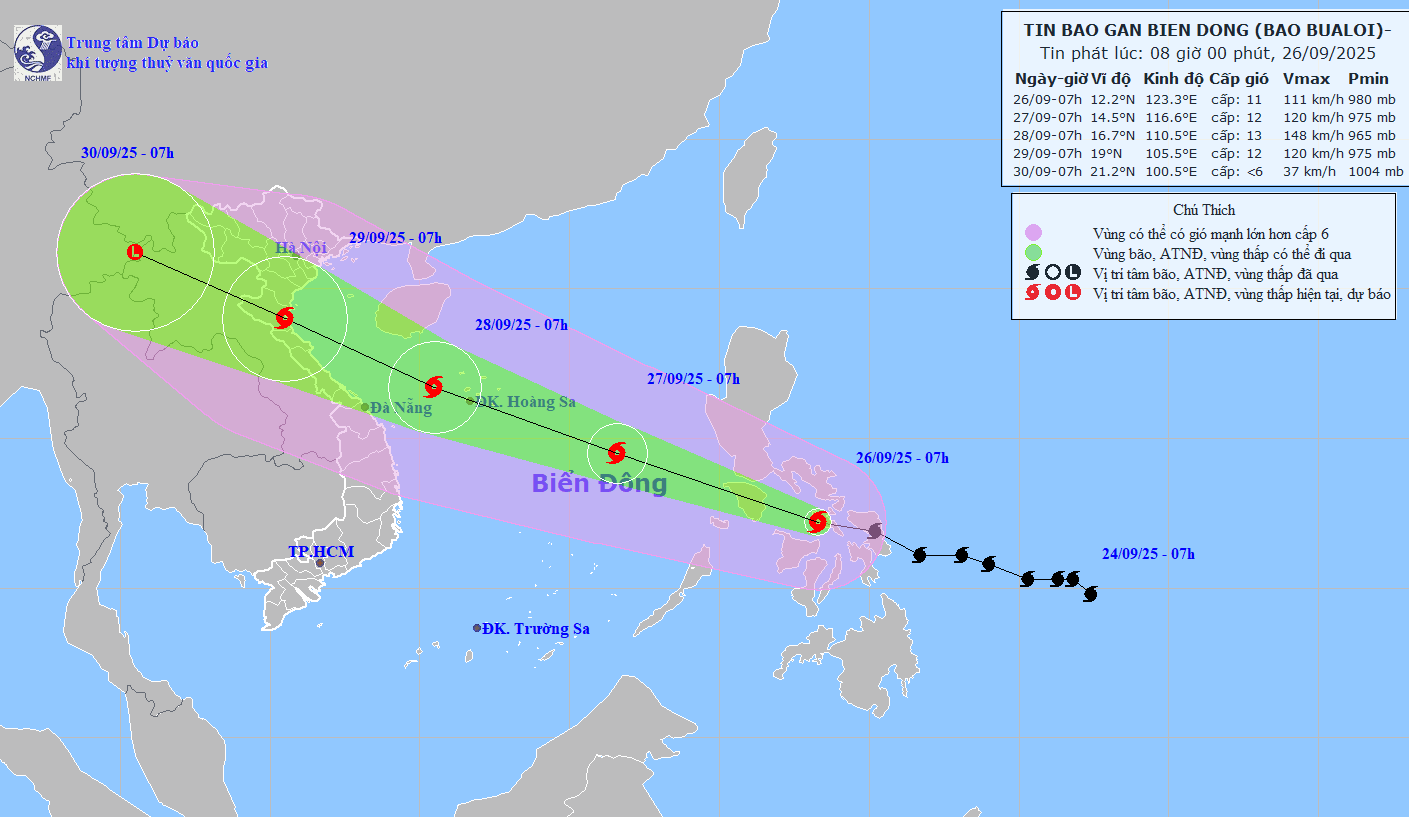
According to the National Center for Hydro-Meteorological Forecasting, as of 9 a.m. on September 26, the center of Tropical Storm Bualoi was located at approximately 12.3 degrees North latitude and 122.6 degrees East longitude, over central Philippines. The strongest winds near the storm’s eye were at level 11 (roughly 103–117 km/h), with gusts up to level 14.
By late evening today, Bualoi is expected to enter the eastern part of the central East Sea, becoming the 10th named storm of the year in Vietnamese territory.
Once it enters the East Sea, the storm is forecast to move west-northwest at a very high speed, averaging 30 km/h - twice as fast as typical storms in the region.
With this trajectory, Bualoi is likely to approach the western waters of the Hoang Sa (Paracel) archipelago around September 28, intensifying to level 13 with gusts up to level 15.
Forecast models suggest the storm may then shift direction, skirting along the coastline toward provinces in north-central Vietnam and the southern part of the northern delta. Direct impact is anticipated around September 29. From September 28 to 30, northern Vietnam and areas from Thanh Hoa to Thua Thien Hue may experience very heavy rainfall.
Related developments
In recent weeks, the East Sea has seen a flurry of storm activity. Bualoi follows the path of several recent storms, including Ragasa (Storm No. 9), which weakened after making landfall. Meteorologists are analyzing these patterns and offering projections for further storm activity through the end of 2025.
Earlier today, Bualoi was still over the central Philippines with wind intensity at level 11 and moving swiftly. By tonight, it will have entered the East Sea and gained the designation Storm No. 10. Forecasters expect it could potentially make landfall in the north-central provinces of Vietnam.
According to previous updates, Bualoi had wind speeds up to level 12 and gusts of level 15, and it was expected to reach the East Sea by the night of September 26. Meanwhile, the remnants of Storm No. 9 (Ragasa) weakened into a low-pressure system over the Quang Ninh area.
Bao Anh
.svg)
