 Vietnamnet.vn

 Podcast



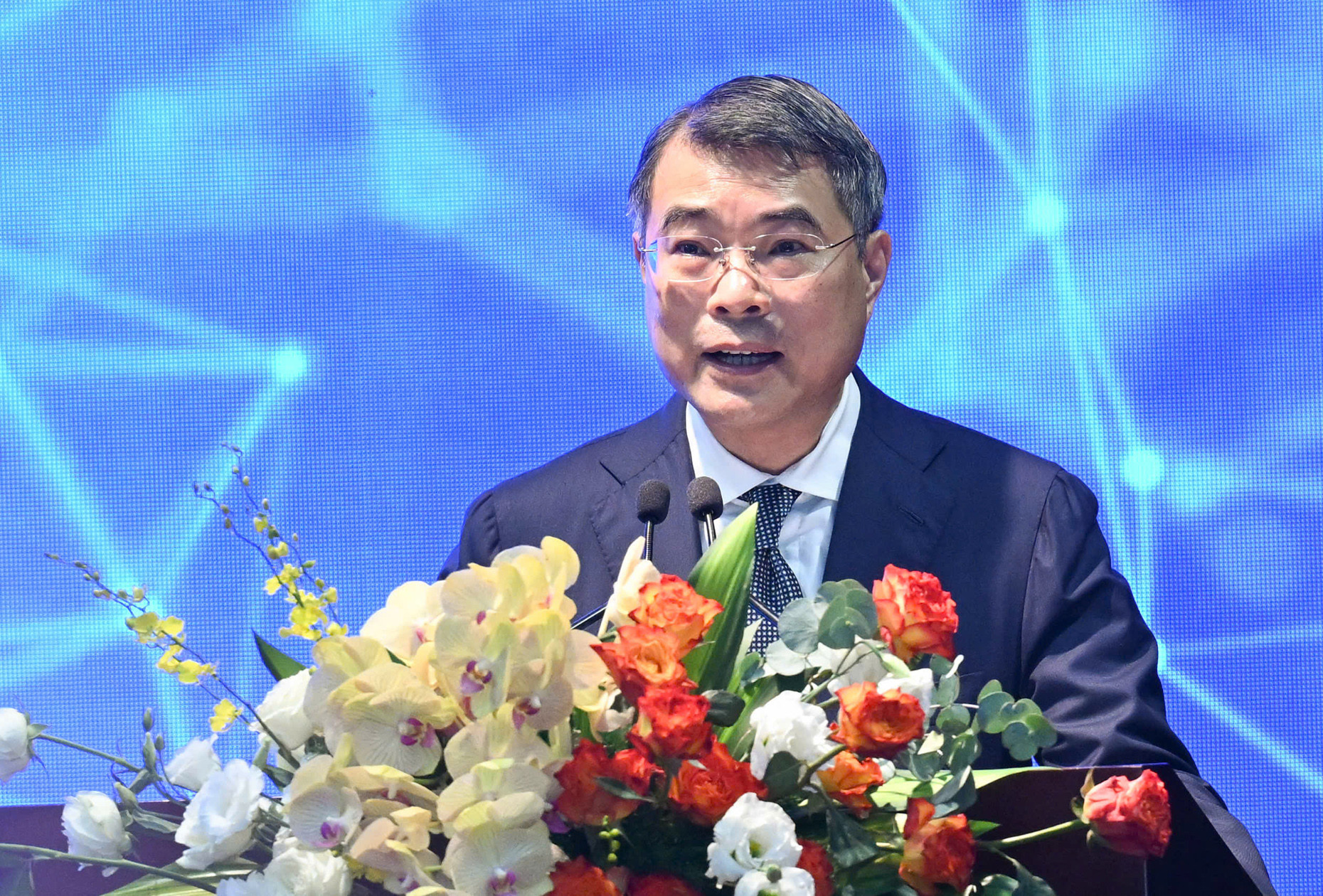
At a recent conference on strategic technology organized by the Ministry of Science and Technology, the message revealed a shift from a mindset of only conducting research to one of creating products that can be commercialized and contribute to economic growth.
Speaking at the conference, Hung stressed that the country’s development requirements have identified science, technology, innovation, and digital transformation as the “top foundational, driving, and strategic breakthrough forces” to enter a new phase of development.
According to the Prime Minister, Politburo Resolution 57 and recent Central Committee conclusions have clearly identified the transformation of the growth model, taking science, technology, innovation, and digital transformation as the main drivers for the double-digit growth target in the coming period.
The highlight of the conference was the list of national strategic technologies and products under Prime Minister’s Decision 21/QD-TTg. Priority areas include AI, big data, cloud computing, Internet of Things, semiconductor technology, blockchain, next-generation biotechnology, quantum technology, UAVs, and Make in Vietnam platforms.
According to the Ministry of Science and Technology, Vietnam is following a new approach of shifting from fragmented research to solving “major national problems,” wherein strategic tech mandates must feature clearly defined output targets, technical benchmarks, specific products, application addresses, and upfront business participation from day one.
Enterprises, institutes, universities
One key message emphasized at the conference is that enterprises must become the center of the national innovation ecosystem.
Ministries such as Agriculture and Environment, Health, Education and Training, and Industry and Trade should work with institutes and universities to set up “problems” to develop products that directly serve each sector and field.
“Businesses, institutes, and universities must be the center of the ecosystem,” the Prime Minister emphasized, demanding coordination among ministries, institutes, universities, and enterprises to develop strategic technology.
Minister of Science and Technology Vu Hai Quan said that if businesses wish to expand rapidly and sustainably, they must invest in R&D, technological innovation, and digital transformation, while boldly investing in Vietnamese knowledge, technology, and people.
The State will continue prioritizing support for enterprises developing strategic tech fields such as AI, semiconductors, biotechnology, Big Data, digital infrastructure, new energy technology, and smart manufacturing.
Accepting controlled risks
Another notable point is the requirement for strong reform of science and technology finance and governance mechanisms.
Hung said mechanisms must be breakthrough-oriented. If normal procedures are applied, investment in innovation cannot be achieved. The approach is to place orders, accept controlled risks, and use the final product and output to evaluate the effectiveness of State investment.
Vietnam encourages enterprise and social capital to jointly invest in a number of priority products. The State’s financial mechanism must be very open and help ministries, institutes, universities, and enterprises to jointly conduct research.
“Incentive policy mechanisms must be strong and feasible to apply in practice. Policies must come with detailed guidance for immediate implementation and must clearly identify bottlenecks, obstacles, and the authority to resolve them and propose timely solutions.
“In particular, it is urgent to remove bottlenecks related to financial mechanisms for science, technology, and innovation, prioritize resources for strategic technology, core technology, and tech enterprises, and promote capital market development for innovation, venture funds, and innovative startups,” the Prime Minister said.
The chair of MK Group, Nguyen Trong Khang, proposed four recommendations:
First, create a mechanism for ordering strategic technologies that prioritizes developing the capacity of Vietnamese enterprises, especially the ability to master core technology, achieve self-reliance in production technology, and develop intellectual property.
Second, build a long-term investment mechanism that accepts risks for high-tech R&D.
Third, promote linkages among enterprises, research institutes, universities, and key laboratories, centered on real national problems.
Fourth, create mechanisms to support Vietnamese tech enterprises in entering international markets to raise standards in technology, production, and intellectual property capacity.
“Vietnamese tech enterprises are fully capable of undertaking high-tech national tasks and mastering core technologies if they have sufficiently long-term investment mechanisms, a stable development environment, and opportunities to participate in strategic technology programs,” Khang said.
Thai Khang
.svg)
