 Vietnamnet.vn

 Podcast



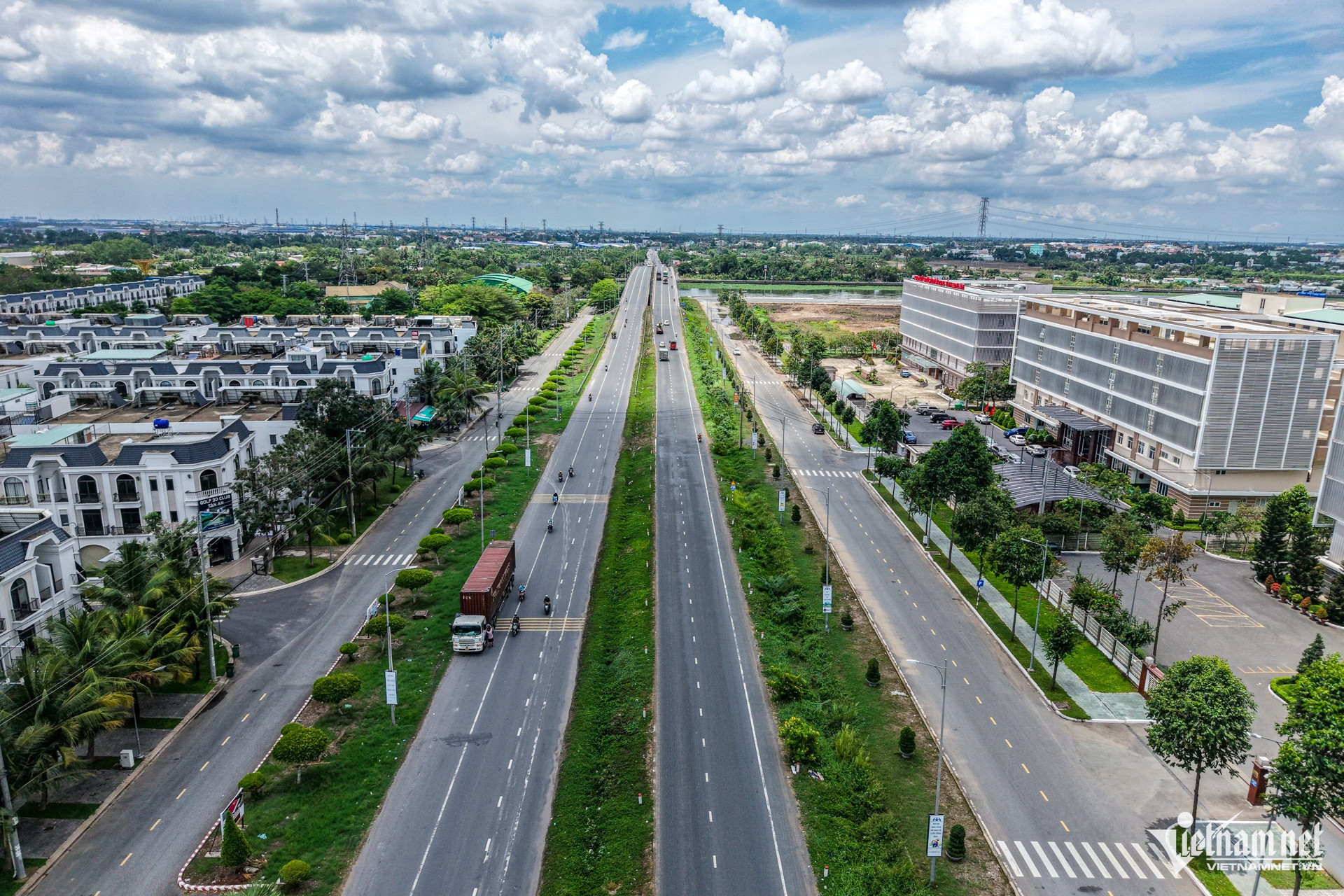
On February 12, at the 9th session, the 10th Tay Ninh Provincial People's Council voted to approve the resolution on adjusting the provincial planning for the 2021-2030 period, with a vision toward 2050.
Delegates unanimously adopted the proposal and draft resolution. Under the revised plan, Tay Ninh will organize three socio-economic zones, three development centers, six economic corridors, three growth axes and one border belt, aiming to ensure sustainable development, strengthen connectivity, and maximize local potential and advantages.
The Duc Hoa – Hau Nghia urban cluster will host the new administrative – political center.
Under the revised master plan, Tay Ninh divides development space to optimize local resources across three economic regions.
Region 1 (South) will focus on industrial, urban and service development supporting HCMC. This gateway area directly connects to Ring Road 3, Ring Road 4 and the Moc Bai – HCMC economic corridor.
Region 2 (West) will develop a border-gate economy, high-tech agriculture and eco-tourism along the border and the Vam Co Dong River.
Region 3 (North) will prioritize clean energy, high-tech agriculture and green tourism associated with Dau Tieng Lake and Lo Go - Xa Mat National Park.
The three core development centers include: the Tan Ninh – Long Hoa urban cluster positioned as a cultural and tourism hub rich in the Southeast region identity; the Long An – Tan An urban cluster becoming a modern service, healthcare, education and high-tech industrial center; and the Duc Hoa – Hau Nghia urban cluster serving as the province’s new administrative-political center. This area is planned as a key economic, financial and logistics hub.
The six economic corridors include: Economic Corridor 1A associated with Ring Road 3 HCMC, developing industry, urban areas and services, connecting to Long Thanh International Airport and Cai Mep - Thi Vai Port.
Economic Corridor 1B linked to Ring Road 4 HCMC, extending from Ring Road 3, developing industry, urban areas and services, connecting to Hiep Phuoc Port and Long An International Port.
Economic Corridor 2 associated with the Go Dau - Xa Mat expressway and National Highways 22 and 22B, connecting HCMC.
Economic Corridor 3A linked to the HCMC – Trung Luong expressway, the Duc Hoa - My An expressway (Dong Thap), and National Highway 1A, connecting the HCMC -Tay Ninh - Mekong Delta region.
Economic Corridor 3B associated with the HCMC - Soc Trang expressway and National Highways 50 and 50B, connecting the HCMC - Tay Ninh - Mekong Delta region.
Economic Corridor 4 associated with National Highway 56B from Bau Bang, connecting the HCMC – Moc Bai Border Gate Economic Zone expressway and the HCMC – Moc Bai railway. It is part of the Trans-Asia corridor linking Cai Mep – Bau Bang – Moc Bai Border Gate Economic Zone and Southeast Asia.
The three growth axes include: Growth Axis 5A linking East – West with the Dong Thap Muoi region and the Long An Border Gate Economic Zone, associated with National Highway N1 and connected to the Duc Hoa growth axis; Growth Axis 5B connecting the Long An Border Gate Economic Zone with Tan An center, associated with National Highway 62; and Growth Axis 6 associated with a new route connecting the three centers Tan Ninh – Duc Hoa – Tan An, linking northern centers (Tan Ninh – Hoa Thanh) with southern areas (Duc Hoa, Tan An) and key urban areas of the province, integrating routes CT.01 – DT.816 (west bank of Vam Co Dong River) – DT.838F – National Highway 22C.
One border belt associated with National Highway 14C will serve as a border patrol route closely linked with Route N1, forming a supporting corridor to ensure national defense – security and social welfare in border trade areas.
GRDP per capita is targeted at $8,500 by 2030, aiming to become a livable destination.
To realize its ambition of becoming a desirable destination and place to live, Tay Ninh targets average GRDP growth of over 10 percent per year in the coming period, with per capita income reaching $8,500 by 2030.
The province plans to develop a multimodal transport infrastructure system, prioritizing completion of the Go Dau – Xa Mat and HCMC – Moc Bai expressways; studying metro line extensions and light rail development to create a regional connectivity network, while promoting the digital economy to contribute up to 30 percent of total GRDP.
Tay Ninh also orients development around people and firmly refuses to trade the environment for growth. Alongside building the Ba Den Mountain tourism complex into an international-class destination, the province will focus on eliminating extreme poverty and achieving universal health insurance coverage.
Tuan Kiet
.svg)
