 Vietnamnet.vn

 Podcast



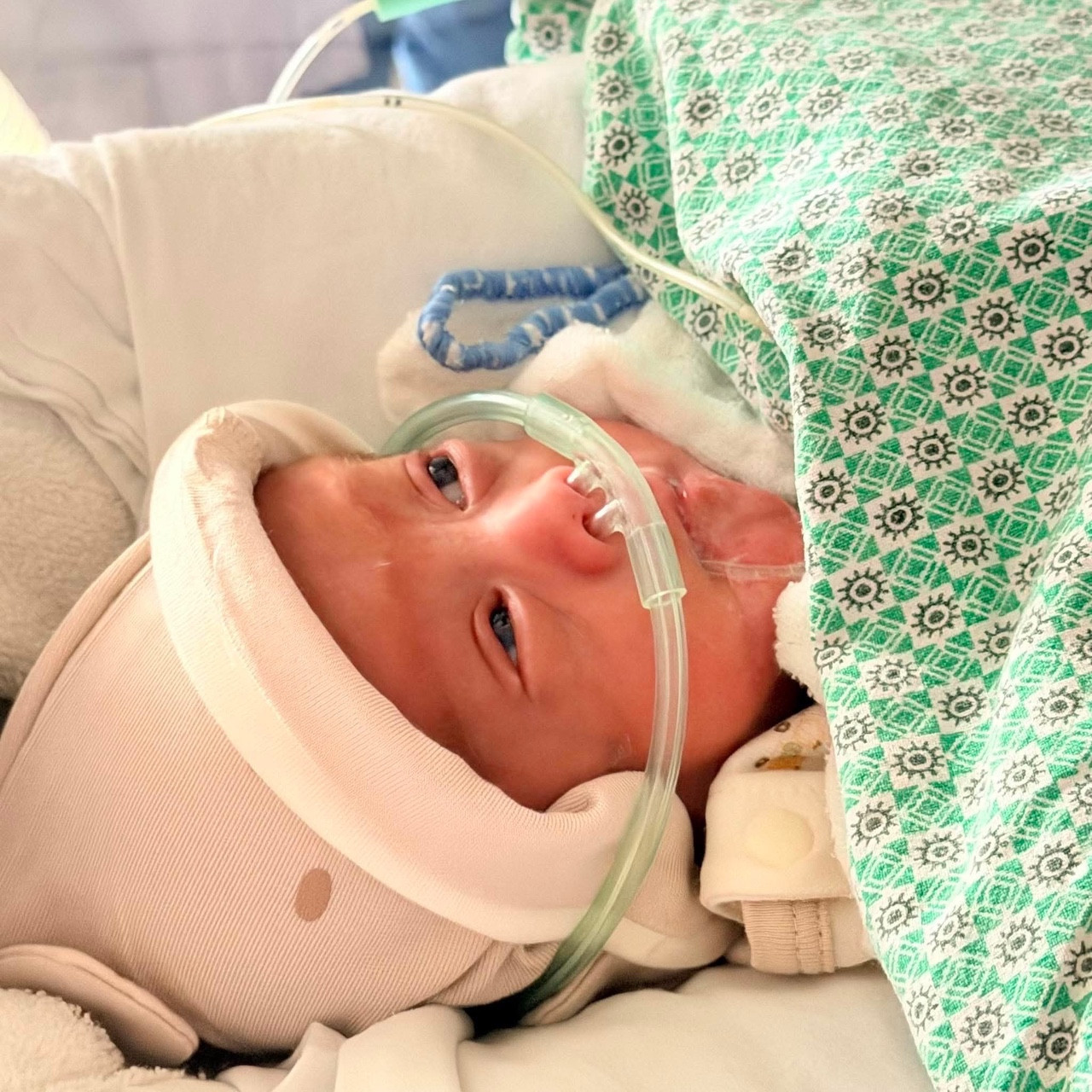
Five months after her baby boy was born, L. still finds it hard to believe she is holding him in her arms, cuddling and breathing in his scent. The young mother's journey through pregnancy and delivery was immensely difficult, filled with critical, life-or-death moments.
At the end of 2025, however, N.T.L. burst with happiness following a successful embryo transfer on her very first attempt, after four long agonizing years of waiting and experiencing a painful pregnancy loss.
But the joy was short-lived. By the 12th week of pregnancy, doctors discovered her cervix had shortened to just 25mm. At the same time, she was diagnosed with severe gestational diabetes, requiring close medical management and daily insulin doses of up to 70 units.
Entering the 16th week, her cervical length dropped to 20mm, forcing her to undergo a cervical cerclage procedure at a private hospital.
By the 19th week, when L. went for an examination at Hanoi Obstetrics and Gynecology Hospital, doctors found her cervix had shortened further and dilated by 2cm. With both diabetes and a cerclage in place, combined with the early cervical dilation, the young mother faced the looming risks of infection and preterm labor.
L. was immediately admitted to the A4 High-Risk Pregnancy Department to preserve her pregnancy. Under the close monitoring and care of Dr. Truong Minh Phuong (Deputy Head of Department A4) and Dr. Nguyen Viet Thang, the pregnancy was extended day by day to the immense relief of the entire medical team.
The perilous ordeal
The most brutal challenge struck during the 24th week of pregnancy when L. suffered premature rupture of membranes, necessitating the removal of the cervical cerclage stitch. Though aware of the risks, the young mother was devastated and felt overwhelmed. She wept bitterly, holding onto a single wish: to keep her baby inside for as long as possible. The ordeal worsened just five days later when she accidentally slipped and fell while showering.
That very evening, tests revealed that her amniotic fluid was almost completely depleted. Doctors warned of an impending chain of severe risks, including infection, fetal growth restriction, pulmonary hypoplasia, or even loss of fetal heartbeat. Nevertheless, her maternal instincts drove L. to push forward with continued monitoring.
That night, consumed by fear, she searched online for stories of infants born at 24 weeks. The more she read, the more anxious she grew, wondering if her tiny baby would be strong enough to survive. In the darkness of her hospital room, she gently whispered to the baby in her womb that if he felt too uncomfortable, it should let her know.
The next morning, L. began bleeding despite not having clear labor contractions. The fetus had dropped low, with his feet positioned right at the cervix. She was urgently transferred to Department A2 to prepare for delivery. As she lay in agony on the delivery table, her husband stood outside the operating room, choked with tears.
He sent his wife a heartbreaking text message, asking: "If the worst happens, do you want to bring our baby home or send him to a temple?"
Choked with tears, the young mother gathered all her remaining strength and cooperated seamlessly with every instruction from the doctors. The baby was born at 24 weeks (on April 26) with an extremely tiny body and was immediately transferred to the Neonatal Department for special intensive care.
The battle to save the extremely premature infant's life proved to be a lengthy ordeal, sustained by mechanical ventilation, incubators, and strict intravenous nutrition. Day after day of resilient struggle alongside the dedication of the medical team, the baby overcame respiratory crises, liver failure, and severe respiratory distress, growing bit by bit to his parents' overwhelming joy.
According to Dr. Nguyen Viet Thang, cases of extreme prematurity at 24 weeks complicated by early rupture of membranes and gestational diabetes present severe clinical challenges with poor prognoses and exceptionally high risk of complications. Extending the fetus's time in the womb for every possible extra day, combined with modern neonatal resuscitation techniques, proved to be the ultimate key to achieving this miracle.
Dr. Thang advises expectant mothers exhibiting signs of threatened preterm labor to undergo regular check-ups at reputable medical institutions and maintain strict control over their pregnancy. In particular, pregnant women with poorly controlled underlying gestational diabetes who experience abdominal pain or abnormal discharge should be hospitalized promptly for timely intervention.
N. Huyen
.svg)
