 Vietnamnet.vn

 Podcast



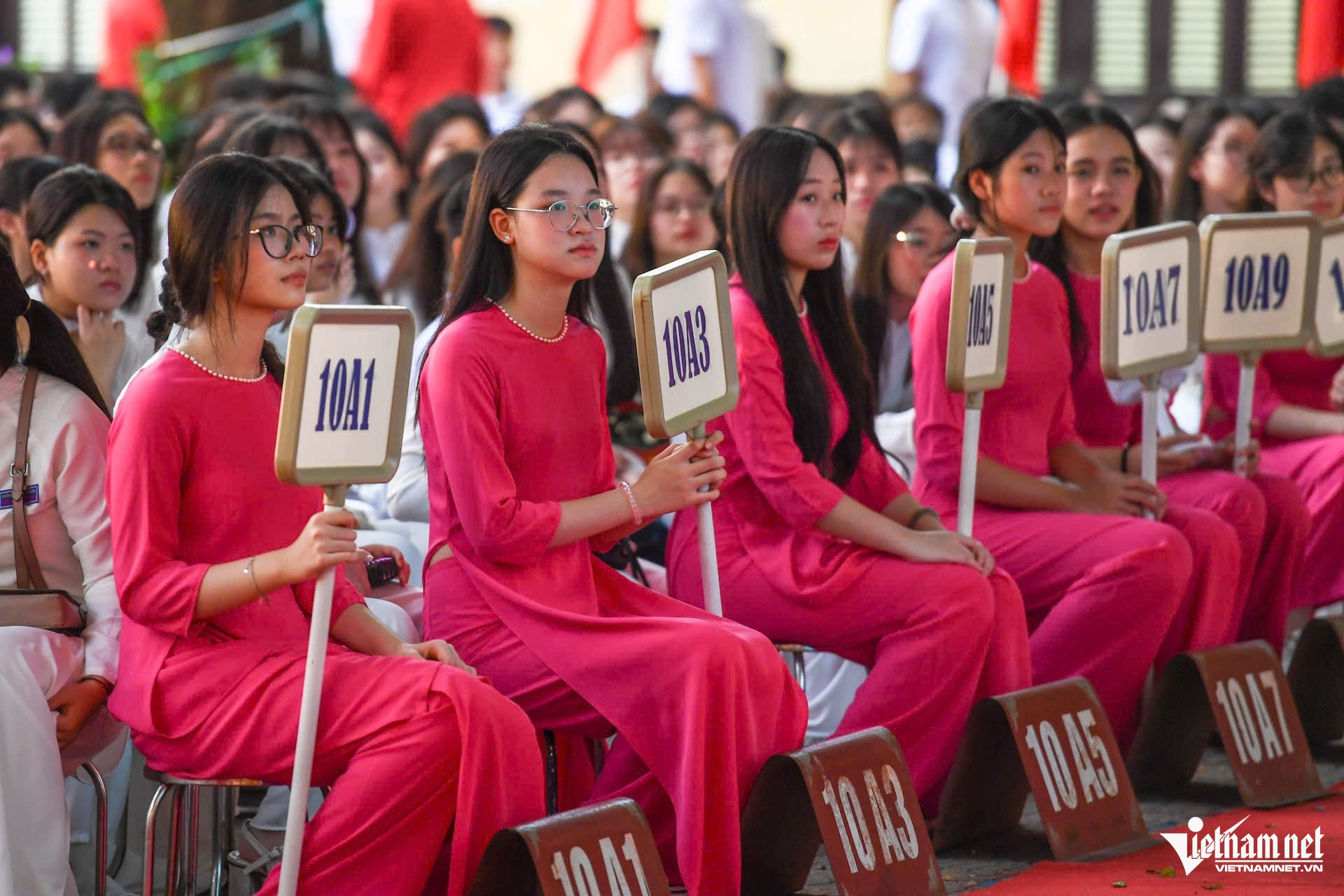
Many parents worry that if they loosen supervision, their children will forget what they have learned and lose momentum when they return to school after Tet.
With an older daughter in grade 9 and a younger son in grade 3, Pham Nguyen Ha from Hanoi said there has never been a year when her family went back to their hometown for Tet without the children bringing books along.
This year, her older daughter is preparing for the grade 10 entrance exam, aiming to get into a top high school in Hanoi. In mock exams, the girl’s scores have been quite satisfactory at around 8.5 points per subject.
However, according to Ha, to be more certain of a seat at the school, her daughter needs to reach at least 9 points. As a result, during the Tet break, she has to do extra revision exercises.
“This year, my family chose to celebrate Tet at my maternal hometown in Quang Binh. Each way takes about 7 hours of travel. Not to mention, the family will also visit the paternal hometown in Hung Yen before Tet. The actual study time for my child is not much. Last year, she even took advantage of the time to study right in the car,” Ha said.
With her 3rd-grade son, Ha is more worried because he is not self-disciplined. During the past summer break, she let him "relax completely," and by the time he returned to class, he had forgotten almost all his knowledge, even making mistakes on simple problems.
“Learning from experience, this Tet I will require him, even during the holiday, to sit at his desk and study for at least one hour a day. If this year the teacher does not assign homework, I will have to find extra exercises for him to do, to avoid losing all his basic knowledge,” she said.
According to Ha, studying during Tet for primary school students is mainly about “warming up” their knowledge. Long breaks often make children forget and lose focus. If they do not study at all for an extended period, they will need time to get back into rhythm after Tet.
Maintaining study routines, resting only on first day
Sharing the same concern, Nguyen Thu Huyen from Hanoi required her grade 6 daughter to create a detailed “Tet study timetable.” She said that this year students are off from the 27th of the lunar month through the sixth day of Tet, so her child still needs to maintain a daily study habit to “keep the rhythm.”
Only on the first day of Tet and in the evenings is her daughter free to relax, play, and visit relatives.
As for her son, who is preparing for the grade 10 entrance exam, Huyen said he “cannot afford to slack off at this moment.” She believes the grade 10 exam in Hanoi is extremely competitive, even “more intense” than the university entrance exam due to limited quotas, so her child cannot over-relax.
“Parents do not dare to let go, because just a little neglect and the child will fall behind. So the child may be on Tet holiday, but cannot forget responsibilities or study carelessly and disrupt routines,” she said.
During this time, the couple encourages their child to practice exam papers and note down parts he does not understand to ask teachers after Tet, mentally preparing for the important upcoming exam.
Thu Mai from Hung Yen believes Tet should be a time to recharge, but recharging does not mean completely letting go. It can also be an effective period for children to “speed up” if used wisely.
“If children completely stop studying for 7–10 days, especially in subjects that require continuous thinking such as Math, Foreign Languages, or Physics, they can easily forget formulas, grammar structures, and lose their problem-solving feel. After Tet, they then need extra time just to get started again,” she said.
Mai said that in the quiet early days of the new year, when children do not have to wake up early for school or be caught up in a packed schedule, they can choose the most suitable time slots for revision.
However, she stressed that studying does not mean “missing Tet.” “If children study continuously for 5–6 hours a day during Tet, it will definitely backfire. But if they spend just 60–90 minutes a day on light revision or reviewing knowledge, they still have plenty of time to enjoy the holiday,” she said.
Thuy Nga
.svg)
