 Vietnamnet.vn

 Podcast



Do smiled gently as he welcomed guests recently to his simple wooden house located at the end of Tan Hoa hamlet. The only way to reach Do's house was to travel along the single road running straight from the entrance gate of Village 4.
Do made a strong impression with his sun-bronzed skin. Having entered his 75th year, he remained as robust as the ironwood trees he had protected and bonded with over the years.
He has seven sons. Five of them are married and have built houses on their father's land. They are not only the joy of his old age but also companions in the difficult journey to preserve Con Lim.
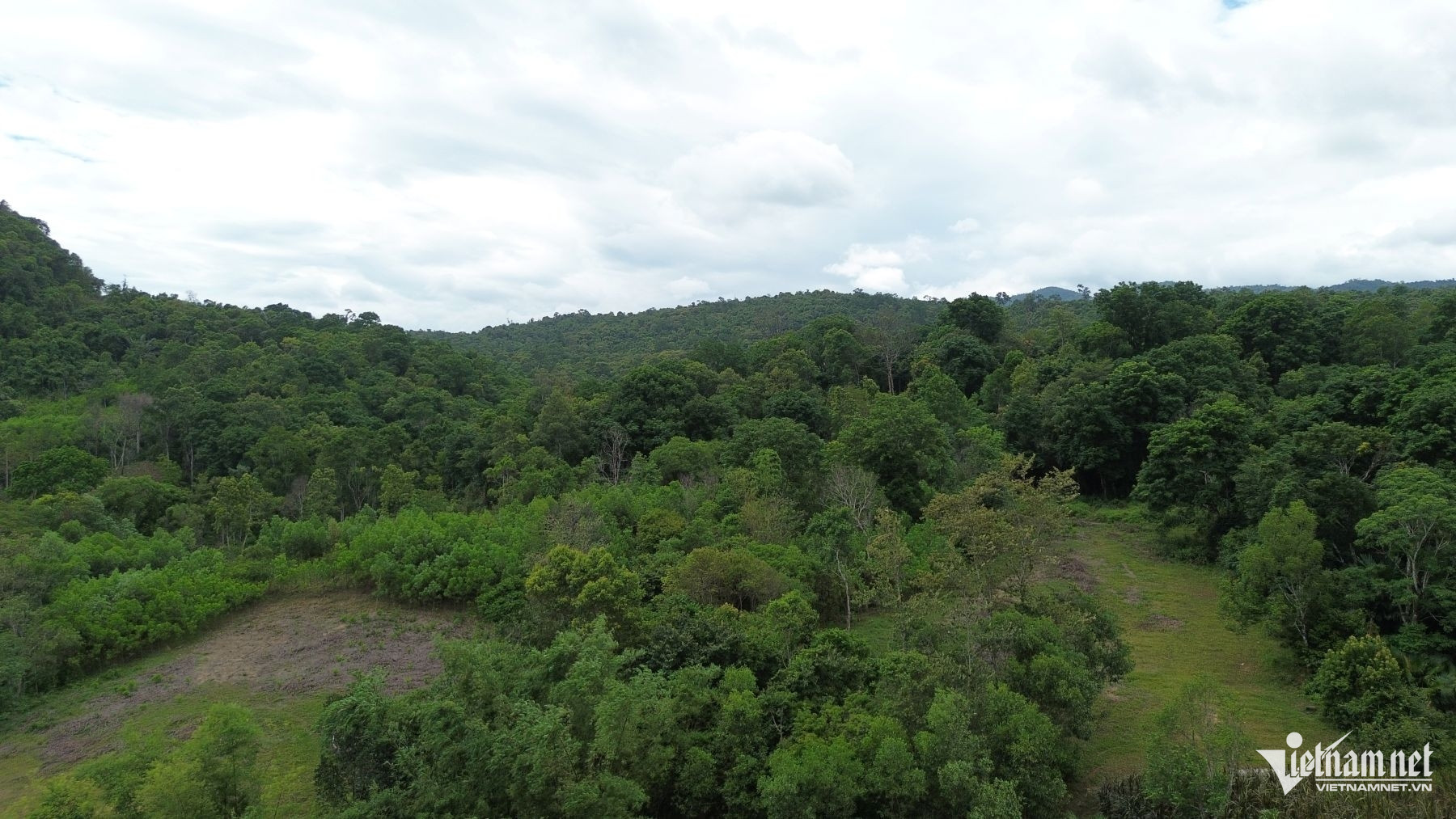
In 1992, when the policy of allocating land and forests to local people was implemented, Do accepted the responsibility to fence, cultivate, and protect 20 hectares of natural forest in Yen Tho, which is now Tan Hoa hamlet.
That decision at the time bound his life tightly to the Con Lim forest. Back then, very few ironwood trees were left in the Tan Hoa area. After the war, ironwood was continuously exploited.
Determined not to let the ironwood forest disappear, Do resolved to fence and protect the area to help the ironwood regenerate. After 33 years of strict protection, the forest he cultivated and protected has become a rare ironwood forest on the peak of Giang Man.
‘Do's Con Lim is an inviolable area’
Do was born under the canopy of ironwood and grew up alongside the ancient trees. During the war years, the ironwood forest sheltered soldiers and villagers from rains of bombs and shells. The ironwood trees became sturdy bomb shelters for villagers during enemy air raids.
"In those days, there was a military engineering workshop of the soldiers on the hill. Since I was familiar with the forest, I often worked as a liaison. People in the village also relied on the large ironwood trees to build shelters to avoid bombs."
Those memories made it impossible for him to stand by and watch the ironwood forest being thoroughly exploited day by day, facing the risk of extinction.
Since receiving the forest for cultivation and protection, Do has gone up to the forest every single day. In the dry season, he clears vegetation and creates firebreaks. In the rainy season, he checks for fallen trees and patrols against encroachment. The moment he hears any strange noise, such as a chainsaw or an axe strike echoing from the forest, he immediately drops all household chores to patrol the woods.
Every time the ironwood forest is encroached upon, Do is ready to confront greedy loggers. He is also ready to clash with neighbors who are enticed and commissioned by timber dealers. His fierce determination makes loggers and timber dealers cautious and hesitant whenever they intend to harm the forest at Con Lim.
Local residents and even greedy loggers whisper to each other: "Do's Con Lim is an inviolable area."
Over 33 years, he has faced loggers countless times. Some came directly to his house asking to buy ironwood trees. Others subtly threatened to steal and cut them down. He merely shook his head gently and said: "I guard the forest as I guard national land, not for myself."
The path up to Con Lim is steep. Tall ironwood trunks rise one after another, blocking out the sunlight. Do carried a machete and walked ahead with agile steps. Following him, we ran out of breath.
In the middle of the vast forest, every boundary is deeply etched in his mind. Where the stream is, where the dam stands, and where the largest ironwood trunk is located all remains in the memory of the man who has spent years walking through this forest.
Do suddenly stopped in front of two ironwood trees standing side by side.
He gently stroked the rough bark and shared: "In 1965, villagers cut down this ironwood tree to build a bomb shelter. After the war, the stump regenerated and grew into the two trees you see now."
The two ironwood trunks now have a diameter of nearly one meter. Their trunks reached straight into the sky with lush canopies.
Tien Pham
.svg)
