 Vietnamnet.vn

 Podcast



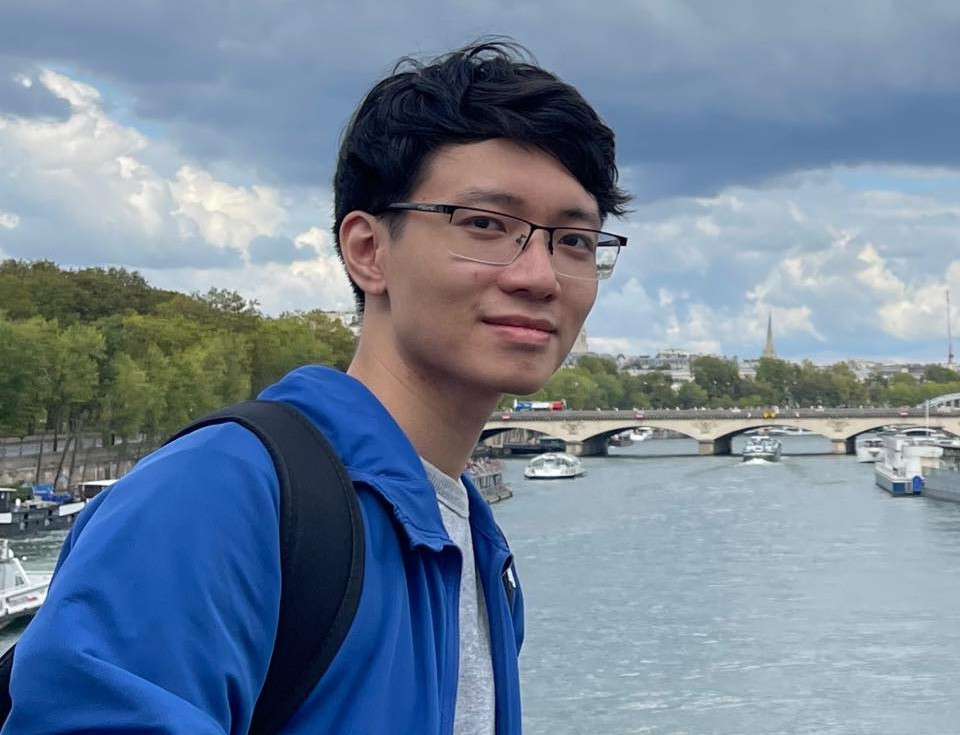
A specialized chemistry student at Nguyen Trai High School for the Gifted in Hai Phong, after winning a second prize in the National Excellent Student competition, Vu was admitted to the chemistry department of Vietnam - France University.
Vu felt, however, that experimental work did not bring the excitement he expected. Knowing a bit about programming, Vu took a risk and applied to the Machine Learning lab of a lecturer at Phenikaa University. Although he could initially solve problems, Vu realized his biggest weakness at that time was programming skills.
So after graduating during the Covid-19 pandemic, Vu spent half a year at home learning to code before joining an AI startup.
“Up to that point, I was still quite vague about my direction. But after about a year of working, I gradually caught up with the changes in this field and became more confident in the path I chose,” Vu said.
However, even with a stable job, Vu still felt unsatisfied. “Instead of working according to orders, I wanted to be free to pursue my own ideas,” he said, noting that it was this desire that urged him to return to the academic path.
In the process of looking for study abroad opportunities, Vu learned about the Erasmus Mundus Master's scholarship in chemoinformatics+. This is a field using AI to help shorten the process of searching for and developing drugs or new materials.
Vu's profile had many advantages as he was strong in both chemistry and AI. Thanks to that, the Vietnamese youth won the scholarship and received an opportunity to study in Europe for two years, moving through Strasbourg (France), Milan (Italy), and Paris (France) before interning at EPFL (Switzerland).
“It was these multicultural learning experiences that changed me a lot. What I felt most clearly is that in any environment, critical thinking and a proactive spirit are always highly valued,” Vu recalled.
After finishing the internship, with the desire to pursue a PhD at EPFL, Vu proposed this wish to his supervising professor. Recognizing his potential because of his research results, the professor agreed to let Vu stay for a PhD over the next four years, starting from October 2025.
PhD student in Switzerland
Currently, Vu is studying AI for Chemistry, the use of data science and AI to solve problems in chemistry. Vu said that instead of relying entirely on expensive experiments with many errors, AI can learn chemical rules to support prediction and process design.
One of Vu's prominent studies is a support system for “retrosynthesis,” which is the design of a process to create a chemical molecule from available raw materials.
The system consists of two stages. First, AI acts as an expert, building a synthesis strategy using natural language. Then, the system compares this with a database of actual reactions to find the most feasible option, ensuring that the input materials can be purchased on the market.
In tests, this system found many accurate options that were closer to the requirements of chemists than traditional automated methods, helping shorten trial-and-error time in the laboratory and supporting the rapid creation of new drugs and materials.
Vu’s paper won the best paper award at an international conference on AI in chemistry held in Denmark.
During the research process, Vu said the greatest pressure for those working in AI research is speed. “I cannot 'hold' an idea for too long but must implement it very quickly from the idea to the initial results,” Vu said.
However, Vu compared human knowledge to an island, while scientists are those standing on the edge to expand that island. To go a long way, scientists need to believe in what they do, be persistent, and have the ability to connect.
“My decision to switch to AI was once very risky, but if I had not tried, I would have never known how far I could go,” Vu said.
In the coming time, Vu hopes to complete his PhD program with the next two years of research at Pfizer (Germany), while continuing to pursue research directions in AI for Chemistry, helping the development of pharmaceuticals and materials become faster, more effective, and less expensive.
Thuy Nga
.svg)
