 Vietnamnet.vn

 Podcast



In 1980, while studying the Kim Dong - Ngoc Nu statue pair at Dau Pagoda, researcher Phan Cam Thuong suggested the sculptures may represent the ideal physical proportions of ancient Vietnamese people.
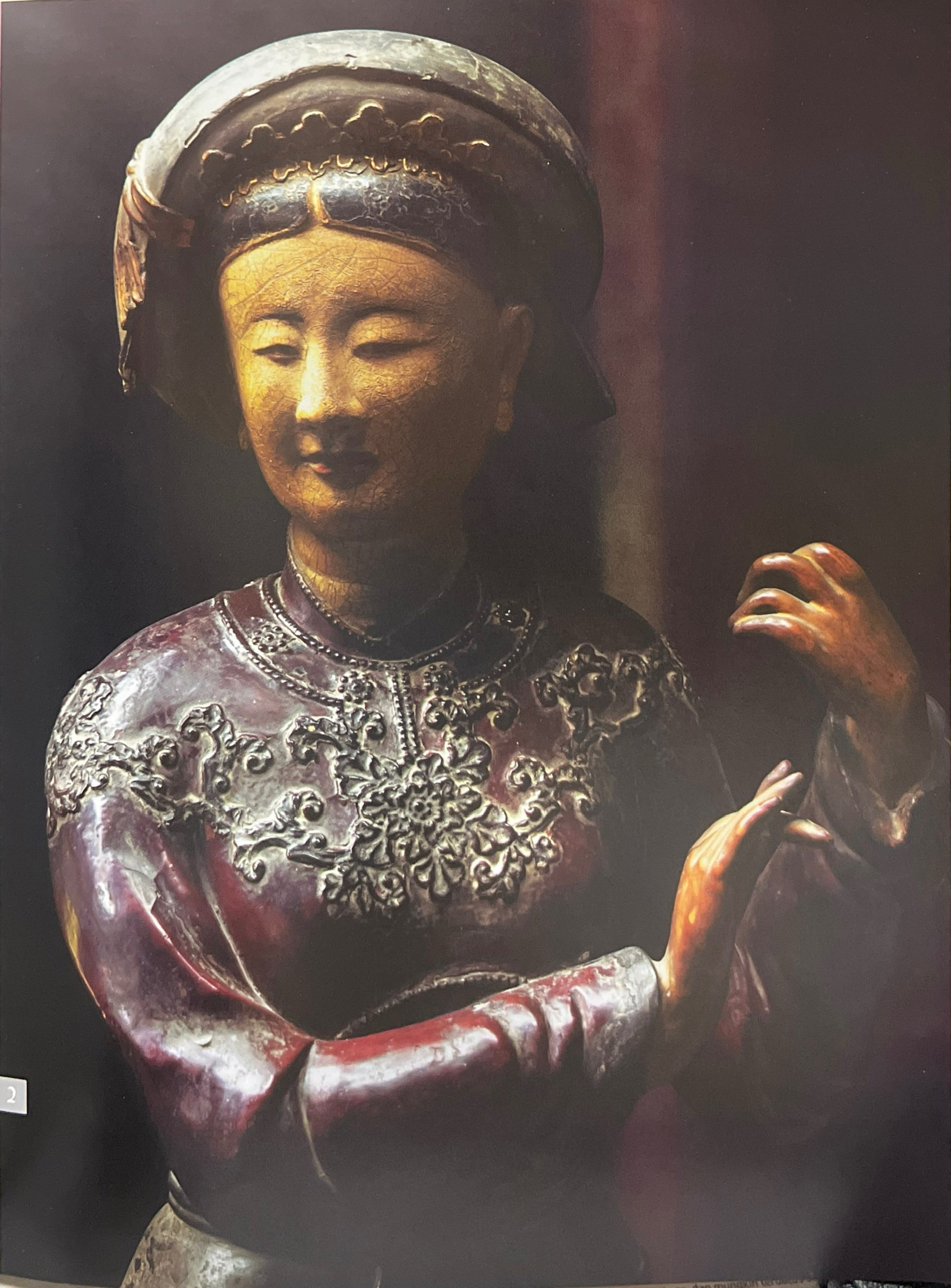
The Ngoc Nu statue at Dau Pagoda possesses a unique beauty that is both representative and distinctly Vietnamese. Photo: Chua Viet
Located in Bac Ninh Province, Dau Pagoda is not only considered Vietnam’s oldest pagoda but also the cradle of the Tu Phap belief system - the worship of four female deities representing clouds, rain, thunder and lightning in the agricultural life of northern Vietnam’s Red River Delta communities.
According to documents from the Department of Cultural Heritage, the pagoda was first built in 187 and completed in 226 in the Dau area of Luy Lau Citadel, the country’s earliest Buddhist center.
After nearly 2,000 years of history, the pagoda still preserves an architectural and sculptural system of exceptional value.
Today, it houses around 100 ancient statues, many regarded as masterpieces of Vietnamese sculpture from the 17th and 18th centuries.
Among them, the Ngoc Nu statue is widely considered one of the greatest works of ancient Vietnamese sculptural art.
A beauty both distinctly Vietnamese and deeply individual
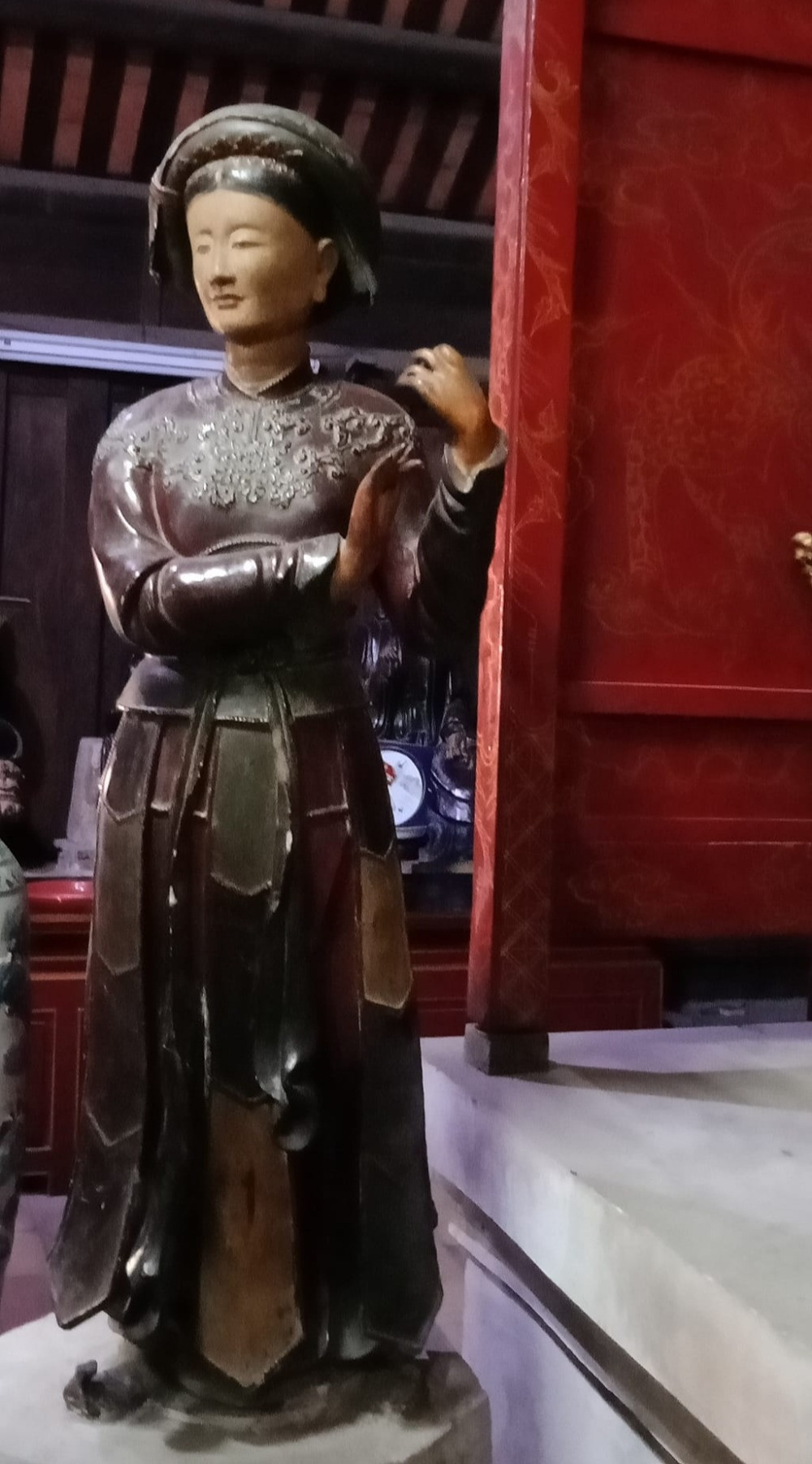
The portrait-like realism is what gives the Ngoc Nu statue its exceptional artistic value. Photo: Minh Hanh
Dating back to around the 18th century, the Ngoc Nu statue stands 153cm tall - nearly life-sized.
It is a rare example in traditional sculpture in which the artisan did not idealize the figure according to divine conventions, but instead portrayed a Vietnamese young woman with striking realism, individuality and vitality.
Ngoc Nu has a full, gentle face and almond-shaped eyes that appear half-closed in a subtle smile, carrying both rustic charm and a hint of mystery.
Her small lips curve softly, creating a quiet elegance reminiscent of the delicate fragrance of night-flowering jasmine drifting through an old temple garden.
The flower-offering pose - often rigid in traditional worship statues - was rendered here with softness and natural grace.
Her figure is balanced and slender while still full-bodied, capturing the healthy beauty of a 16- or 17-year-old girl.
Although the clothing follows symbolic conventions, the headscarf is sculpted with remarkable realism down to each fold, revealing the meticulous craftsmanship of the artisan.
Painter and art researcher Phan Cam Thuong once described the Ngoc Nu statue as embodying a beauty that is both representative and uniquely Vietnamese.
He argued that when placed alongside classical female figures from China, Korea, Japan or Mongolia, the Vietnamese features of Ngoc Nu remain unmistakably distinct and recognizable.
Compared with the female beauties depicted later in Hang Trong folk paintings, Dau Pagoda’s Ngoc Nu is considered “more realistic, more graceful and far more individual.”
A sculpture with the soul of a portrait
One of the statue’s most remarkable qualities is its strong portrait-like character.
Rather than functioning purely as a symbolic figure, the sculpture reflects a powerful awareness of individual beauty and the creative freedom of folk artisans.
Within the lively eyes, restrained smile and graceful posture, viewers encounter not only the image of a young woman from centuries ago but also the refined, gentle and elegant spirit of Vietnam itself.
Nearly two centuries after its creation, the Ngoc Nu statue at Dau Pagoda continues to move admirers with a lifelike beauty that feels astonishingly human - a lasting testament to the pinnacle of ancient Vietnamese sculpture.
Tinh Le
.svg)
