 Vietnamnet.vn

 Podcast



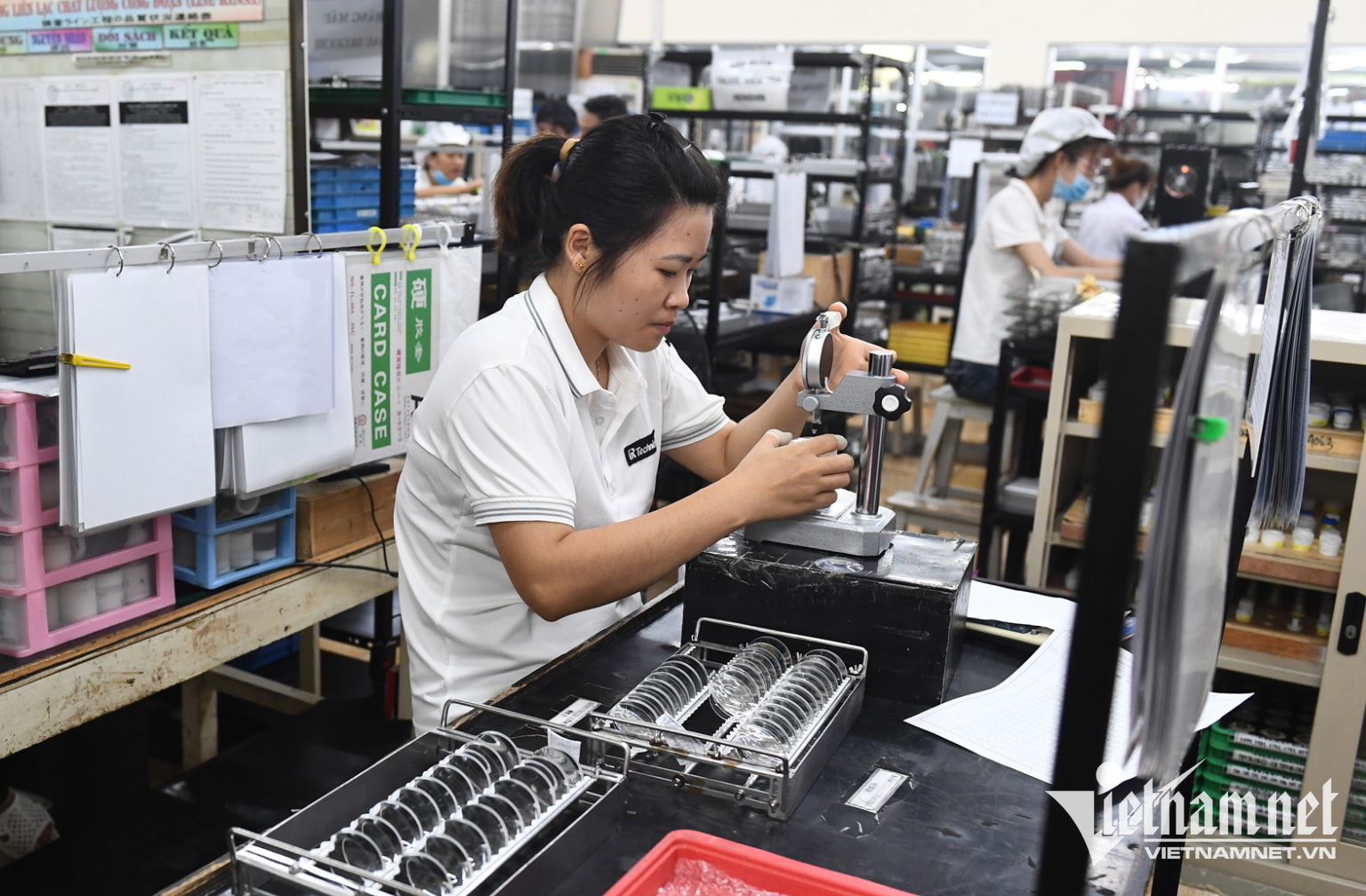
A notable message from the OECD is that Vietnam's challenge is no longer simply attracting more investment, but higher-quality investment.
FDI is not just capital. FDI must serve as a channel for technology transfer, skill development, promoting innovation, and elevating the capacity of domestic businesses. But those benefits do not occur automatically. They only materialize when there are policies good enough to connect FDI enterprises with domestic ones, develop suppliers, train skills, and align foreign investment with national development goals.
The OECD Investment Quality Review poses a question: How can Vietnam shift from an FDI model focused on labor-intensive exports to a model that generates more spillovers in innovation, knowledge, skills, and domestic value?
That is also the core question of the new growth model. FDI has played a massive role in Vietnam's success. But old success is no longer sufficient for the new phase.
Linkages between FDI enterprises and domestic businesses remain limited. Investment in R&D and skill development is low. Many activities are still concentrated in segments with low added value.
The positive news is that the shift has begun. The OECD reports that nearly half of recent new FDI inflows is directed toward green and digital sectors. Vietnam has the opportunity to attract a new generation of investors. But if policies still stop at investment promotion, that opportunity may slip away just like many previous ones—entering Vietnam, manufacturing in Vietnam, exporting from Vietnam, but the technological capacity of Vietnamese businesses does not grow commensurately.
The new benchmark for FDI can no longer just be the number of projects, the scale of registered capital, or export turnover.
Instead, the key indicators should be the extent of technology diffusion, the depth of Vietnamese firms' participation in supply chains, and the amount of value retained within the domestic economy.
The technology lesson
Technology is not a commodity that can simply be purchased and immediately put to use. Its true value lies in the ability to master it.
Merit Janow used AI as an example, noting that AI is not merely a software model but an entire ecosystem comprising computing infrastructure, energy, data, data centers, human resources, governance, standards, and investment policies. Viewed from this perspective, the question is no longer how Vietnam can use AI, but which parts of the AI value chain the country can master.
The same applies to semiconductors, advanced materials, and clean energy. To build a new growth model, Vietnam should not only identify a few priority industries; it must develop the capacity to absorb, master, and commercialize technology.
This also requires a new role for the State. In the past, the priority was to maintain a stable environment and attract investment. Today, the State must build institutions that foster innovation by establishing regulatory sandboxes, connecting businesses with universities and research institutes, and creating trust through a transparent legal framework and consistent enforcement. The challenge is to safeguard public interests without allowing fear of risk to become an obstacle to innovation.
Minister of Science and Technology Vu Hai Quan raised an important question: How can Vietnam build a policy framework and testing mechanisms flexible enough to manage risks while supporting the development of emerging technologies, rather than restricting them out of excessive caution?
That is the sandbox problem. Not loosening management, but also not stifling innovation with fear of risk.
Trust is also the foundation of the innovation ecosystem. Without trust there is no cooperation; without cooperation there is no innovation. A technology ecosystem needs not only capital, human resources, or laboratories, but also stable “rules of the game” so parties are willing to share risks and create value together.
In that context, technology diplomacy emerges as a new tool. If economic diplomacy helps open markets and attract investment, technology diplomacy helps connect Vietnam with innovation networks, knowledge sources, investment funds, technology companies, and international standards, thereby creating a new position in the global value chain.
In the end, what matters is not which technology Vietnam chooses, but what it will use to measure the success of the new growth model: whether productivity increases, whether FDI creates technology spillovers, whether Vietnamese enterprises move deeper into supply chains, and whether R&D becomes products and economic value.
As the OECD noted, technology itself does not drive development; people, institutions, and policies do.
After nearly four decades of growth based on integration and existing advantages, Vietnam is entering a phase where it must create its own competitive advantage from knowledge, innovation, and technological mastery.
Tu Giang - Lan Anh
.svg)
