 Vietnamnet.vn

 Podcast



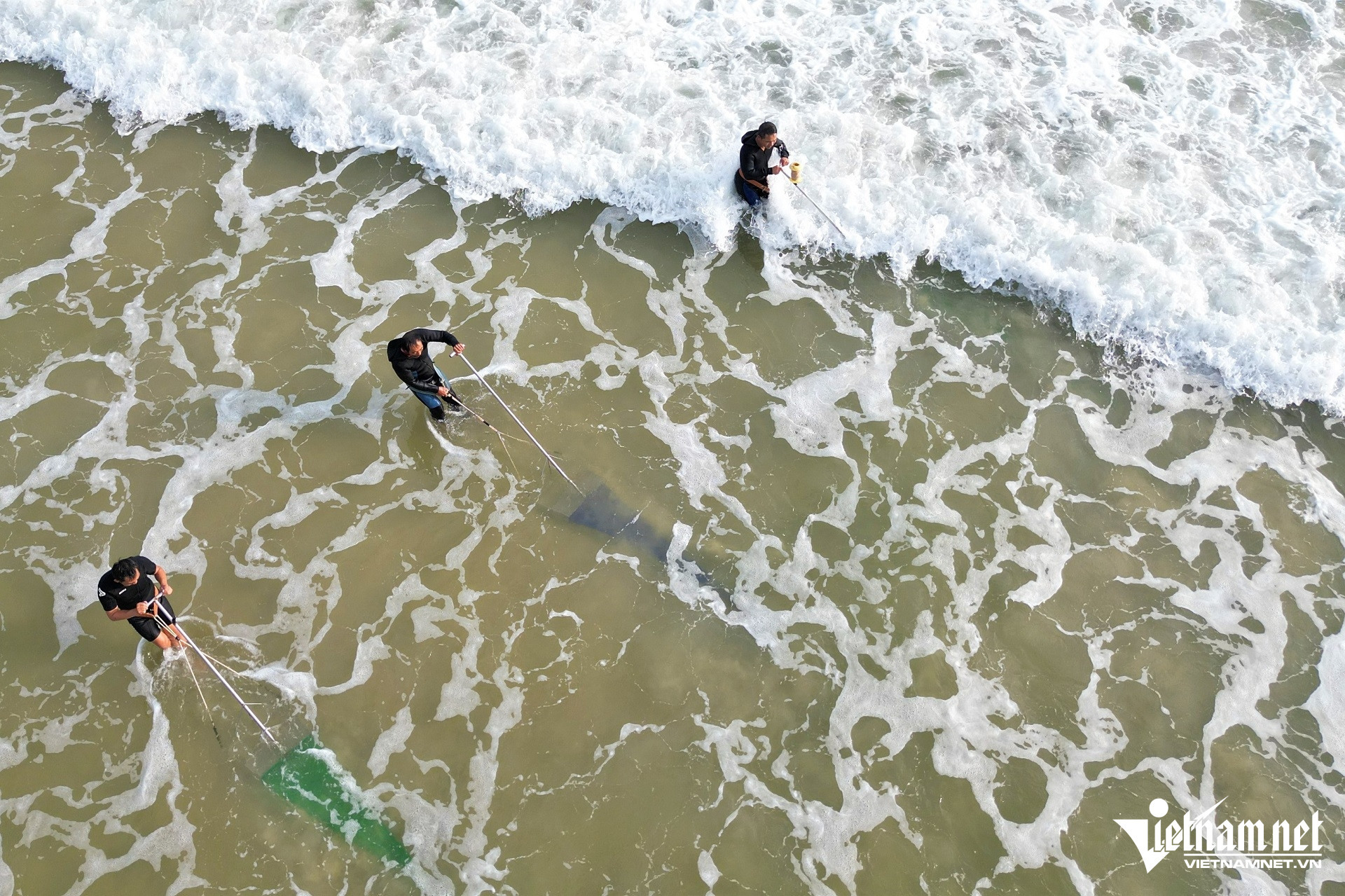
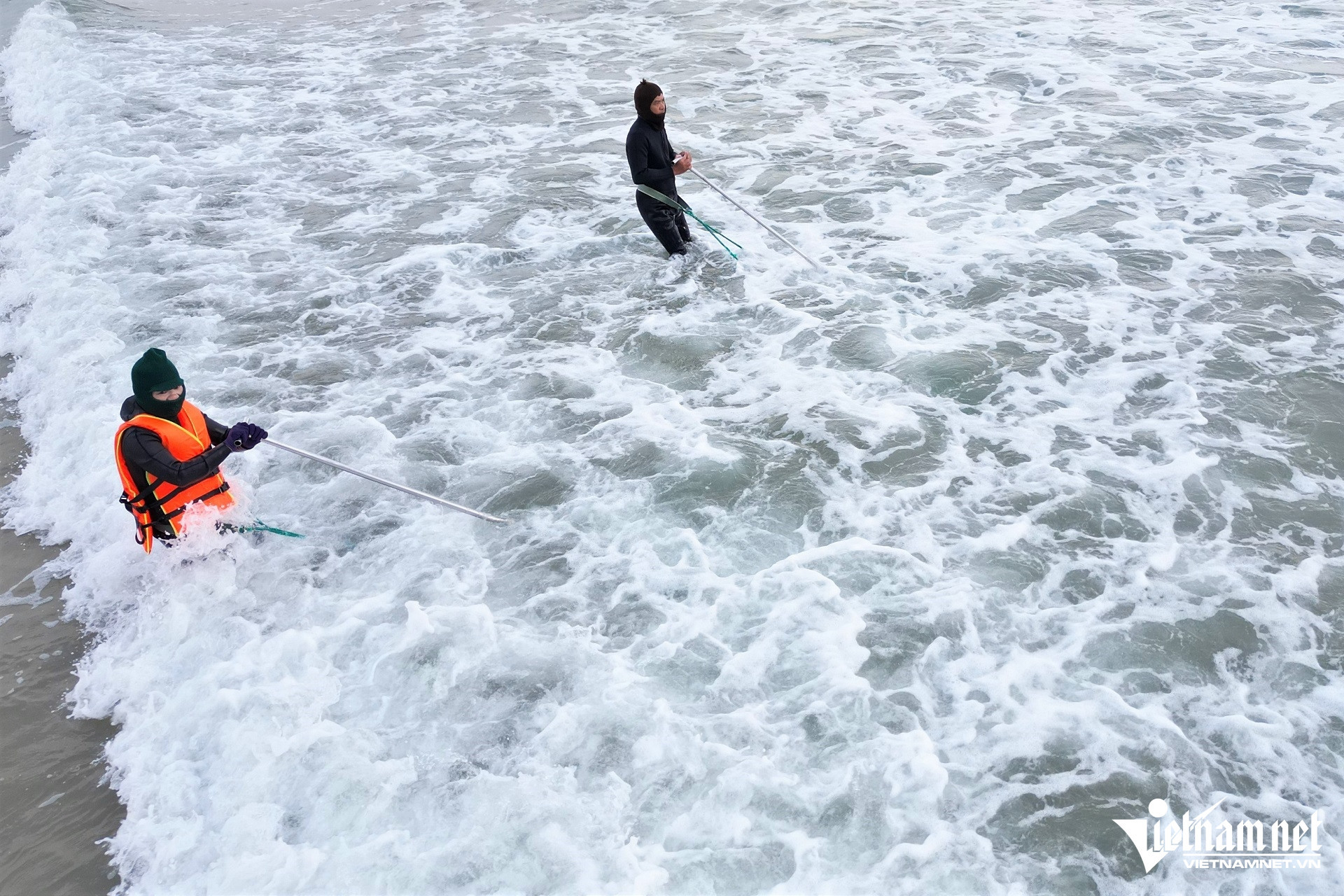
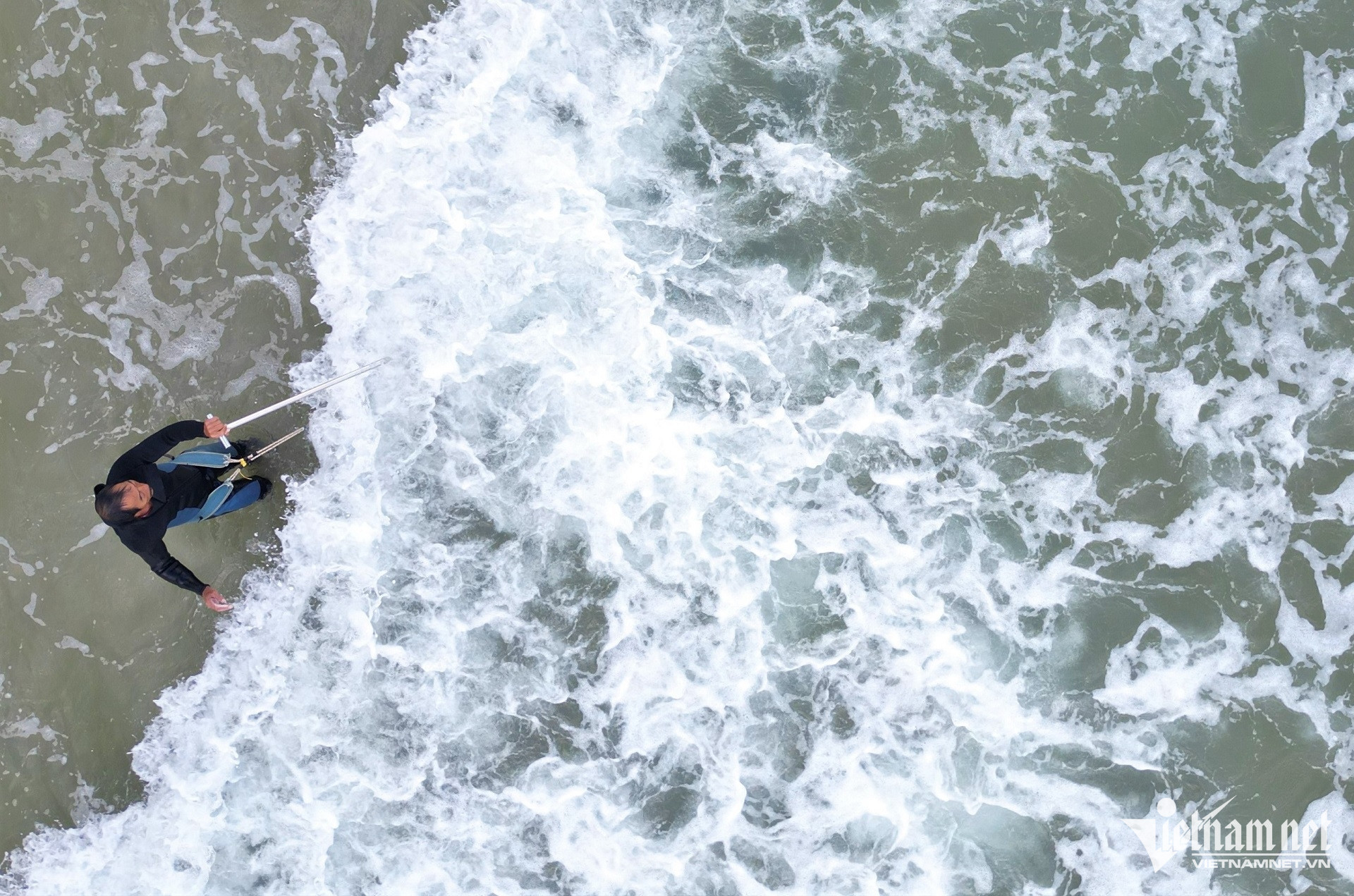
Each year, in the weeks before Tet, locals rise before dawn and head to beaches about 100 meters from shore. Armed with buckets, mesh rakes, and long poles, they begin the slow, methodical walk - always backward - into the shallow surf, eyes fixed on the sand below.
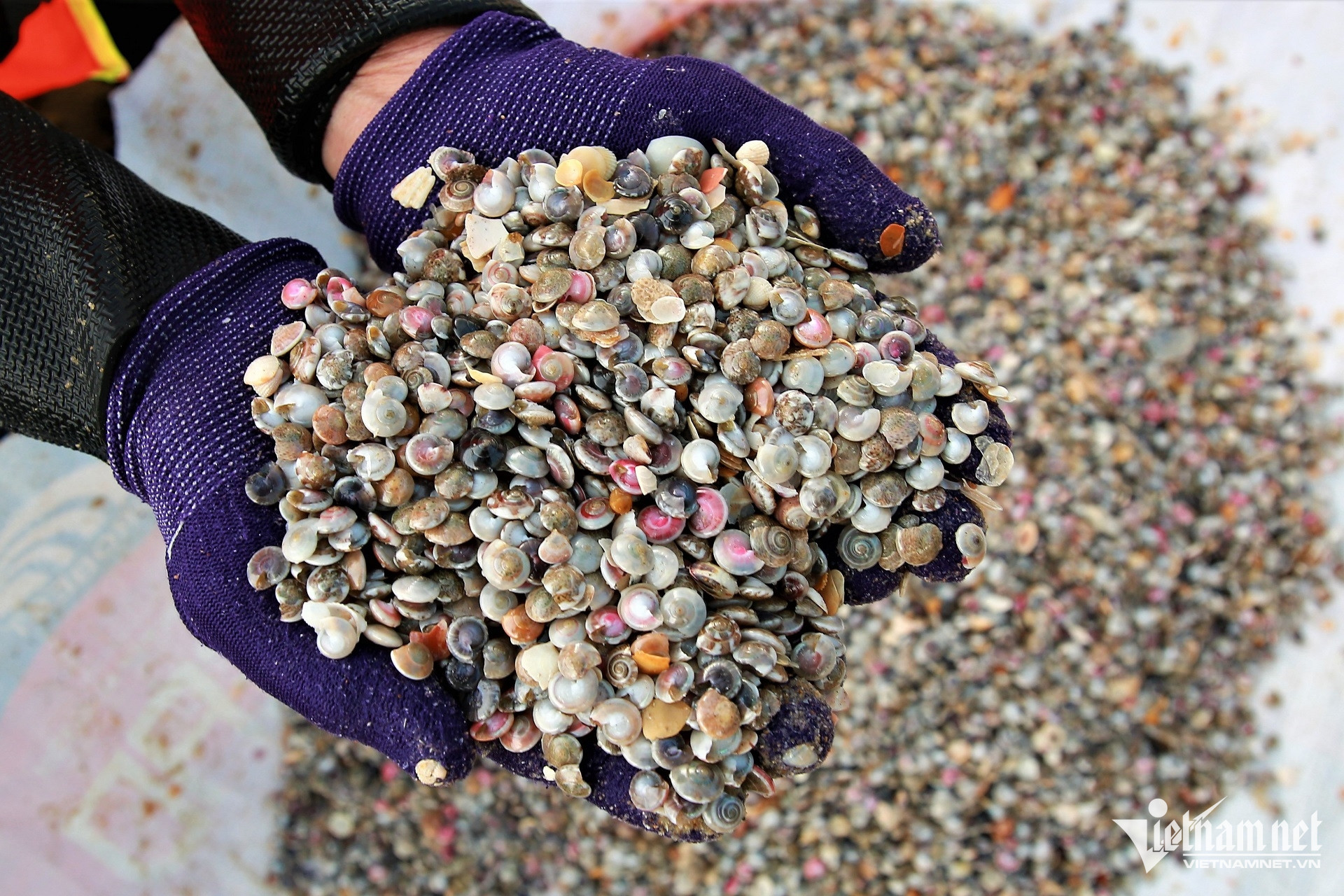
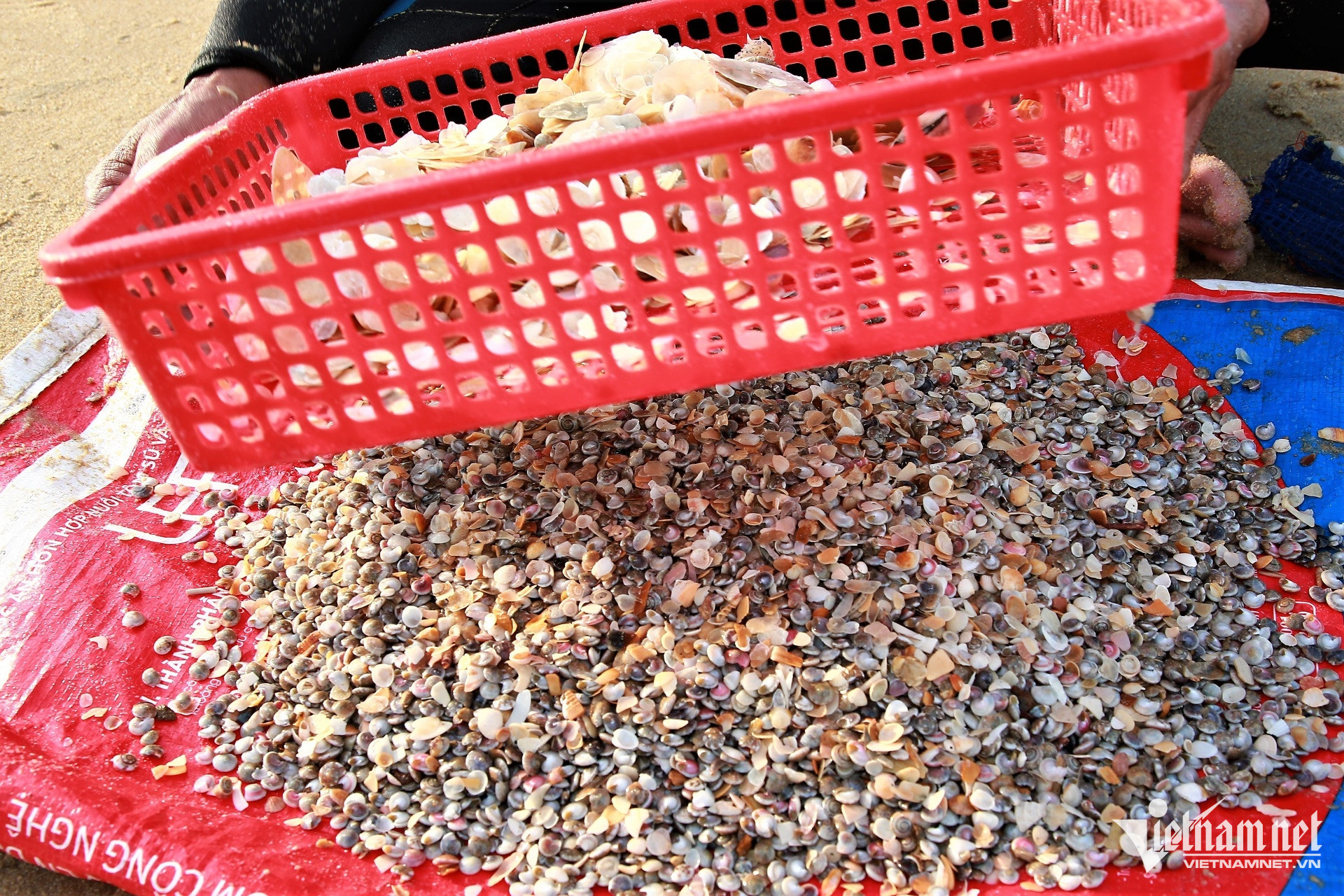
The snails, no bigger than shirt buttons, are washed ashore by the tides and lie just beneath the surface. Considered “gifts from the sea,” they are a beloved delicacy in Da Nang and fetch a premium during Tet.
Ốc ruốc are sold by the tin rather than by weight, and prices for the processed product range from 20,000 to 50,000 VND per tin (roughly USD 0.80–2.00), depending on size. Traditionally eaten by picking the meat from the shell with citrus thorns or toothpicks, the snails are central to Tet snacking in many households.
Harvesting fortune from beneath the waves
Among the dawn tide workers is 55-year-old Nguyen Thi Lieu from Thang An commune, who has followed the tide for years. With the ocean chill soaking her clothes, she moves carefully backward through the water, using a 2-meter bamboo pole tipped with a small rake and net.
“You have to walk backward so the waves push the snails into the net. If you face the shore, the sand buries them and you get nothing,” she explained, never stopping her motion.
This job, she says, doesn’t require skill but demands stamina and balance. A single misstep in a strong wave can knock a person off their feet.
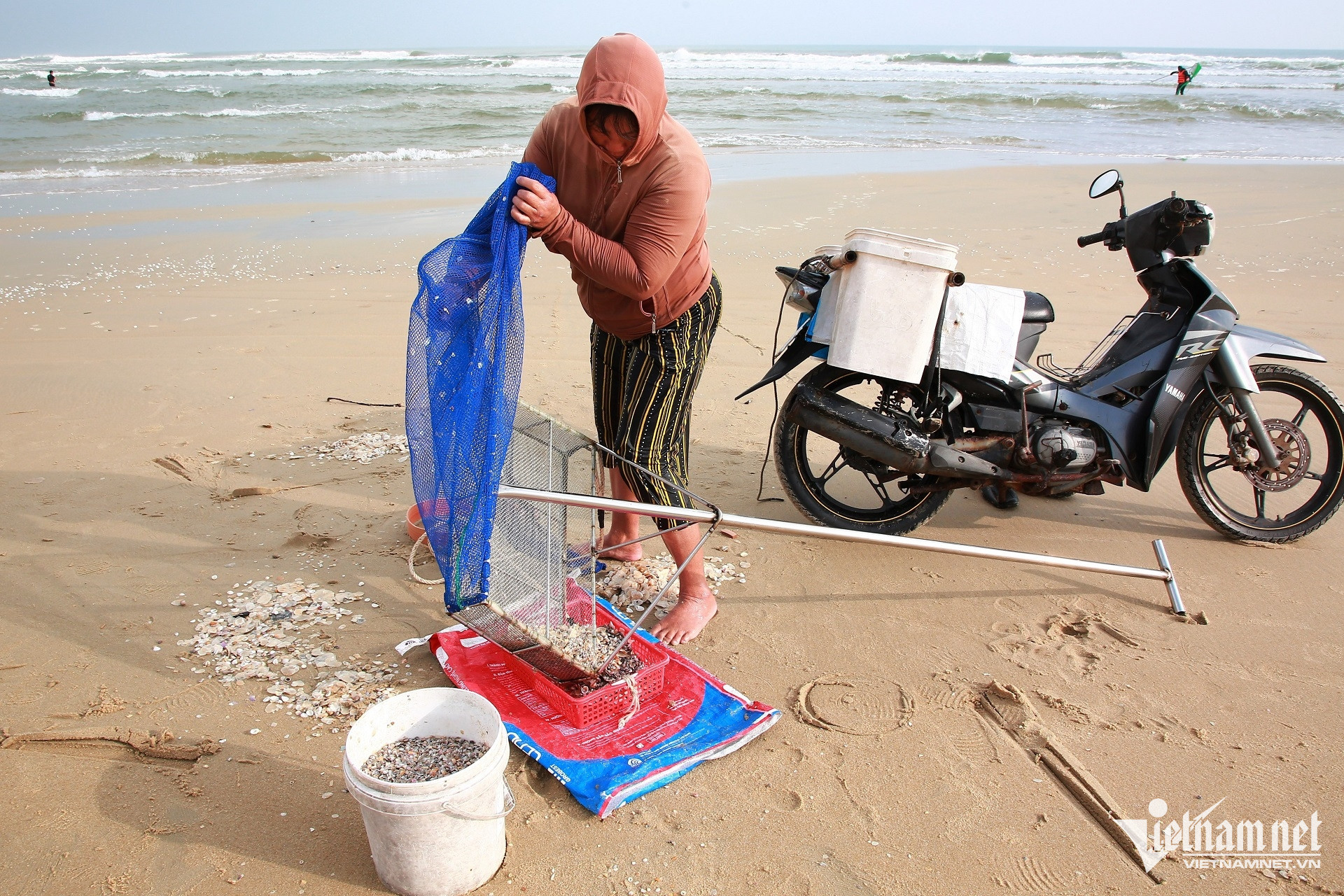
“I start at 5 a.m. and can fill a bucket by 8. That sells for about 700,000 VND (nearly USD 30). It’s hard work, but I’m used to it - it helps me provide for my family,” Lieu said.
Peak harvesting happens during low tide, typically from 2–3 a.m. until around 9 or 10. Calm seas bring better yields, and when conditions are right, harvesters can easily hit the jackpot.
A seasonal job, a Tet windfall
Men also join the seasonal work. Le Van Tai, 58, a construction worker from Quang Phu ward, takes time off each Tet season to go harvesting with his wife.
“Today, we started at 3 a.m. and filled nearly three buckets by 9 a.m. - that’s over 2 million VND (USD 80). We do even better when the sea is calm,” he said.
Harvest tools are handmade: a long bamboo handle with a small iron rake and net about 50 centimeters wide. After harvesting, the snails are rinsed to remove sand and then packed into buckets for sale.
The ốc ruốc season starts just before Tet and usually runs through the third lunar month. On a good day, a few hours of work can yield a significant income. Traders typically pay about 700,000 VND (USD 28) per bucket weighing 25–30 kilograms.
Chasing waves and watching the weather
Tran Van An, 36, from Nui Thanh, says the job depends entirely on weather and tide. Dangerous rip currents can sweep harvesters out to sea, so most work in groups of three to five for safety.
“When the waves get big, you’ve got to get out - there’s no room for mistakes,” An said.
Even though this year’s harvest is smaller due to rough seas, the job still brings solid earnings.
“On slow days, I still make around 700,000 VND. On lucky days, 2–3 million. But it's never easy - we’re out in freezing water for hours and often have to move between beaches to find more snails,” he said.
When the tide rises too high, the workday ends. Harvesters sling their gear over their shoulders and make the long walk back home.
Local seafood vendors like Ms. Hong say many families make several tens of millions of dong during the ốc ruốc season, using the extra income for Tet preparations. Larger snails are sold as food, while smaller ones go to lobster farms in provinces like Khanh Hoa, Gia Lai, and Dak Lak.
Though short-lived, this seasonal job is seen by many coastal residents as a vital source of income. “One season of raking, a whole year of eating,” as they say.
As waves crash and harvesters retreat slowly into the sea, the sight of backs turned to shore and feet inching backward stands as a quiet symbol of resilience and grit along Vietnam’s coast.

Ha Nam
.svg)
