 Vietnamnet.vn

 Podcast



1. The conflict at Eximbank Vietnam, which lasted six years with eight presidents replaced, seems to be at an end.
In late November 2022, Eximbank fixed the list of shareholders to organize an extraordinary shareholders’ meeting, slated for January 2023, in HCM City.
The event is believed to mark a milestone in the power war among shareholder groups at Eximbank. The representatives of Thanh Cong and SMBC groups have withdrawn from the board of directors. The former has divested from the bank and the latter is likely to sell shares.
In 2022, Eximbank witnessed many large-scale share transfer deals, from tens to hundreds of millions of shares, which marked an unprecedented change in shareholder structure.
For many years, Eximbank has been bogged down in the personnel crisis because of conflicts among groups of shareholders. The situation only became stable after Luong Thi Cam Tu, born in 1980, former member of the board of directors, was appointed to the post of chair of the board of directors for the seventh tenure (2020-2025) to replace Yasuhiro Saitoh.
Prior to that, from late 2015 to October 2022, Eximbank changed chairs of the board of directors eight times. At first, Le Hung Dung served in the post, who was later replaced by Le Minh Quoc and then Luong Thi Cam Tu.
After that, Le Minh Quoc once again took the office as the bank’s chair. His successors were Cao Xuan Ninh and Yasuhiro Saitoh. The three latest chairs were Nguyen Quang Thong, Yasuhiro Saitoh and Luong Thi Cam Tu.
Tu used to be CEO of NamABank. She joined Eximbank’s board of directors in April 2018.
Eximbank has one new member of the board of directors – Do Ha Phuong, born in 1984. Phuong is co-founder and CEO of VNInvest Partners. She is considered a member of the NamABank group.
However, the process of shareholder restructuring is still proceeding and may last a long time.
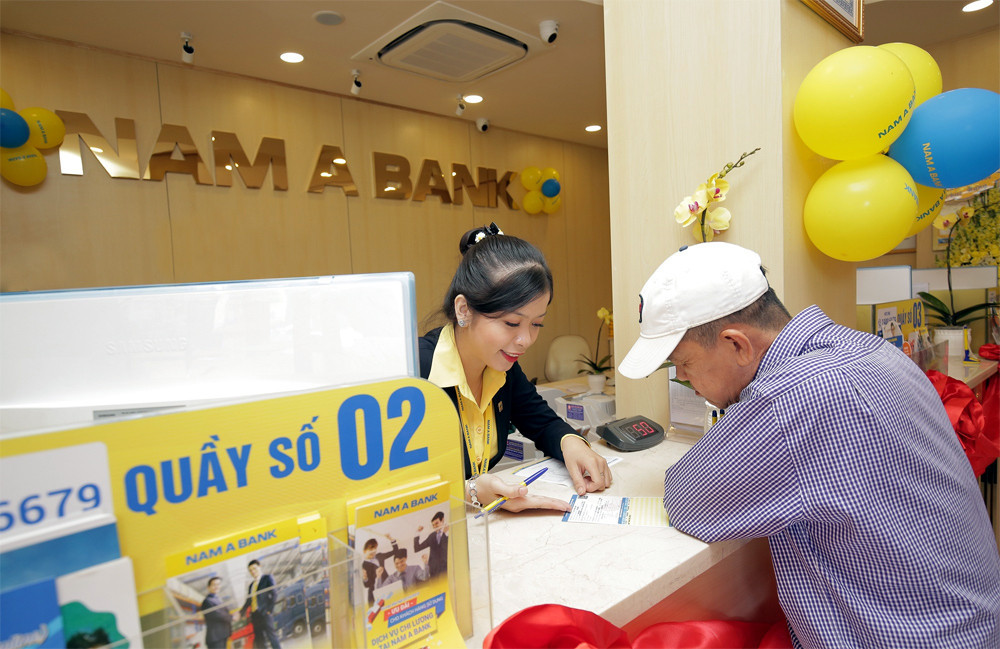
2. NamABank (NAB) has recently reported considerable improvement in business performance, with post-tax profit increasing by 96 percent in Q3 2022 compared with the same period of the year before to VND 546 billion.
After a long period of internal asset dispute, NamABank owned by the family of the late Tu Huong, a famous businesswoman, has become stable.
In early December 2022, NamABank organized an extraordinary shareholder meeting and appointed Tran Ngo Phuc Vu to the post of chair of the board of directors.
Prior to that, Nguyen Quoc Toan, the son of Tu Huong and Nguyen Chan, was the chair of the bank, while his younger brother – Nguyen Quoc My – was deputy chair.
Many years ago, Toan’s siblings took turns holding the post of the bank’s chair. Toan has held the post since 2016.
In 2019, NamABank witnessed uncertainties, including personnel. On occasion, Toan resigned from his post and Vu was authorized to manage NamABank amid internal litigation.
Another burning issue at NamABank, which former Governor of the State Bank of Vietnam Le Minh Hung focused on, was the cross ownership by NamABank and Eximbank’s groups of shareholders.
The ownership ratio and the issue of nepotism were also big problems which once existed at NamABank. In a report in 2015, Tu Huong’s family held a controlling stake, 24 percent, of the bank.
Five years later, no detailed report about the ownership ratios of internal shareholders and large shareholders of the bank had been made public.
The 2021 administration report showed that Toan held 4.26 percent of shares, Chan 4.11 percent, Nguyen Thi Thanh Van (Toan’s elder sister) 4.26 percent, Nguyen Quoc May 3.65 percent and Nguyen Thi Xuan Thuy (Toan’s younger sister) 0.09 percent.
As such, Toan and related people held 16.4 percent. This did not include the institutional shareholders related to Toan – Rong Thai Binh Duong Co Ltd (more than 5 percent).
3. Sacombank, where Duong Cong Minh, born in 1961, is chair of the board directors, reported good business results in 2022 with pre-tax profit increasing by 86 percent in Q3 2022 compared with the same period of 2021.
Minh became well known as chair of Him Lam real estate group, golf course projects in HCM City and Hanoi, and Sacombank.
He is also chair of LienViet Securities, Him Lam JSC and some other enterprises. He used to be chair of LienVietPostBank.
During the reign of Dang Van Thanh, Sacombank was the leading private bank in terms of operation scale, market share and banking retail services. However, the bank later met with ups and downs when Tram Be, a businessman, appeared with the merger of SouthernBank.
4. PGBank and SaigonBank have the smallest assets in the banking system, but they are very attractive if noting that investors do not need to spend much money to obtain control. PGB and SGB shares are attracting investors.
PGBank’s capitalization value had reached VND4.89 trillion as of December 30. SBV has approved the transfer of all PGB shares held by Petrolimex, which means that PGBank will change hands.
SaigonBank is the smallest bank, but it is still eyed by some investors who say that it is not easy to obtain licenses to set up a bank.
Manh Ha
.svg)
