 Vietnamnet.vn

 Podcast



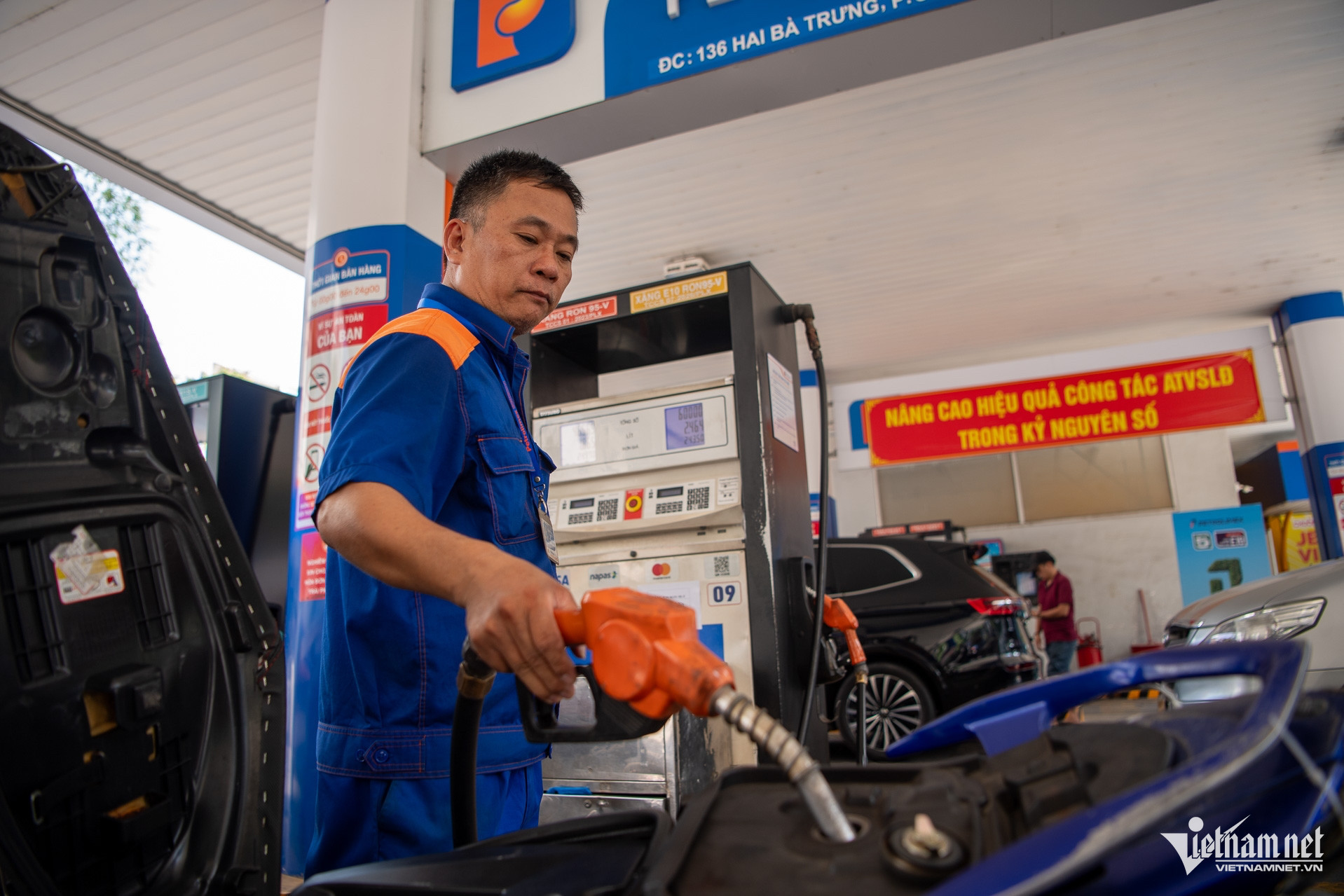
Compared to the same period last year, Vietnam’s fuel imports increased by 750,000 tons.
In the domestic market, thousands of fuel stations have phased out RON95 gasoline in favor of E10 biofuel.
Latest data from the Customs Department show that during the first 15 days of May, Vietnam imported nearly 199,000 tons of various fuel products worth around $299.8 million.
By mid May 2026, the country had spent $4.55 billion importing nearly 4.33 million tons of fuel products.
Compared with the same period last year, imports of energy products rose sharply by 20.9 percent, equivalent to an increase of 750,000 tons, while import value surged 85.7 percent, up by $2.1 billion.
Import turnover for gasoline reached $1.05 billion, diesel nearly $2.46 billion, mazut oil around $119 million, and aviation fuel approximately $927 million.
In the first half of May alone, businesses spent around $596.7 million importing more than 552,000 tons of crude oil.
As conflict in the Middle East shows no signs of ending soon, businesses have accelerated fuel imports to ensure uninterrupted domestic supply.
In the domestic market, fuel prices were cut across the board during the May 14 adjustment period.
E5 RON92 gasoline fell by VND656 per liter to VND23,134 ($0.89) per liter, while RON95-III gasoline declined by VND276 to VND24,078 ($0.93) per liter.
Diesel 0.05S also dropped by VND268 per liter to VND27,226 ($1.05) per liter, while mazut 180CST 3.5S decreased by VND587 to VND20,585 ($0.79) per kilogram.
Since peak levels recorded in late March and early April, E5 RON92 gasoline prices have fallen by VND6,980 per liter, RON95-III prices by VND9,762 per liter, and diesel prices by a sharp VND17,562 per liter following seven consecutive downward adjustments.
Notably, Vietnam’s fuel market is currently undergoing a transition from traditional mineral gasoline to E10 biofuel.
In practice, since mid May, thousands of fuel stations nationwide have gradually reduced the share of RON95 gasoline to switch toward E10 fuel.
Nearly 1,000 PVOIL fuel stations began selling E10 gasoline from May 15.
Meanwhile, by May 20, approximately 5,500 Petrolimex fuel stations nationwide had also shifted to E10 sales and stopped selling mineral gasoline.
The Ministry of Industry and Trade is currently collecting public feedback on a draft resolution aimed at accelerating the roadmap for E10 adoption, including proposed pricing formulas for the biofuel product.
The draft also states that the Ministry of Finance has been assigned to study and propose adjustments to special consumption tax and environmental protection tax policies for E5 and E10 biofuel products in order to create a more attractive price gap compared with mineral gasoline.
Tam An
.svg)
