 Vietnamnet.vn

 Podcast



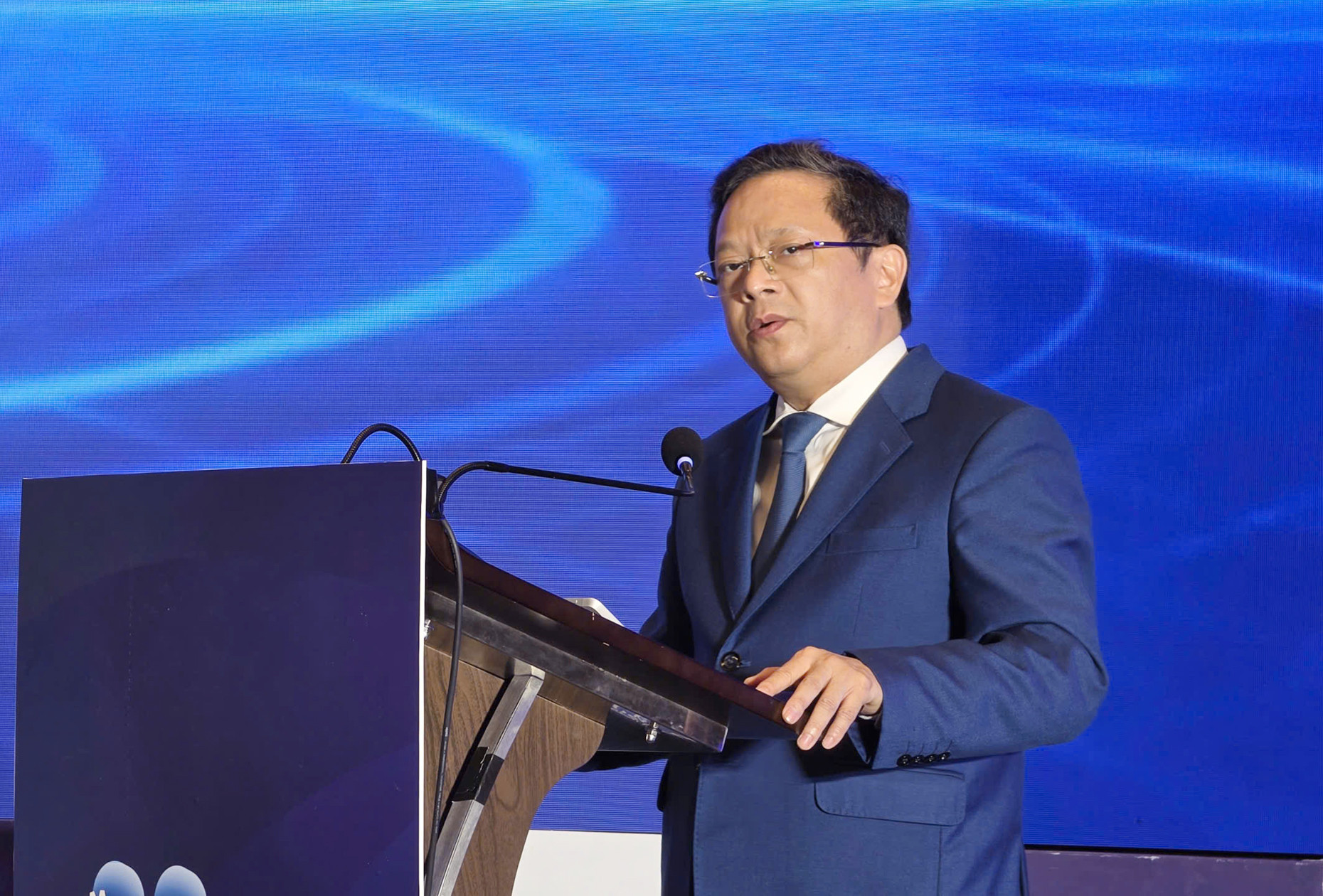
On July 10, the annual international exhibition and conference on industrial parks took place in Hai Phong.
In the first half of 2026, industrial production continued to record positive signals, with the Industrial Production Index (IIP) increasing by 10.8 percent year-on-year. The processing and manufacturing industry alone rose by 11.4 percent, continuing to hold its key driving role in the economy.
However, the growth rate disparity among localities, energy security requirements, infrastructure development, high-quality FDI attraction, and the transition toward green and sustainable production models are posing new demands on Vietnam's industrial park system.
Industrial parks: not just land for lease
Nguyen Van Khoi, chair of the Vietnam Real Estate Association and member of the Prime Minister's Advisory Council for Administrative Procedure Reform, noted that the world is witnessing profound shifts in geopolitics, economics, and technology.
He said global supply chains are being restructured; and trends in investment shifts, green development, digital transformation, AI, and the circular economy are shaping new development models. For Vietnam, this presents both a massive opportunity and a major challenge.
"To develop industry rapidly, we must first have a modern industrial park system. To attract the world's leading technology corporations, we must provide corresponding development spaces. To improve national competitiveness, industrial parks cannot just stop at leasing land; they must become high-quality ecosystems for manufacturing, innovation, and services," Khoi emphasized.
He pointed out that many industrial parks still develop under traditional models; logistics infrastructure lacks coordination; linkages with urban areas are limited; and workers' housing, expert accommodations, and social institutions fail to meet requirements. Meanwhile, digital and green transformations remain slow, and the quality of investor support services is uneven.
In addition, issues concerning clean land funds, site clearance, land prices, and investment procedures remain bottlenecks that need to be cleared.
According to Khoi, in the new phase of development, there must be a strong shift from the model of "industrial parks providing manufacturing premises" to one of "modern industrial ecosystems."
"A successful industrial park does not just have factories; it must have logistics centers, digital infrastructure, research and innovation centers, housing for workers and experts, educational, medical, commercial, and cultural services, as well as a green, safe, and sustainable living environment," he said.
He also argued that the new generation of industrial parks needs to be governed by digital data, AI, the Internet of Things, big data, and smart operating platforms to improve management efficiency, save energy, reduce costs, and increase competitiveness.
New-generation industrial parks
Nguyen Duc Hien, deputy head of the Central Strategy and Policy Board, said that Vietnam's industrial parks cannot merely be places for concentrated production or infrastructure provision. They must become modern industrial ecosystems.
“They should be spaces where innovation and digital technology converge, based on AI and high-quality human resources," Hien said.
He said the new generation of industrial parks will be the foundation for forming innovative industrial clusters, improving productivity, competitiveness, and the resilience of the economy, contributing directly to national industrial growth goals in the coming period.
Tran Van Quan, vice chair the Hai Phong Provincial People's Committee, said industrial parks and economic zones have long been vital pillars in the process of industrialization and attracting foreign direct investment into the manufacturing sector.
Approximately 70 to 80 percent of newly registered FDI capital in the processing and manufacturing industry is concentrated in industrial parks and economic zones.
The foreign-invested economic sector, operating mostly within industrial parks and economic zones, contributes around 20 percent of GDP and more than 70 percent of the country's export turnover. Industrial parks and economic zones alone provide direct employment for nearly 3.83 million workers.
In the context of global supply chains restructuring toward diversifying supply sources, Vietnam is emerging as a priority destination for high-tech capital flows.
The semiconductor field has cumulatively attracted over $14 billion with more than 240 projects, alongside a new wave of investment into data centers, AI, and renewable energy.
Investors from South Korea, Japan, Singapore, China, the United States, and Europe continue to consider Vietnamese industrial parks as strategic destinations within regional and global supply chains.
As the country sets a target for an average GDP growth rate of 10 percent per year or higher, the industrial park system needs to continue innovating toward synchronicity in planning and infrastructure, green transformation, digital transformation, and enhancing the capacity to welcome high-tech, semiconductor, and innovative projects.
Thai Khang
.svg)
