 Vietnamnet.vn

 Podcast



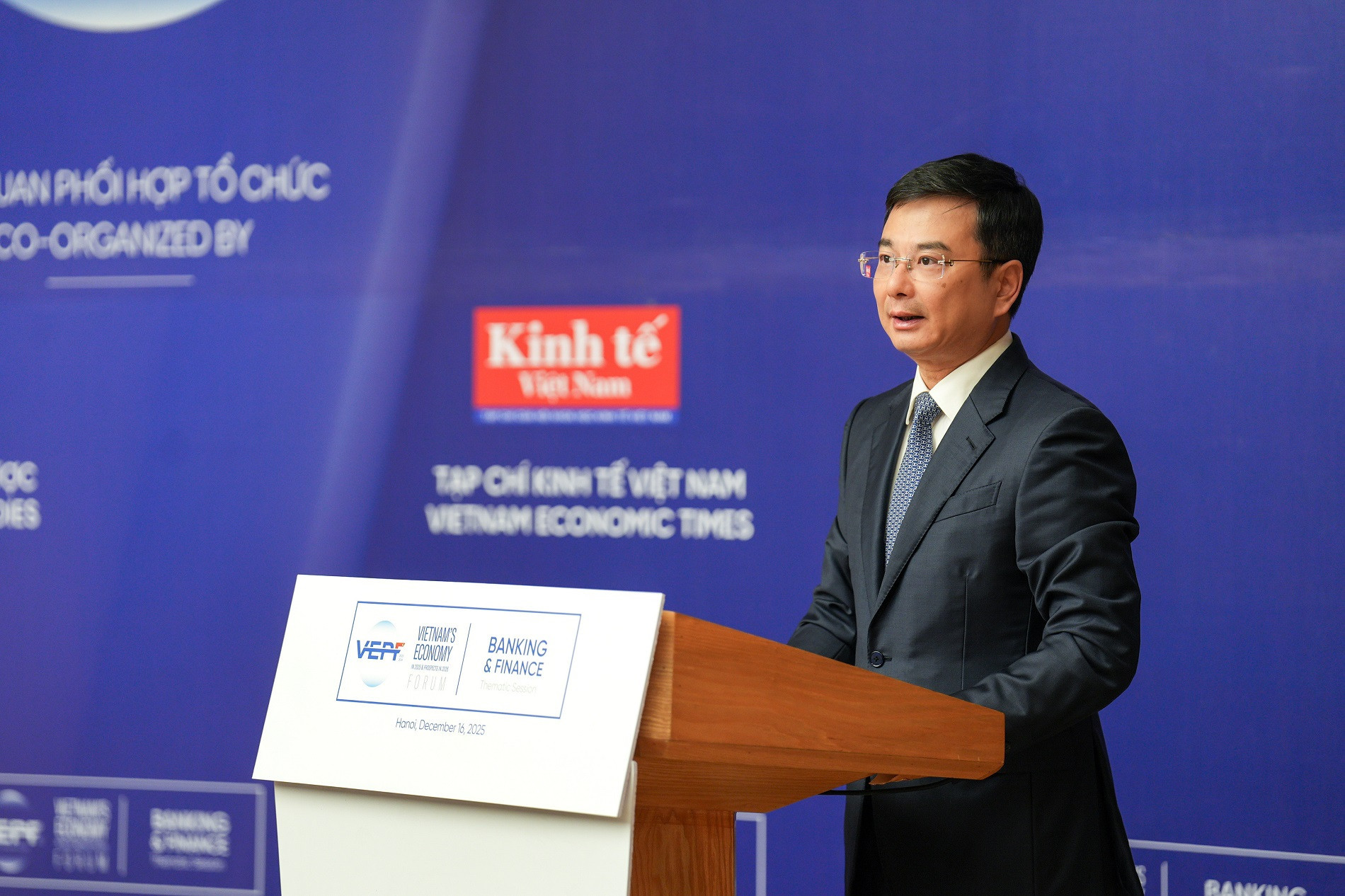
At a financial forum titled “Mobilizing and effectively using financial resources for economic growth in the 2026–2030 period,” held at the Government Office on December 16, Deputy Governor of the State Bank of Vietnam (SBV), Pham Thanh Ha, emphasized the urgent need for robust and sustained growth to achieve upper-middle income status by 2030, and high-income status by 2045.
“To support a growth model based on science and innovation, Vietnam must secure large-scale financing and use it efficiently,” he said.
According to Ha Thu Giang, Head of the Credit Department for Economic Sectors at the SBV, as of November 27, 2025, total outstanding credit had reached over 18.2 quadrillion VND (approx. 745 billion USD), up 16.56% compared to the end of 2024 and nearly double the level at the start of the previous period.
Credit structure has shifted to align with sectoral priorities. Agriculture and rural development accounts for 23% of outstanding credit, and small and medium-sized enterprises (SMEs) for 19%. Notably, credit for high-tech enterprises and supporting industries grew by an average of 17.51% and 19.91%, respectively.
Bank lending has played a vital role in financing major national projects. However, Giang noted that the strain on banks is intensifying, as capital markets remain underdeveloped and uneven.
“The demand for medium- and long-term capital is enormous, especially for national-level infrastructure. But 80% of the banking system’s deposit base is short-term, which creates significant maturity mismatch risks,” she explained.
To ease this burden, experts recommended expanding other funding channels - particularly the stock and corporate bond markets - to better provide long-term capital.
Effective use of capital is more important than mobilization alone
From a fiscal policy perspective, Vice Minister of Finance Do Thanh Trung stressed that while securing sufficient funding is essential, allocating and using it wisely is even more critical.
“Mobilization must go hand in hand with strategic allocation, transparency, and efficiency to create high value-added outcomes,” Trung said.
Economist Dr. Can Van Luc echoed this, arguing that Vietnam must pursue fast, sustainable, and inclusive growth across the economic, social, and environmental pillars.
He emphasized shifting from a model based on capital and labor to one rooted in technology, innovation, institutional reform, and productivity.
Vietnam needs to improve all three links in the capital chain - mobilization, allocation, and usage. This requires strengthening financial market institutions, enhancing regulatory oversight, accelerating digital transformation, promoting fintech, cashless payments, digital assets, and fostering green, sustainable, and inclusive finance, Luc added.
Capital market expansion holds the key
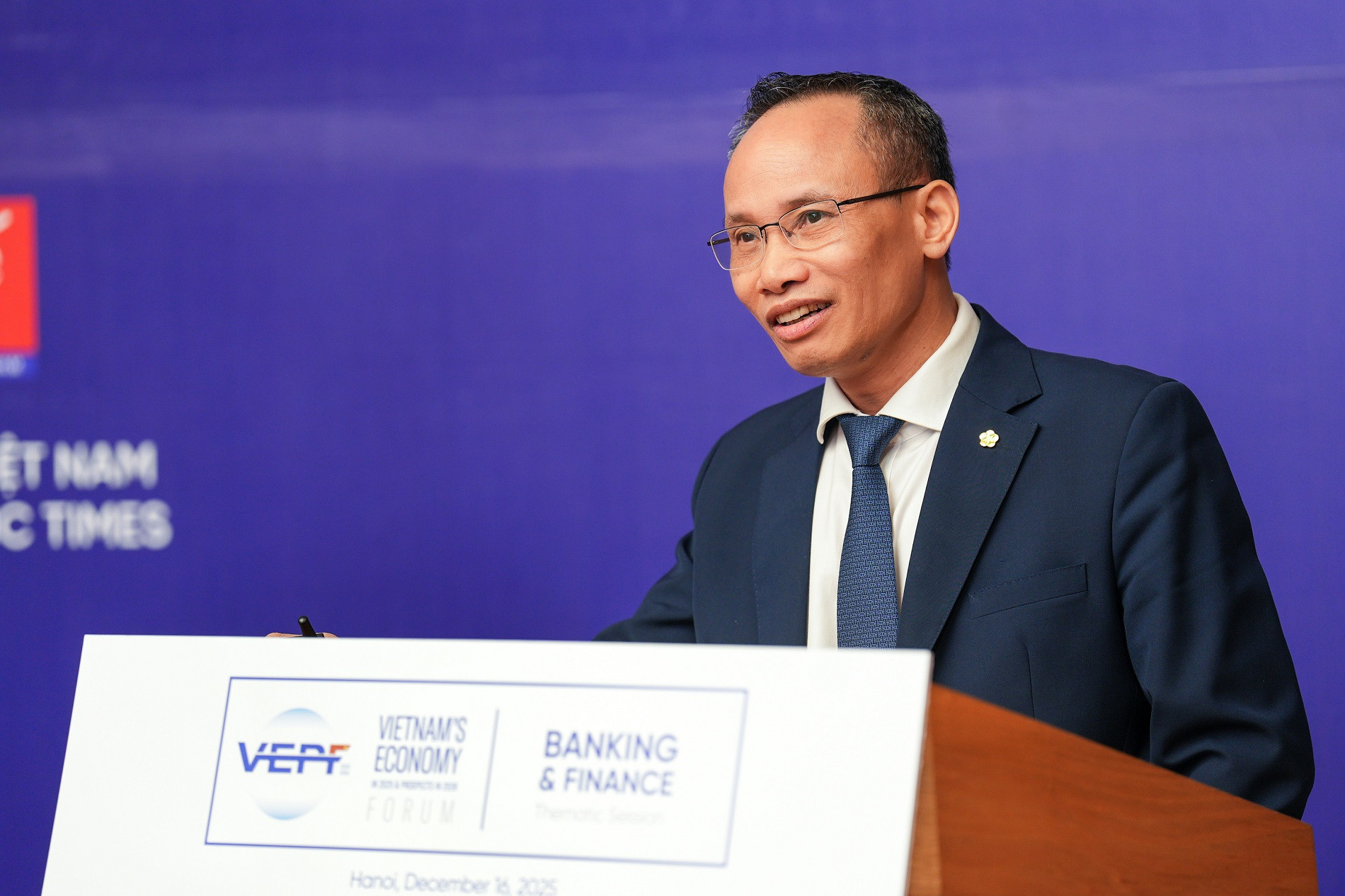
According to Bui Hoang Hai, Vice Chairman of the State Securities Commission (SSC), Vietnam’s stock market continued to expand in 2025, reinforcing its role as a pillar of the financial system and a platform for economic growth.
The average daily trading value on the equity market in the first 11 months of 2025 reached 29.5 trillion VND (approx. 1.17 billion USD), up 38.5% from the previous year.
On the bond side, average daily trading in listed bonds and privately issued corporate bonds reached nearly 15 trillion VND and 5.4 trillion VND respectively - up 27.4% and 26.44% year-on-year.
As of October 2025, Vietnam’s stock market had over 11 million investor accounts, with domestic retail investors comprising 99.38% of accounts and accounting for 85% of trading value.
However, experts noted that most activity remains concentrated in the secondary market, dominated by trading rather than capital-raising.
“What’s needed now is a stronger push for enterprises to raise funds directly via primary markets - through share offerings and corporate bonds. This will ease the reliance on the banking system,” one expert concluded.
Tuan Nguyen
.svg)
