 Vietnamnet.vn

 Podcast


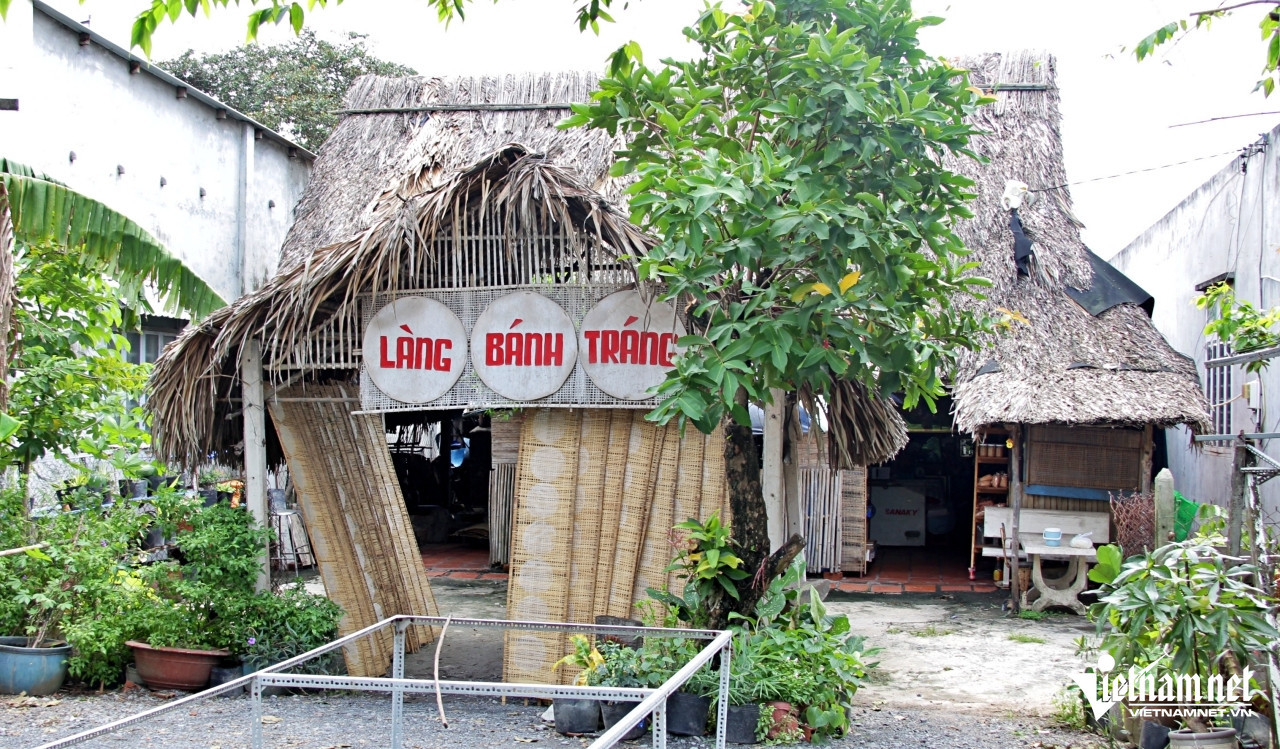
Amid the rhythm of modern life, many traditional crafts risk fading away. However, some remain stubbornly attached to the trade, finding ways to preserve and develop it in contemporary times.
Amid a courtyard bathed in golden morning sunlight, continuous crackling sounds echoed. Noticing her guest's surprise, Ho Que Chau (born 1981, Phu Hoa Dong commune, HCMC) quickly explained that it was the sound of dried rice paper peeling off bamboo mats.
As she spoke, she hurried to carry the bamboo mats into the shade. Arranged neatly in rows on the mats were round, thin, rice-white sheets of rice paper.
Chau's family is one of those belonging to the long-famous Phu Hoa Dong rice paper craft village in HCMC. Even so, she does not know when the local handmade rice paper craft first originated.
Chau said the craft has been passed down through generations. Her own family has been tied to the trade since her paternal grandparents' time.
Since childhood, Chau was accustomed to the sight of her family and neighbors lighting fires and making rice paper every morning. As she grew up, she began helping her mother make rice paper, becoming proficient in the trade by age 17 or 18.
However, in her youth, she loved tourism and dreamed of becoming a tour guide. She passed the entrance exam to Saigon Tourism College. Upon graduation, she fulfilled her dream by becoming a tour guide.
"I worked in tourism until I got married and my mother started getting older. Once, she asked if I wanted to carry on the family's traditional craft. If I didn't, the trade passed down by my grandparents across generations might be broken.
"I thought this was a traditional family craft left by my grandparents, so I wanted to preserve it, even if the work doesn't make one rich. Moreover, this trade gives me time to be close to and care for my family. I decided to give up my youthful dream to return home and continue the rice paper trade," she said.
Chau preserves the exact recipe handed down from her grandparents' time. All processing steps, from mixing batter, decanting water and spreading the batter to drying the paper, are performed manually.
Striving to keep the trade alive
Her rice paper making starts with mixing rice flour with water and salt in appropriate proportions, then letting the batter settle overnight from the previous afternoon. Around 2-3am, she and her mother wake up to decant the water (pouring off the floating water layer above the settled batter) and light the stove to steam the paper.
When the fire burns red-hot and the pot of water above it begins to boil and release clouds of steam, Chau starts making the rice paper. She uses a ladle to scoop batter onto a piece of cloth stretched over the mouth of the pot of boiling water. She then skillfully uses the ladle to spread the batter into a very thin, round layer.
Once the rice paper is cooked, she uses a rolling tube to lift it from the cloth and spread it onto bamboo racks. By the time the racks are covered with rice paper, the early morning sun has begun bathing the courtyard in golden light.
She then takes the rice paper outside to dry in the sun. After about two hours, the rice paper dries, naturally peels away from the bamboo racks and produces a pleasant crackling sound.
Once the rice paper is finished, Chau and her mother, Thai Huong Lan, born in 1960, stack the sheets and store them in hygienic plastic bags. Normally, Chau makes rice paper from 3 am until around 9 am, producing 1,000-1,200 sheets.
To meet growing market demand, Chau also makes other products, including grilled rice paper with eggs, ginger rice paper, chili rice paper and shrimp rice paper.
Diversifying her rice paper products allows Chau's establishment to meet a wider range of customer needs and makes it easier to find markets for its products. However, because the rice paper is made by hand and production capacity is limited, Chau's products are sold only in the domestic market.
Ha Nguyen

