 Vietnamnet.vn

 Podcast



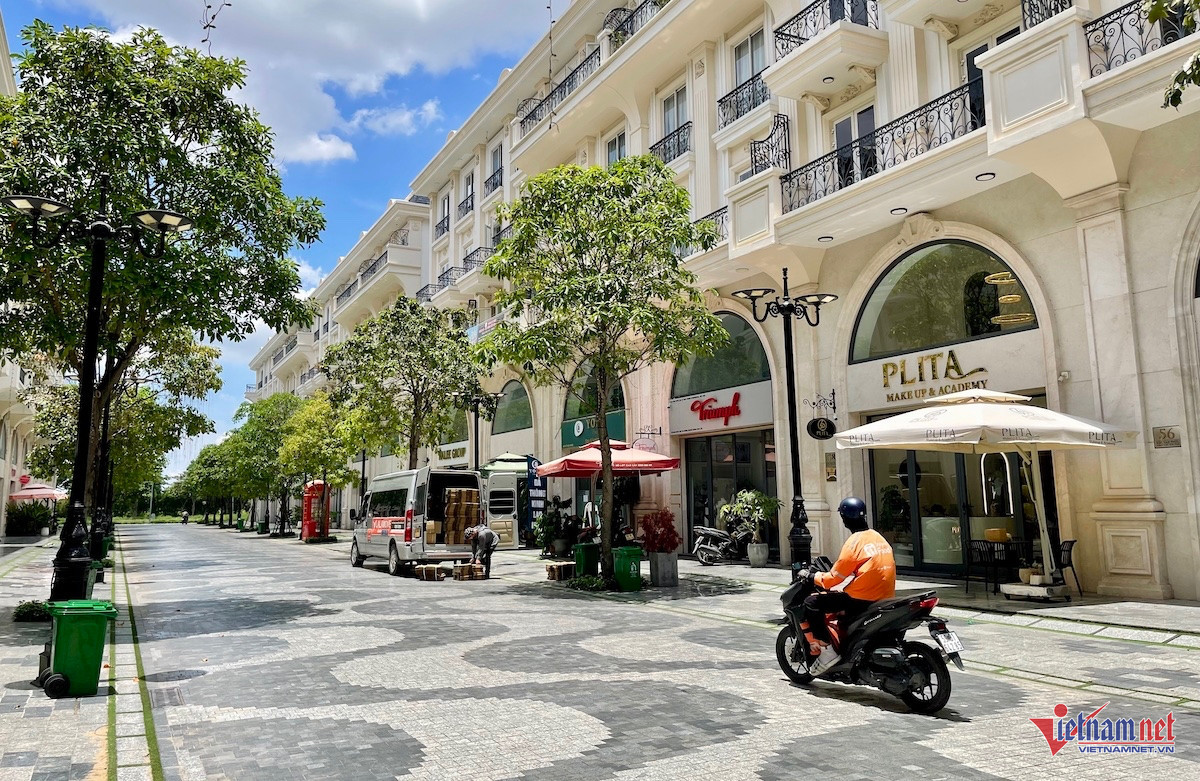
Homebuyers have changed significantly. While they previously made purchasing decisions largely based on expectations of short-term price gains, they now prioritize projects with transparent legal status, well-planned developments, convenient infrastructure connections, and immediate income-generating potential.
The townhouse segment in HCMC is showing clear signs of recovery. Reports from market research units all show that new supply is rising again and liquidity is improving.
However, unlike previous growth cycles, the market's driver no longer stems mainly from speculative psychology but primarily originates from real housing demand and infrastructure expectations.
In the second quarter of 2026, the market recorded the return of supply after a long period of scarcity. New supply mainly came from mega-urban areas in the East and gateway or suburban areas, reflecting the development trend shifting out of the center.
According to JLL, in the first half of 2026, the market had about 4,100 landed property units newly opened for sale and about 4,250 successful transactions. CBRE Vietnam recorded nearly 2,000 newly launched units in the second quarter of 2026 alone.
Despite different statistical methods, research units all showed that liquidity has improved significantly compared to the previous period, concentrating on methodically planned projects with utility systems and complete legality.
This development also reflects the clear polarization of the market. Projects with favorable locations, good construction progress, and benefits from infrastructure continue to record high absorption rates, while products lacking a competitive advantage still face difficulties in finding customers.
While liquidity improves, the price level shows no signs of decreasing. According to JLL, the primary price of landed property currently reaches about VND195 million/m2 of land.
Avison Young said prices in central and eastern HCMC remain between $6,000 and $14,000 per sqm of land due to limited supply. The addition of more affordable products in areas outside the city center has only slightly adjusted average market prices and has not triggered a downward trend.
Investors shift from 'buying new' to 'buying right'
The most notable development in HCMC's townhouse market is not price levels or transaction volumes but the shift in how buyers select properties.
According to Le Thi Huyen Trang, CEO of JLL Vietnam, buyer behavior has changed significantly compared with previous cycles.
While purchasing decisions were previously driven largely by expectations of short-term price appreciation, buyers now prioritize projects with transparent legal status, well-planned developments, convenient infrastructure connections, and the ability to generate income immediately.
As financing costs remain high, flexible payment policies offered by developers have also become an important factor in sustaining liquidity.
From an investment perspective, Nguyen Le Dung from Savills Hanoi said the market is shifting from the mindset of "buying new" to "buying right."
She explained that an asset's value is no longer assessed based on how new a project is, but on its ability to remain competitive, generate stable cash flow, and appreciate throughout its operating life.
With financing costs yet to return to previous lows, investors are also prioritizing long-term returns over expectations of rapid price appreciation.
Meanwhile, CBRE Vietnam said large-scale infrastructure investment in southern Vietnam will continue to support the market.
Projects such as the Bien Hoa-Vung Tau Expressway, the expansion of National Highway 13, ring roads, and interprovincial railway networks will continue to expand urban development space, creating additional growth potential in HCMC's gateway areas and driving supply toward large-scale urban developments and satellite townships.
Avison Young Vietnam said townhouses remain an attractive asset accumulation segment due to limited supply.
Notably, younger buyers are increasingly willing to choose large-scale urban developments in southern or western parts of the city if they offer an integrated living environment, comprehensive amenities, and convenient transport connections, rather than prioritizing proximity to the city center alone.
DKRA Consulting said the market will remain increasingly polarized in the coming quarters.
Liquidity will continue to concentrate in projects with completed legal procedures, good construction progress, and strong infrastructure advantages, while properties that are overpriced or lack competitive advantages will continue to struggle to attract buyers.
The same thing is happening in the apartment market segment. In the 1st half of the year, apartment supply and liquidity in HCMC revived. Even so, selling prices continued to rise, while buyers became increasingly cautious in the face of market pressures.
Both CBRE Vietnam and JLL recorded a common point that supply is gradually recovering but remains concentrated in the mid-to-high-end segment, while affordable products are becoming increasingly scarce.
Anh Phuong
.svg)
