 Vietnamnet.vn

 Podcast



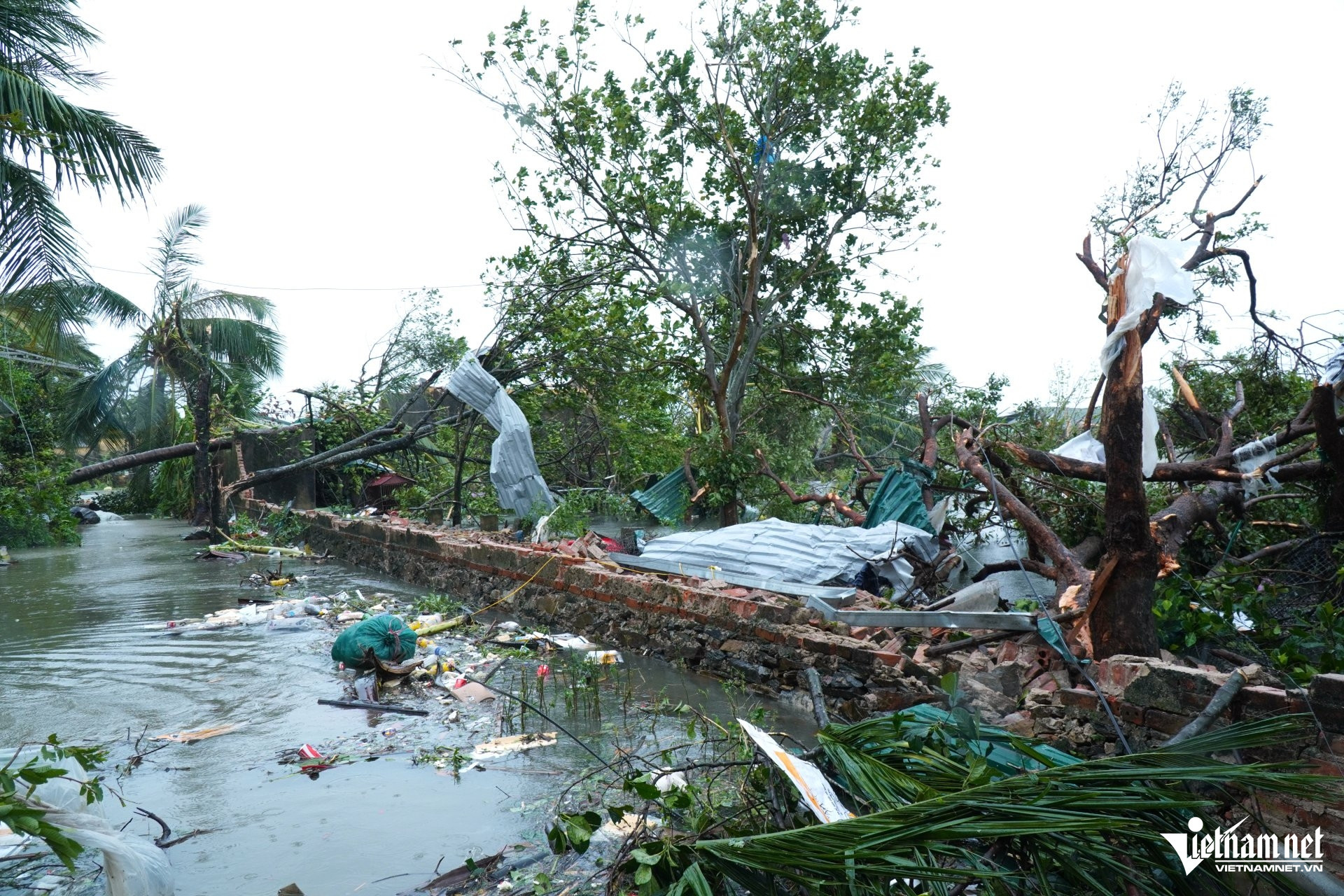
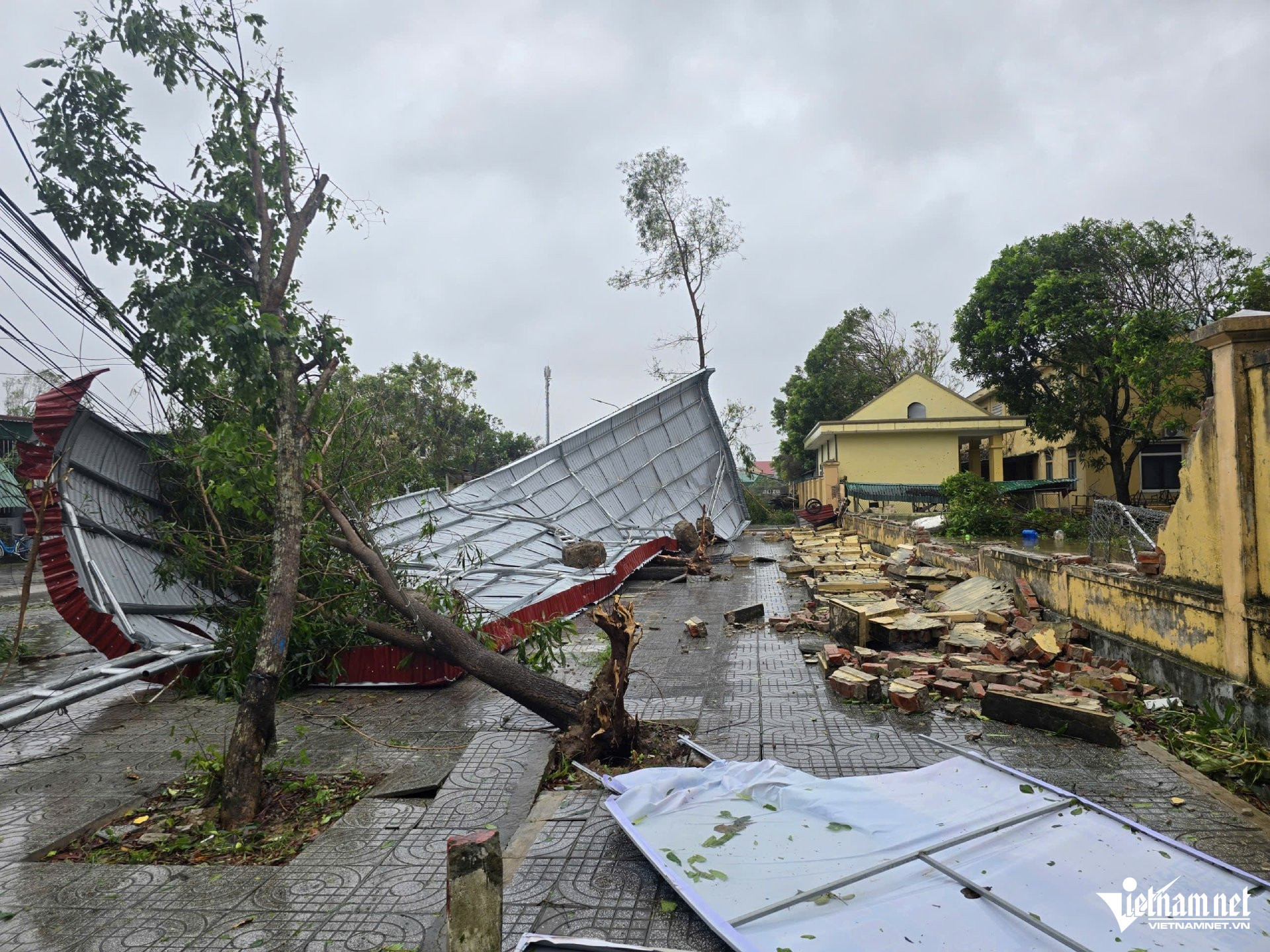
Typhoon Bualoi, the 10th storm of the season, raged through central Vietnam for hours with wind gusts over level 12, ripping off roofs, toppling trees, and snapping utility poles in provinces from Thanh Hoa to Quang Tri.
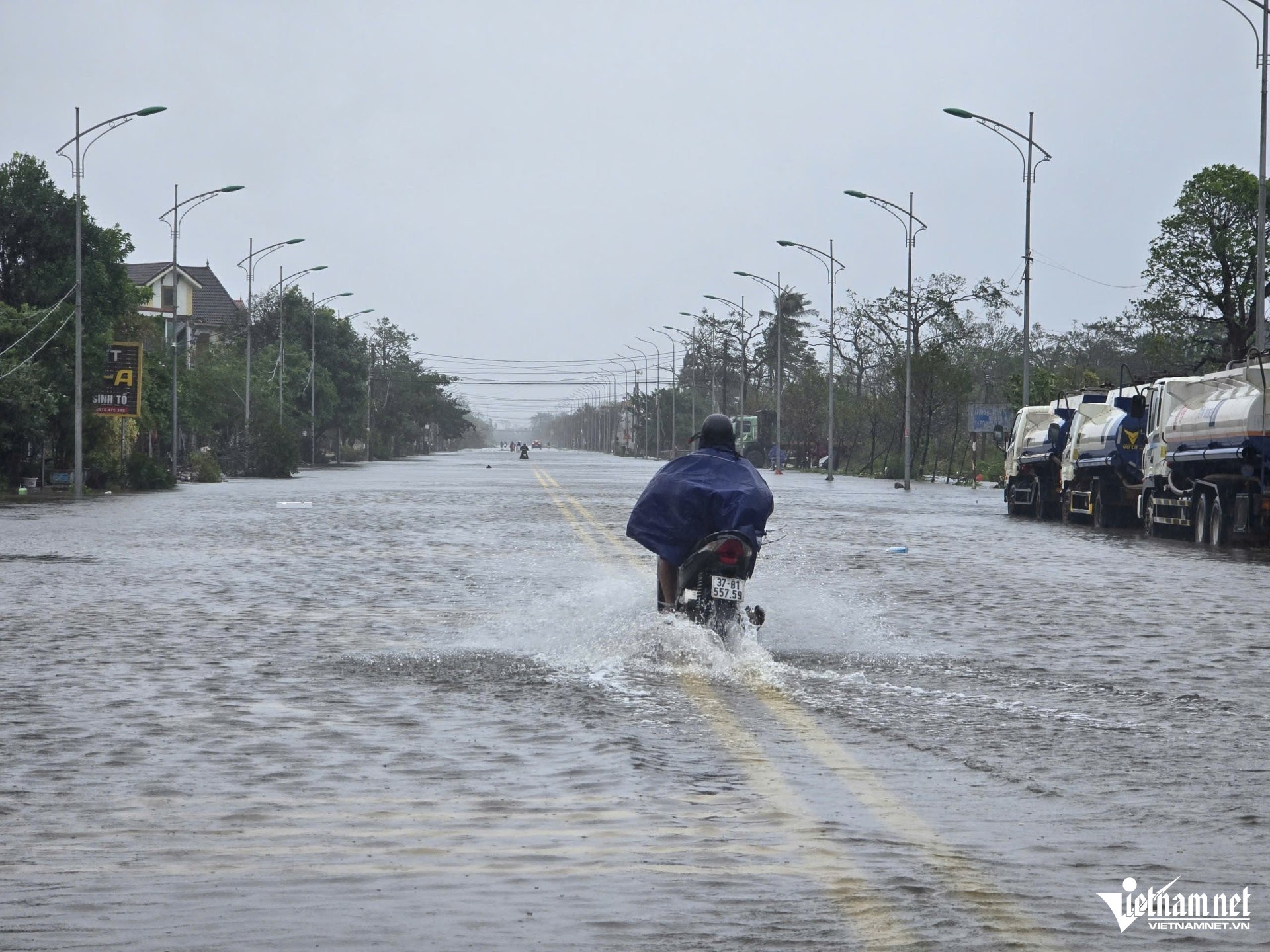
In Thanh Hoa: On the morning of September 29, after making landfall, Typhoon Bualoi caused widespread damage across the province. Both urban and rural areas saw trees uprooted, metal roofs torn away, and deep flooding in streets and residential zones.
In Hac Thanh Ward, streets like Dong Le and Le Lai, as well as the roundabout at Con Hac, were submerged. Strong winds and waterlogged soil caused numerous trees to fall, damaging power lines and blocking traffic.
Along Le Loi Street, numerous billboards and metal roofing sheets were hurled through the air, posing a danger to passersby.
Authorities mobilized hundreds of officers and soldiers to evacuate residents, remove fallen trees, and clear access to isolated areas. Over 1,600 households, totaling nearly 6,500 people, had to be evacuated urgently.
Thousands of students were given the day off for safety. The Chairman of the Thanh Hoa People’s Committee urged residents to stay indoors, refrain from fishing or collecting driftwood in rivers and streams. Localities were on 24/7 alert, monitoring flood levels, reinforcing dikes, and preparing food supplies for cut-off regions.
In Nghe An province, Typhoon Bualoi also wreaked havoc, severely damaging Vinh Market. Numerous meat and fruit stalls collapsed, leaving goods scattered across the floor. Trees were uprooted along many roads, while signs and roofs were blown away by powerful winds.
Heavy rains flooded and isolated parts of western Nghe An. In Tien Phong commune, swollen streams submerged three spillways and the Nhan Quac Bridge. Landslides in Long Quang hamlet threatened residential homes. While some were evacuated, Na Sanh, Muong Hin, and Na Cay hamlets remained isolated.
In the border commune of Thong Thu, eight hamlets were cut off. Several sections of National Highway 16 were blocked by landslides. In Tri Le commune, seven homes were damaged and 62 households had to evacuate overnight.
In Cua Lo Ward, Nghe An, high tides combined with waves 1-2 meters tall caused seawater to flood coastal areas. Streets were inundated by 40-50 cm of water. Parts of river mouths and shipping channels were also temporarily cut off, halting transportation.
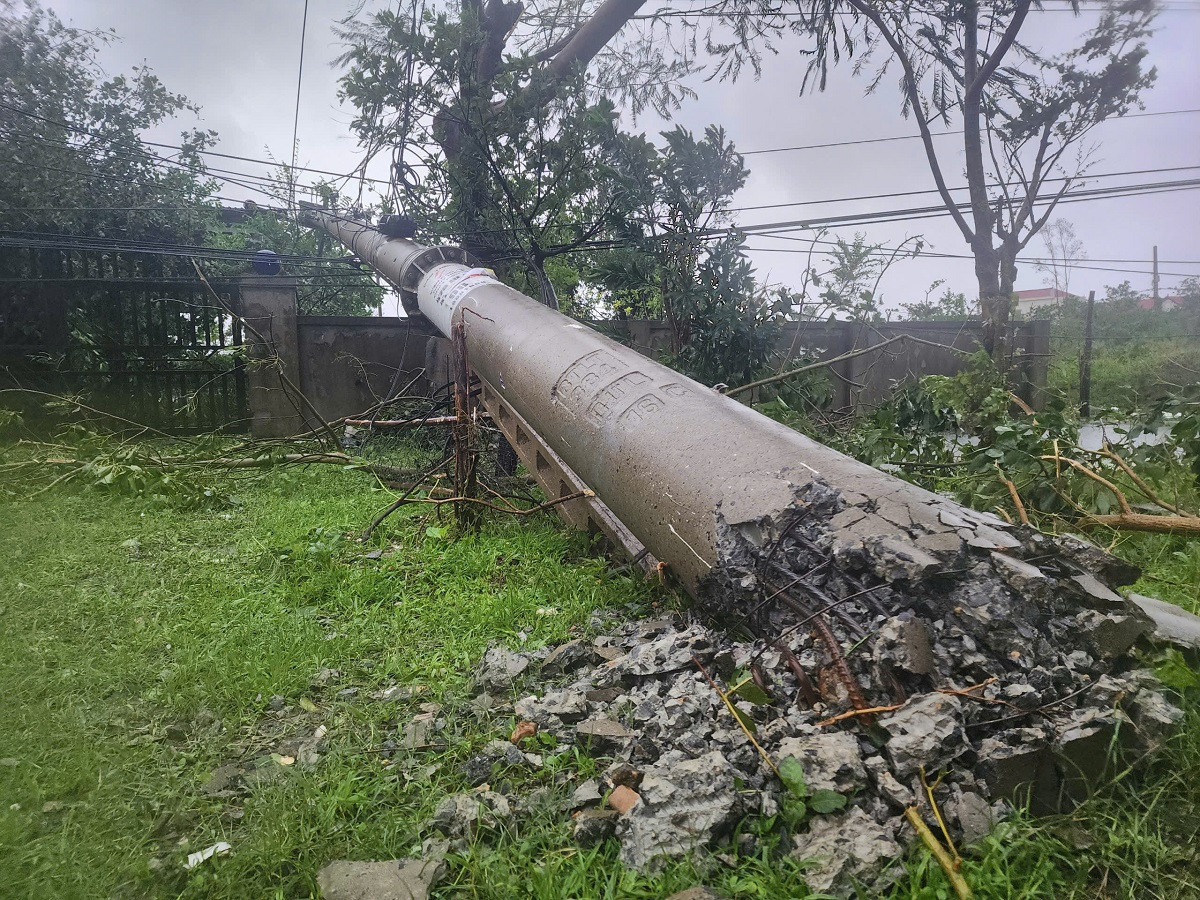
In Vinh Phu Ward, metal roofing littered the streets, and electric poles were broken. At Le Thi Bach Cat Secondary School in Cua Lo, metal awnings were ripped apart and mangled.
In Ha Tinh province, Typhoon Bualoi made landfall late on September 28 and continued into the morning of the 29th, bringing level 14 gusts that destroyed key infrastructure, homes, and schools.
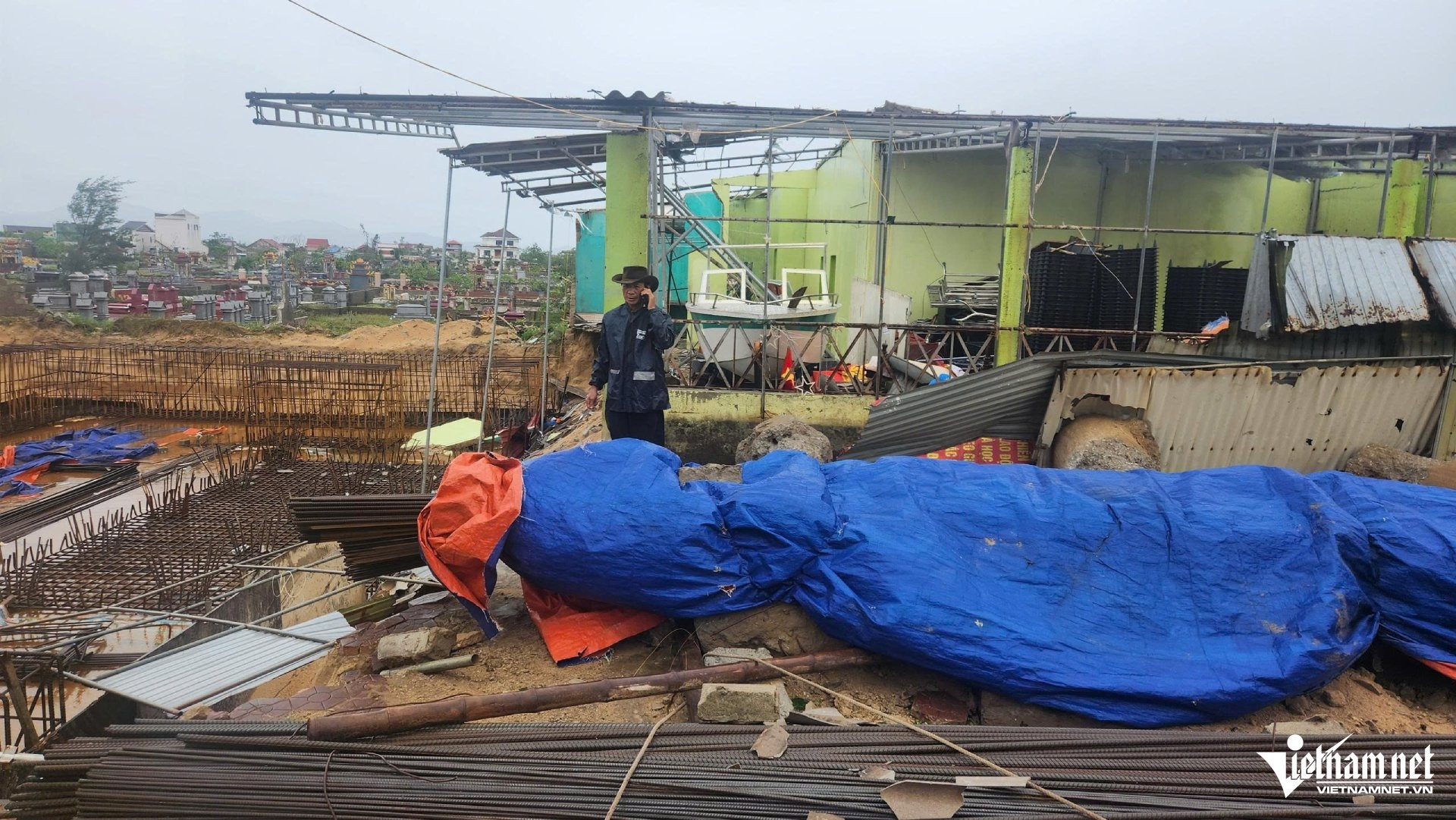
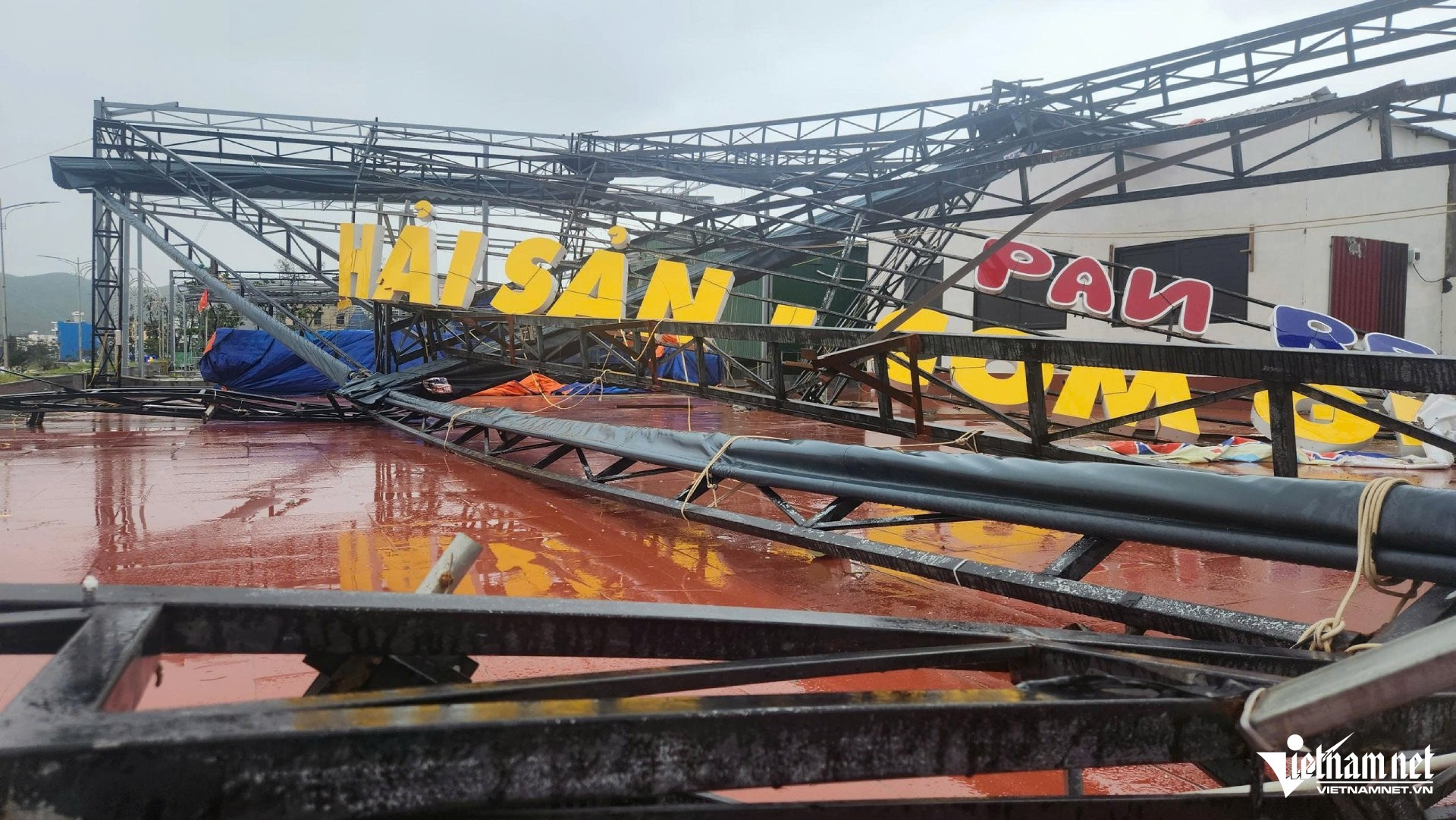
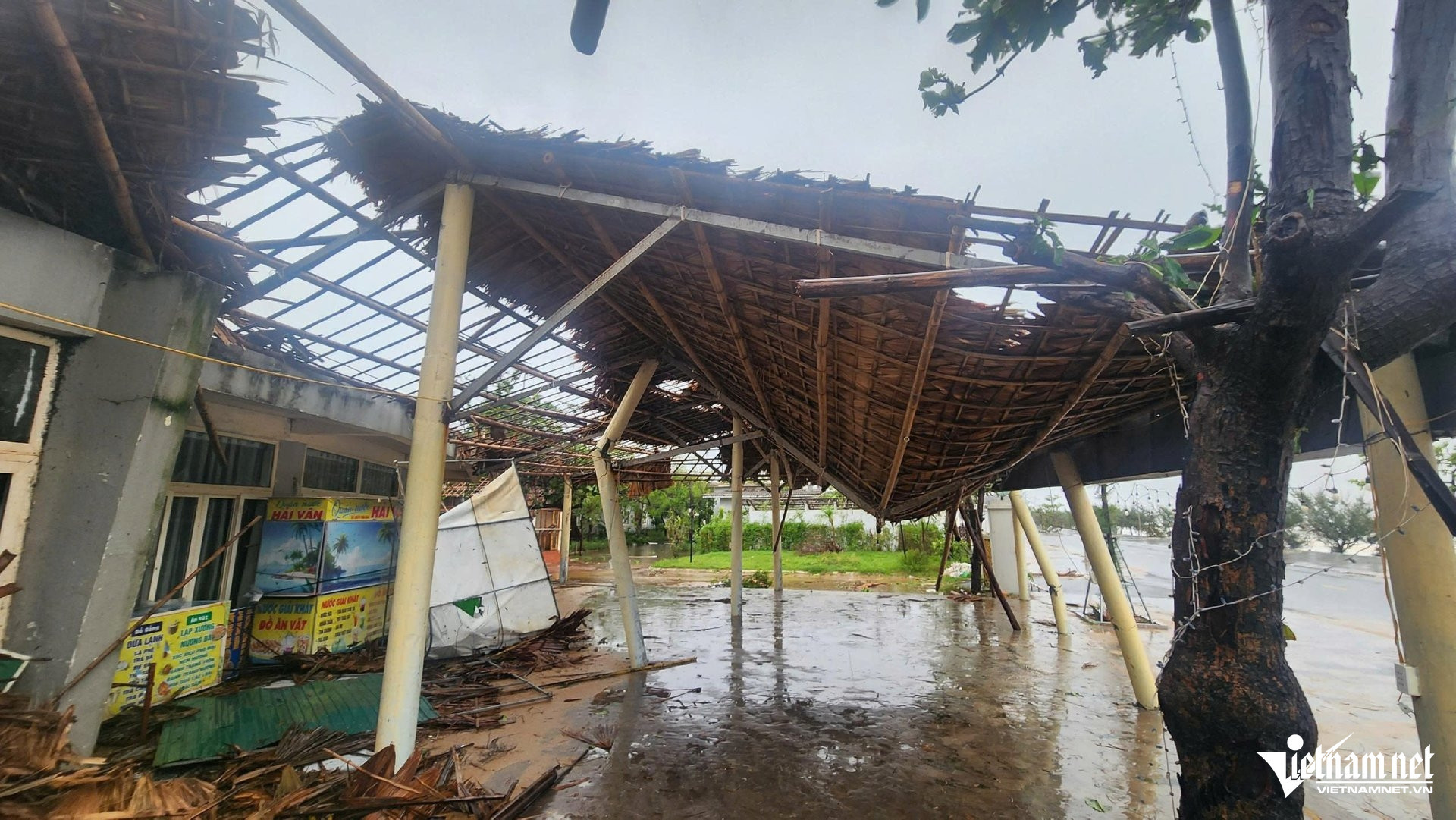
Tourist destinations like Thien Cam and Xuan Thanh were left in ruins. Coastal restaurants lost their roofs, and fallen trees were strewn everywhere.
At the Vung Ang Economic Zone, the storm pounded for hours with heavy rain, collapsing the coal storage facility of the Vung Ang 2 Thermal Power Plant. A factory representative said strong winds around 10 PM on September 28 caused the roof to cave in, and repairs could take several months.
A parking structure in Thanh Sen Ward was flattened, while restaurants and seafood shops in Thien Cam were left twisted and shattered.
Quang Tri left in ruins after Typhoon Bualoi
According to the provincial Civil Defense Committee, Typhoon Bualoi caused severe damage to life, property, and infrastructure in Quang Tri.
As of now, 12 people are reported missing, including a child born in 2009 from Yen Tho Hamlet, Kim Phu Commune, who was swept away by floodwaters; two crew members from the sunken vessel BV 4670–TS (based in Ho Chi Minh City) lost at sea near Cua Viet; and nine fishermen from boats BV-92756-TS and BV-92754-TS who went missing near Gianh Port. Additionally, five people were injured.
The storm also destroyed three homes and tore the roofs off 390 others. Public infrastructure was badly damaged, and over 9 hectares (22 acres) of summer-autumn rice fields were submerged.
Hydraulic and dike systems were also seriously affected. Rivers like Kien Giang (Le Thuy Commune), Vinh Dinh, and Long Dai (Truong Son Commune) experienced severe erosion over hundreds of meters, with some areas encroaching into paved roads. Sea dikes in Vinh Hoang, Trieu Co, and Cua Tung communes were also eroded, while a river dike in Hoan Lao Commune was breached by two meters.
Provincial roads 562, 564, 571, and the western branch of the Ho Chi Minh Trail saw multiple landslides and fallen debris. In Huong Phung commune, the Chenh Vanh spillway bridge lost two spans. Many village roads were heavily eroded, with an estimated hundreds of cubic meters of soil and rock displaced.
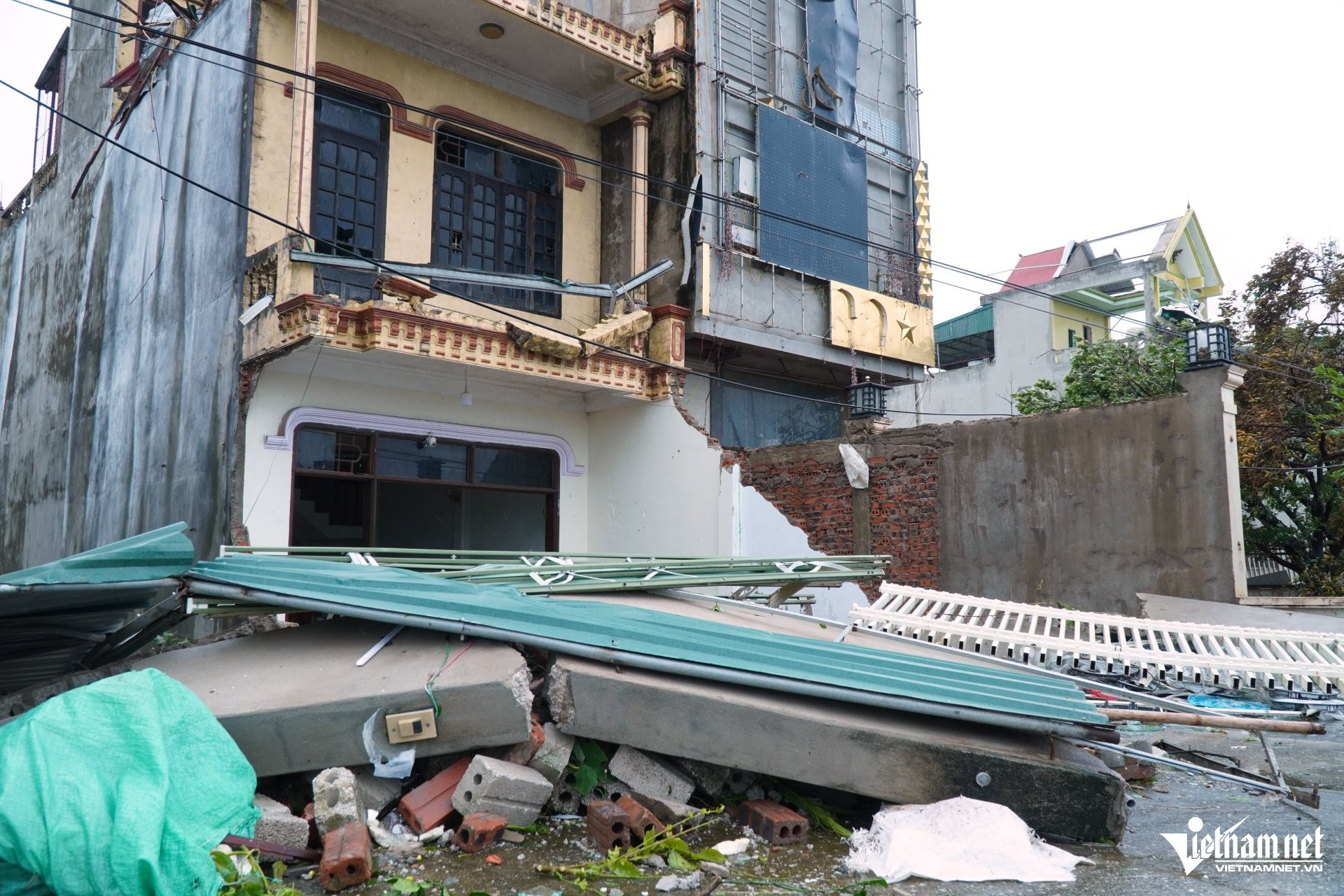
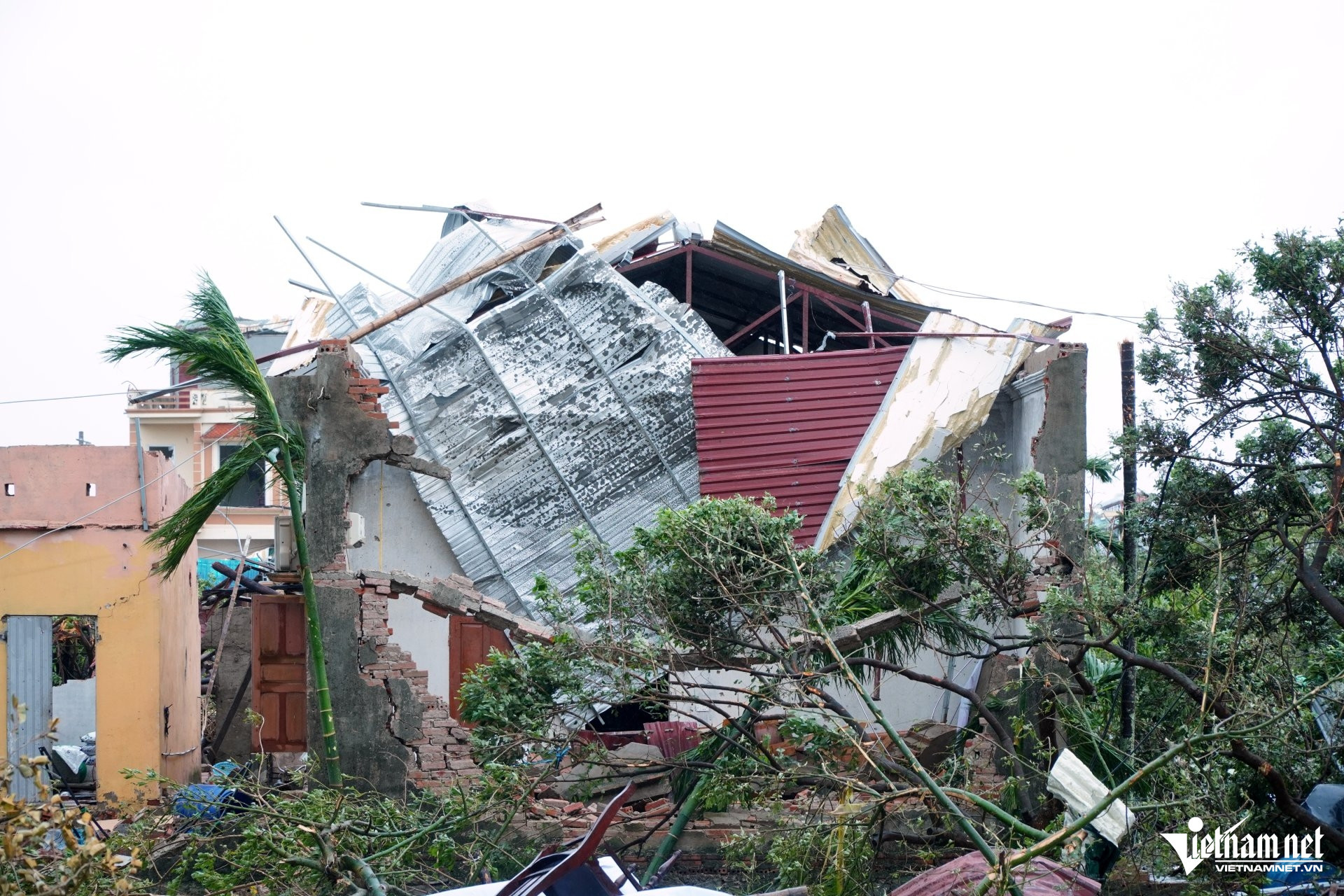

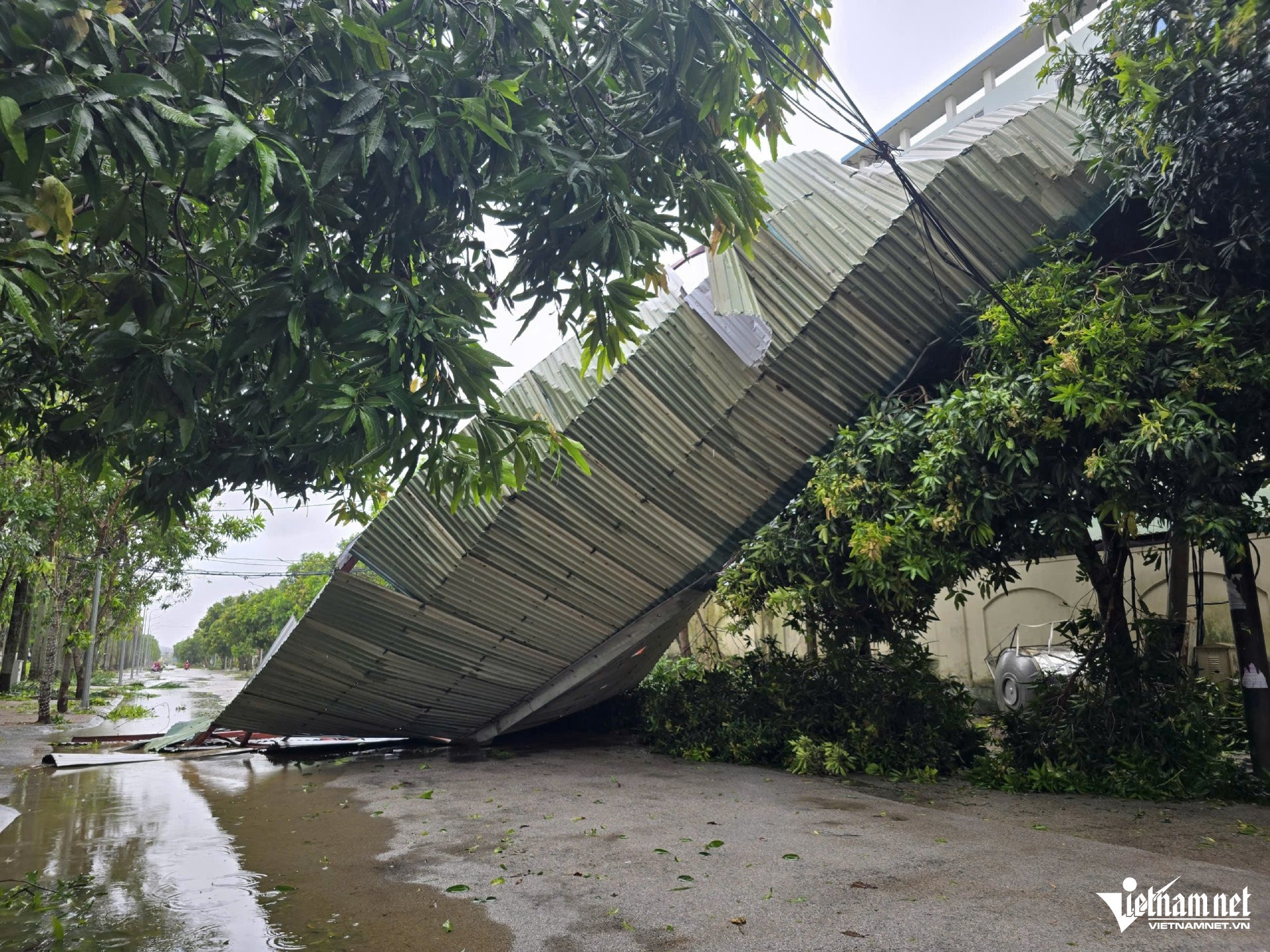
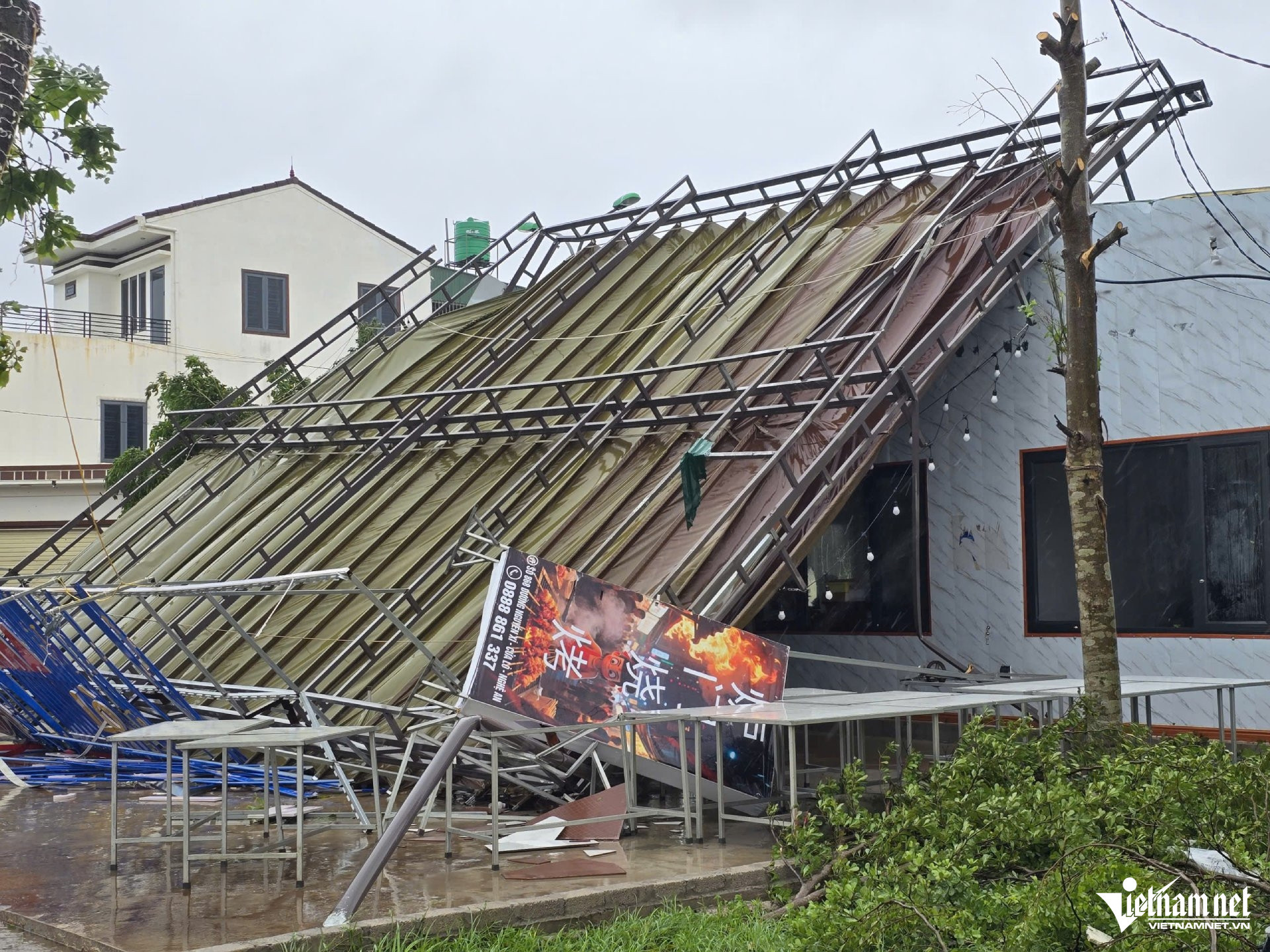
Steel-framed roof of a service center in Cua Lo was toppled by the storm.
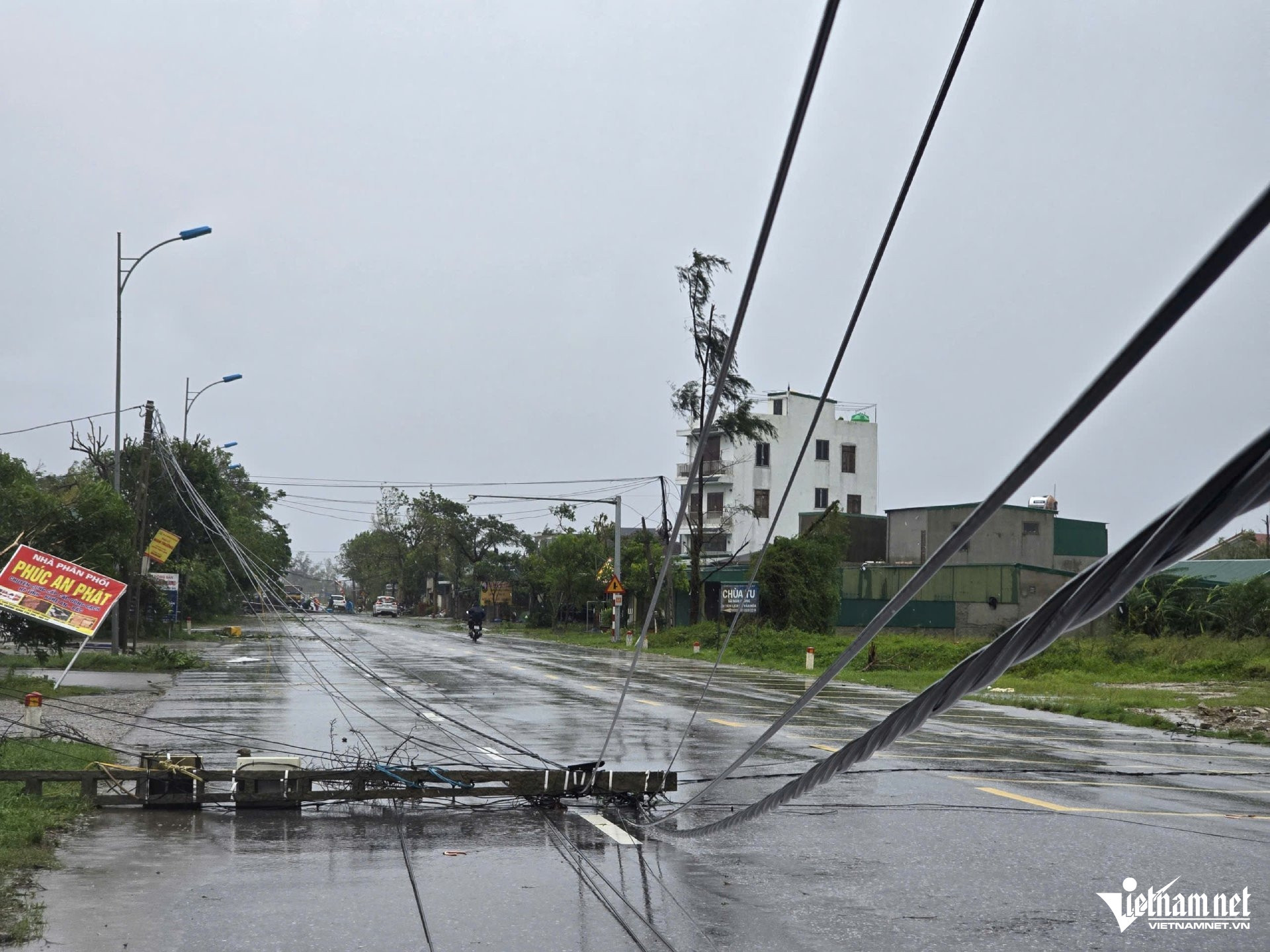
Electric poles collapsed in Nghe An Province.
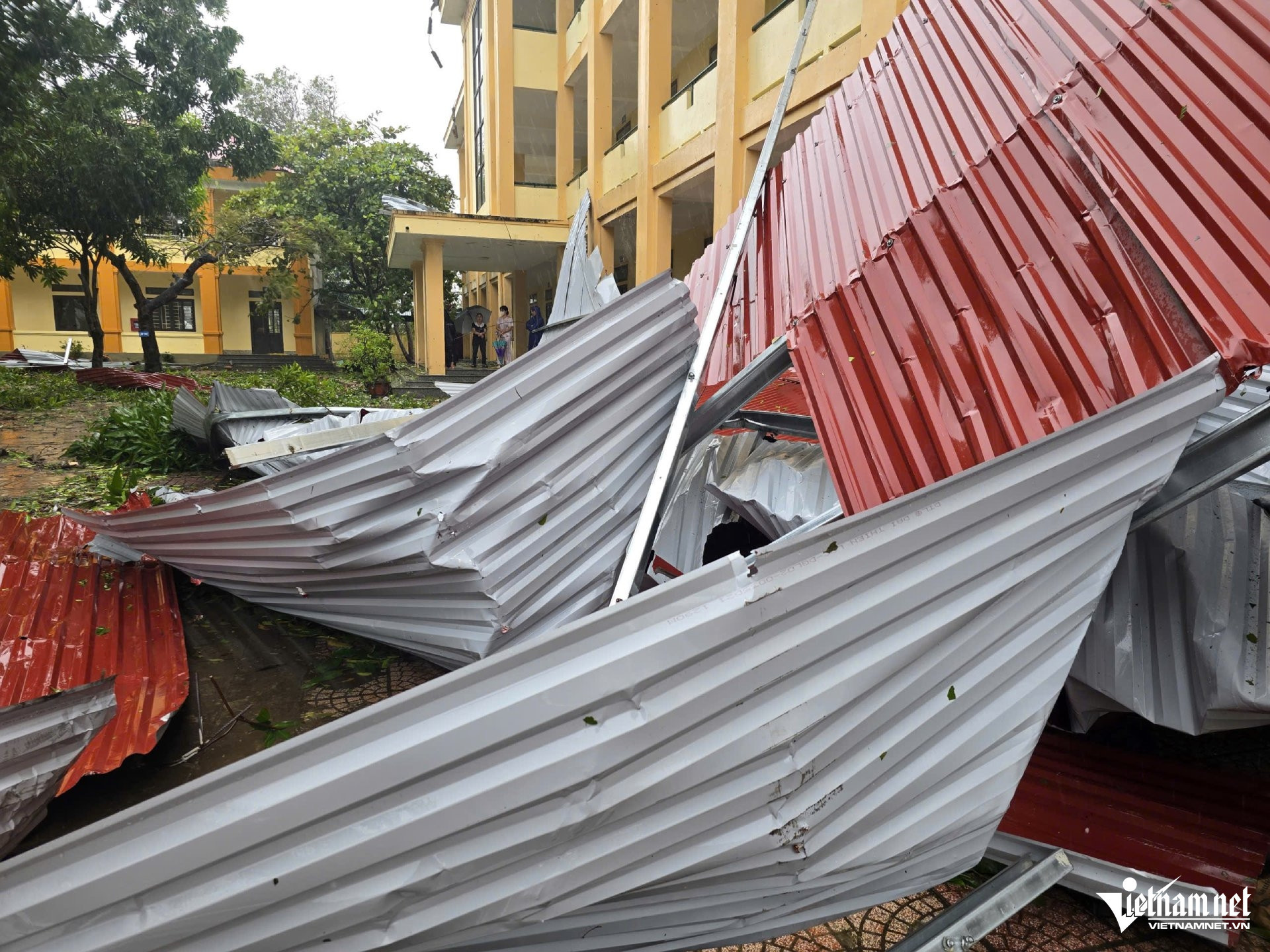
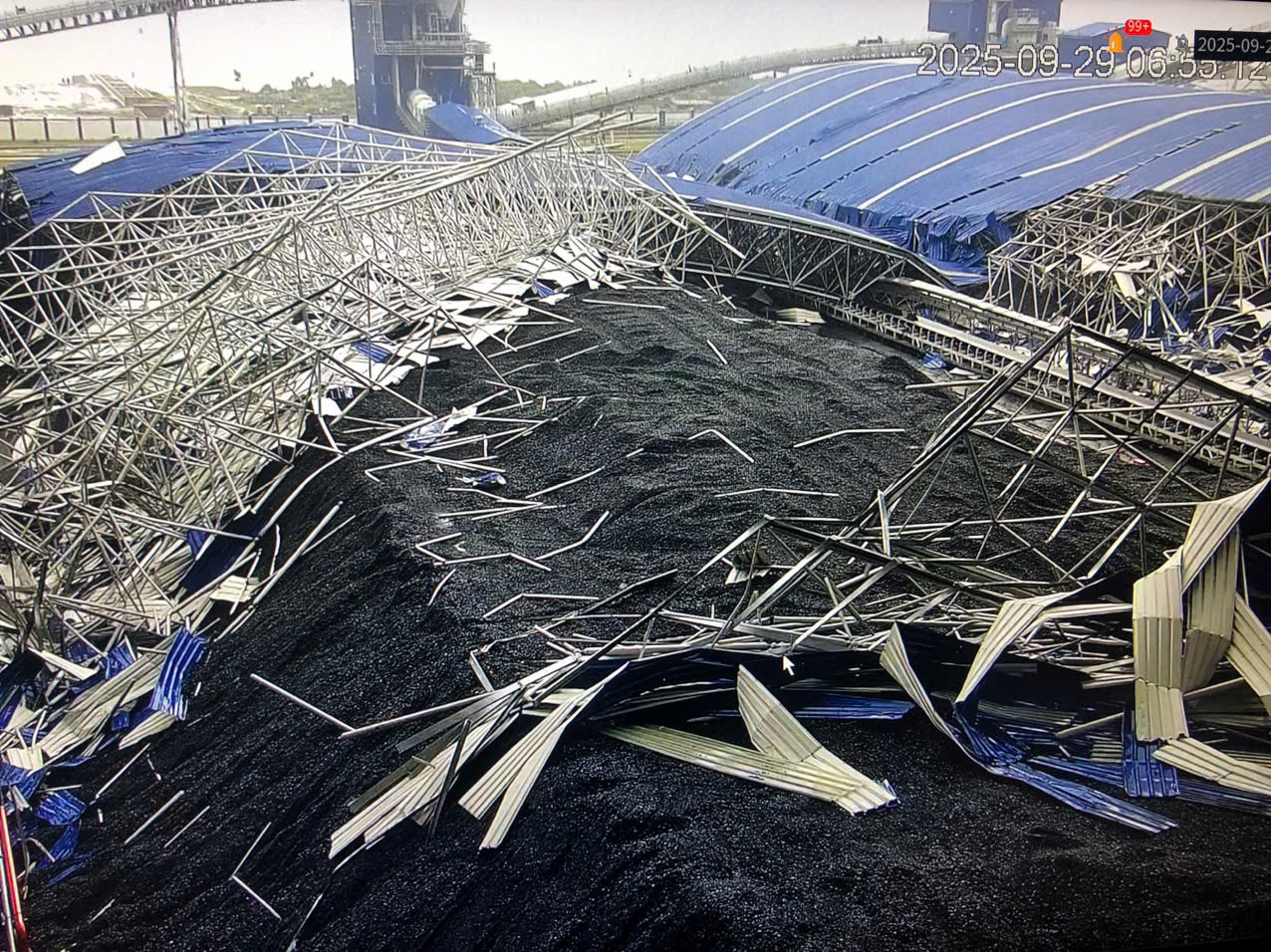
The coal warehouse of Vung Ang 2 Thermal Power Plant collapsed. Photo: Thien Luong


Thien Luong - Le Duong - Hai Sam
.svg)
